Through which constellations does the sun pass?
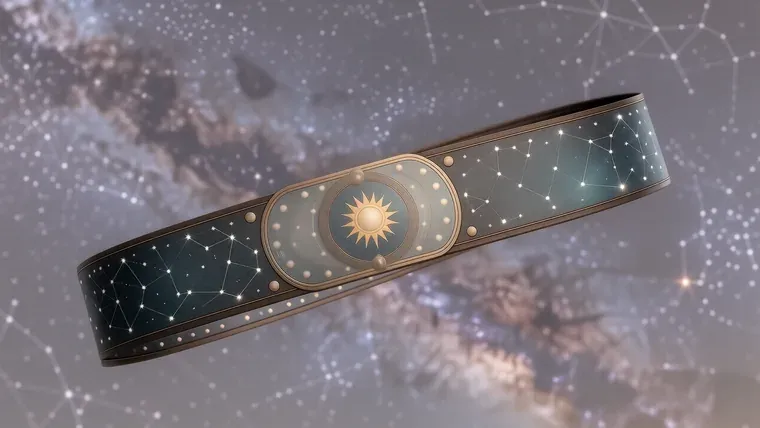
The Sun passes through thirteen zodiacal constellations along the ecliptic, which is the apparent path of Earth’s orbit around the Sun. While astrology typically recognizes only twelve signs based on equal 30-degree arcs, the astronomical reality involves thirteen distinct constellations of varying sizes. These include Aries, Taurus, Gemini, Cancer, Leo, Virgo, Libra, Scorpius, Ophiuchus (the Serpentine), Sagittarius, Capricornus, Aquarius, and Pisces. The Sun’s position within these boundaries changes daily as Earth completes its annual revolution.
The Mechanics of the Ecliptic
The ecliptic dictates celestial movement. It is a line. Because the Earth orbits the Sun, we observe the Sun appearing to migrate through different background star patterns over twelve months. This motion is an optical effect. We do not actually move through the stars.
The Moon follows this path too. It moves fast. While the Sun takes a full year to traverse the zodiac, the Moon completes a revolution around Earth every 27.3 days. This frequent transit means the Moon visits every zodiacal constellation much more often than the Sun does. Planets also occupy these regions. Their paths vary. Because their orbits differ in inclination and distance from the Sun, planets like Mars or Jupiter appear to wander through these constellations at irregular intervals.
The boundaries are fixed. IAU standards apply. The International Astronomical Union established official constellation boundaries in 1928 so that astronomers worldwide could use a standardized coordinate system. These scientific borders often do not match astrological signs. Astrology uses mathematical divisions. It divides the 360-degree circle into twelve equal segments of 30 degrees each, although the actual physical constellations occupy much larger or smaller areas of the sky.
The First Signs: Aries and Taurus
Aries starts the cycle. It is small. The Sun enters Aries around April 19 and departs by May 13, although this timing shifts slightly due to the precession of the equinoxes. Only three stars are easily visible to the naked eye. These are Hamal, Sheratan, and Mezartim. Robert Hooke identified Mezartim as one of the first double stars in 1664 when he used a telescope to observe its structure.
Taurus follows Aries. It is massive. The Sun moves into Taurus on May 14, where it stays until mid-June. This constellation contains over 100 visible objects. Aldebaran shines brightly here. It has an apparent magnitude of 0.85. Because Aldebaran is a red giant that is 36 times the size of our Sun, it dominates the Hyades star cluster with its intense light.
The Pleiades are nearby. They are beautiful. You can see this compact group of stars easily in a dark sky. While many cultures see them as sisters or daughters, astronomers study them as a young open cluster. Taurus also hosts the Crab Nebula. This nebula formed after a supernova was recorded by Chinese astronomers on July 4, 1054.
Gemini, Cancer, and Leo
Gemini contains many stars. It is bright. The Sun enters Gemini on June 20, moving between the prominent stars Castor and Pollux. These two stars are very close to each other in our line of sight. Although they look like twins, they have different colors and physical properties. Gemini also contains the planet Uranus, which was first discovered there in 1781.
Cancer is harder to see. It is dim. The Sun enters Cancer on July 21, but the constellation lacks bright stars. Its brightest member, Altarf, has a magnitude of 3.53. Because the stars in Cancer are relatively faint, urban light pollution often hides them from view. You might need binoculars to find the Beehive Cluster.
Leo is very brilliant. It shines well. The Sun resides in Leo from August 10 to September 15. Regulus is its primary star. It has a magnitude of 1.35. While Leo contains the Sickle asterism, it also hosts the Leonid meteor shower every 33 years. These meteors can reach rates of 150,000 particles per hour during peak activity.
The Mid-Year Transition: Virgo and Libra
Virgo is huge. It is vast. The Sun enters Virgo on September 16, which coincides with the modern autumnal equinox. This constellation is the second largest in the entire sky. Spica is its most famous star. It has a magnitude of 0.98. Because Spica shines with the light of 600 Suns, it is easily identifiable even in moderately bright skies.
Virgo contains many galaxies. They are distant. Astronomers have cataloged thousands of “starry islands” in this region, including the Sombrero Galaxy. Libra follows Virgo. The Sun enters Libra on October 31. This constellation was once part of Scorpius. It is much younger than the other zodiacal groups.
Libra is quite balanced. It looks steady. The brightest stars form a rectangle. Gliese 581 is a notable red dwarf located here. This star hosts several planets that might support life. Although we have sent radio messages to this system, we have not yet received any confirmed signals.
Scorpius and the Serpentine
Scorpius is intense. It is red. The Sun enters Scorpius on November 23, but it only stays for about seven days. Antares is the centerpiece. It has a magnitude of 0.96. Because Antares is 700 times larger than our Sun, its reddish hue is unmistakable to observers.
The Serpentine is different. It is Ophiuchus. The Sun passes through this constellation from November 29 to December 17. Most astrologers exclude it from the twelve signs. However, it is a real astronomical entity that intersects the ecliptic. This constellation is quite large.
Ophiuchus contains many stars. It is complex. While it sits between Scorpius and Sagittarius, it does not fit the traditional zodiacal model. The stars here are spread across the equatorial region. You can see it clearly during the summer months in the northern hemisphere.
The End of the Year: Sagittarius and Capricornus
Sagittarius is bright. It is deep. The Sun enters Sagittarius on December 18. This constellation contains the center of our Milky Way galaxy. Because a dense cloud of interstellar dust obscures the view, we cannot see the galactic core directly. We see the light from billions of stars around it instead.
The Pistol Star lives here. It is massive. This star is 150 times more massive than our Sun. It emits an incredible amount of energy. Sagittarius also features the Teapot asterism. This shape is easy to find in a dark sky.
Capricornus follows Sagittarius. It is modest. The Sun enters Capricornus on January 19. The stars form an elongated triangle. While some see a goat, others see an inverted hat. Astronomers discovered Neptune within this constellation’s boundaries in 1846. It remains a useful area for studying globular clusters like M55.
Aquarius and Pisces
Aquarius is wide. It is cold. The Sun enters Aquarius on February 16. This constellation features several prominent stars that look like water pouring from a jug. One star is currently becoming a planetary nebula. This process will eventually happen to our own Sun in about 5 billion years.
Pisces marks the end. It is large. The Sun enters Pisces on March 12 and stays until April 18. The star Alrisha sits at the center of the two fish. Because the stars in Pisces are not very bright, they can be difficult to locate without a star chart.
The two fish are connected. They use a string. This connection is seen in the star Alrisha. While the constellation covers a huge area, it lacks many bright stars. You will find it between Aquarius and Aries.
Summary of Zodiacal Data
| Constellation | Sun Entry Date | Brightest Star | Magnitude |
|---|---|---|---|
| Aries | April 19 | Hamal | 1.98 |
| Taurus | May 14 | Aldebaran | 0.85 |
| Gemini | June 20 | Pollux | 1.14 |
| Cancer | July 21 | Altarf | 3.53 |
| Leo | August 10 | Regulus | 1.35 |
| Virgo | September 16 | Spica | 0.98 |
| Libra | October 31 | Zubeneschamali | 2.61 |
| Scorpius | November 23 | Antares | 0.96 |
| Ophiuchus | November 29 | Rasalhague | 2.08 |
| Sagittarius | December 18 | Kaus Australis | 1.79 |
| Capricornus | January 19 | Algedi | 2.6 |
| Aquarius | February 16 | Sadalsuud | 2.9 |
| Pisces | March 12 | Alrisha | 3.8 |
The precession of the equinoxes changes everything. The Earth wobbles. Because the axis completes a full rotation every 25,920 years, the position of the vernal equinox shifts through the zodiac. In the past, the equinox was in Taurus. Now it is in Pisces. By the year 2600, it will move into Aquarius.
Observing these constellations requires patience. The sky changes. While we use fixed names for these patterns, the actual stars are moving through space at different velocities. We see a two-dimensional projection of a three-dimensional universe. This perspective makes the zodiacal belt appear as a continuous circle of light and shadow.
Frequently asked questions
How many constellations does the Sun actually pass through?
The Sun passes through thirteen distinct zodiacal constellations along the ecliptic, whereas astrology typically recognizes only twelve signs.
What is the difference between astrological signs and astronomical constellations?
Astrology uses twelve equal 30-degree segments, while astronomy follows official IAU boundaries where constellations vary in size and include Ophiuchus.
Which constellation does the Sun enter around the autumnal equinox?
The Sun enters Virgo on September 16, which coincides with the modern autumnal equinox.
Why does the position of the vernal equinox change over time?
The Earth's axis completes a full rotation every 25,920 years due to the precession of the equinoxes, causing the equinox to shift through the zodiac.
More in Constellations
How to see the appearance of Cassiopeia in the night sky
Learn how to identify the W-shaped Cassiopeia constellation and locate deep sky objects like M52, M103, and the Cas A supernova remnant.
The best time to observe the Hydra constellation
Discover the ideal months for viewing the Southern Hydra constellation and learn about its brightest stars, nearby galaxies, and visibility requirements.

What an incredible creature the bear is in nature and sky
Explore the dual nature of bears as biological predators like the polar bear and celestial markers such as the Ursa Major constellation.
What is the location of the Orion constellation in relation to the
Discover how to locate the Orion constellation relative to the Big Dipper and learn celestial navigation techniques using Polaris and the winter sky.