Stars
How far away is the nearest star in light years?
Discover how far Proxima Centauri is from Earth and learn about its physical characteristics, planetary system, and distance measurements.
Star types, brightness, the nearest stars and the light-years between them.
Discover how far Proxima Centauri is from Earth and learn about its physical characteristics, planetary system, and distance measurements.
Explore how astronomers use the cosmic distance ladder, from trigonometric parallax to standard candles and redshift, to measure stellar distances.
Discover the science behind shooting stars, from the mechanics of atmospheric entry to the chemical composition of meteorites and predictable meteor showers.
Learn why the Big Dipper is an asterism in Ursa Major and explore the distinct magnitudes and distances of its seven primary stars.
Explore how stellar mass determines whether a star becomes a white dwarf, a neutron star, or a black hole through various evolutionary stages.
Learn how to find Polaris using the Big Dipper, Cassiopeia, and other celestial methods to navigate accurately in the night sky.
Discover how astronomers name stars using the Bayer system, Arabic descriptive terms, and modern technical catalogs like the Henry Draper catalog.
Discover why the brightest stars range from deep red to piercing blue based on surface temperature and Wien's Law physics.
Learn about the visual magnitude and physical dimensions of stars in Cepheus, from faint points of light to massive red hypergiants.
Discover how surface temperature and spectral classification determine whether a star appears blue, white, yellow, or red to the human eye.
Discover why Polaris appears white or yellowish to the naked eye and learn about its complex triple star system and spectral classification.
Discover why the stars in the Big Dipper vary from yellowish-white to blue-white due to differences in surface temperature and spectral classification.
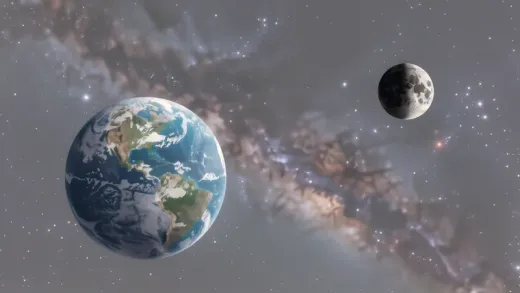
Explore how astronomers use light-years, parsecs, and trigonometric parallax to measure the immense gaps between our planet and nearby stellar neighbors.

Discover how far Proxima Centauri is from our solar system and learn about the Alpha Centauri triple star system and its orbiting planets.
Explore how different propulsion methods, from chemical rockets to light sails, impact the travel time required to reach the Alpha Centauri star system.
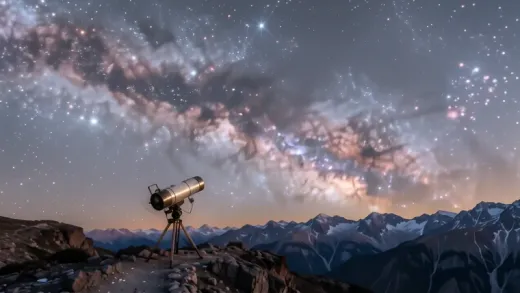
Discover why Polaris is the star at the end of the Little Bear's tail and learn about its complex triple star system and role in navigation.
Explore the spectrum of cosmic density, from white dwarfs and neutron stars to the infinite density found within a black hole singularity.
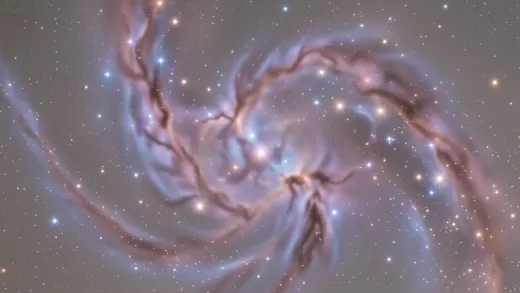
Discover how many stars are visible to the naked eye versus the estimated 10 sextillion stars existing throughout the entire observable universe.
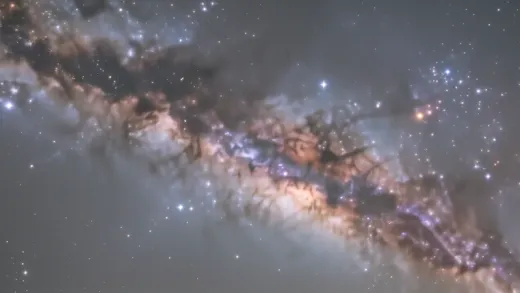
Astronomers estimate the Milky Way contains between 200 billion and 400 billion stars, though dust clouds make an exact count difficult.
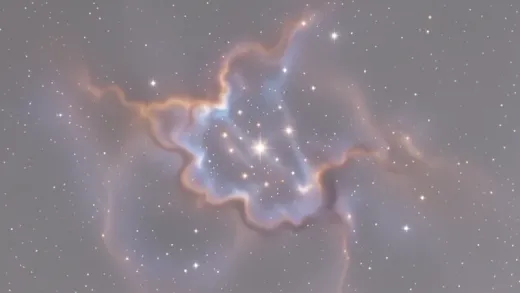
Learn how to locate the orange giant Arcturus using the Big Dipper and explore its unique physical properties and galactic origins.
Learn how low- to intermediate-mass stars evolve into dense white dwarfs and the physical properties that define these stellar remnants.
Discover how Pyotr Lebedev experimentally proved radiation pressure and how modern synchrotron research validates Sommerfeld's momentum theories.
Discover how thermonuclear fusion powers stellar luminosity and why surface temperatures dictate whether a star appears blue, white, or red.
Learn why meteoroids appear as falling stars, how friction creates light during atmospheric entry, and where these cosmic fragments ultimately end up.
Learn why one light second equals exactly 299,792.458 kilometers and how this constant speed of light impacts astronomical measurements.
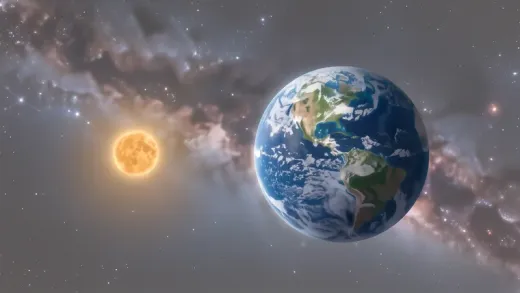
Learn how long it takes for sunlight to reach Earth and discover how orbital variations affect the transit time of solar photons.
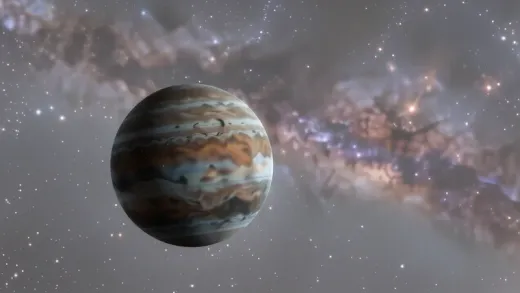
Discover why Eris is considered the most massive dwarf planet in our solar system and how it compares to Pluto and other Kuiper Belt objects.
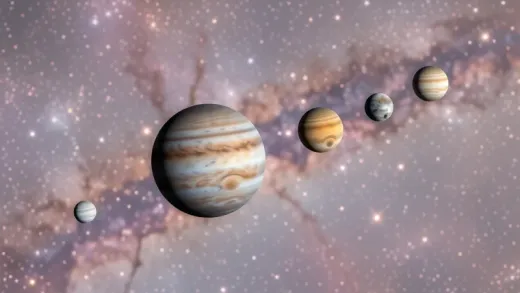
Discover the historical and scientific reasons why ancient astronomers classified planets as wanderers due to their unique movement across the sky.