What is the distance in kilometers of 1 light second?
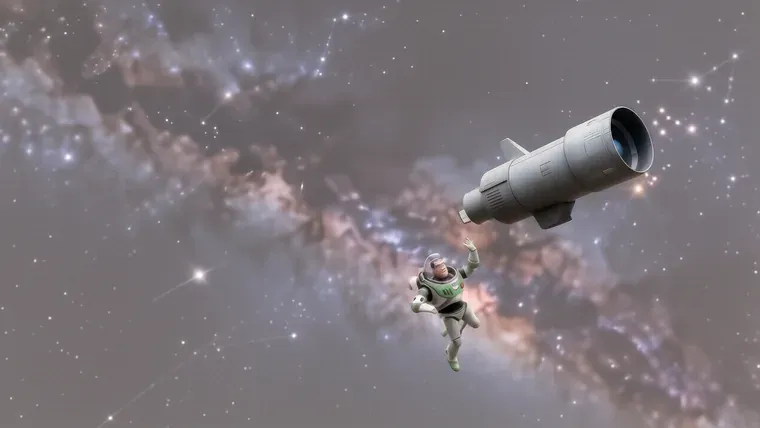
One light second is exactly 299,792.458 kilometers. This value is derived from the constant speed of light in a vacuum, which the International System of Units (SI) defines as precisely 299,792,458 meters per second. Because the meter itself is defined based on this speed, the measurement is exact and does not rely on experimental error.
The fundamental mechanics of light speed
Light travels fast. It moves at a constant velocity through a vacuum. In physics, we define this constant as c. This value remains fixed regardless of the observer’s motion because of the principles established in special relativity.
The distance covered in one second is 299,792.458 km. If you were to measure this in feet, it would equal 983,571,056 feet. This unit provides a convenient way to scale distances within our solar system. While we often think of light as instantaneous, the delay becomes obvious when discussing interplanetary travel.
A single light nanosecond is approximately 299.8 mm. This distance is slightly less than one international foot. Engineers use these smaller increments when designing high-speed computer architectures because signal latency at the nanosecond scale can affect processor performance.
The scale of light-based measurements varies significantly:
- Light microsecond: ~300 meters
- Light millisecond: 299.79 kilometers
- Light minute: 17,987,547.48 kilometers
- Light hour: 1,079,252,848.8 kilometers
Historical attempts to measure the constant
Early thinkers believed light was instantaneous. They thought it moved with infinite speed. This changed during the 17th century when astronomers began noticing discrepancies in celestial timing.
In 1676, the Danish astronomer Ole Rømer observed the moons of Jupiter. He focused specifically on Io, which orbits the planet frequently. Rømer noticed that the eclipses of Io appeared to occur later than predicted when Earth was moving away from Jupiter. Although he did not calculate the exact modern value, his observation that light has a finite speed changed astronomy forever. He estimated the speed at roughly 220,000 kilometers per second.
James Bradley improved these findings in the 18th century. He studied the phenomenon of stellar aberration. This effect occurs because Earth’s orbital velocity causes stars to appear in slightly different positions than they actually are. Bradley calculated a speed of approximately 301,000 kilometers per second.
Galileo Galilei attempted a terrestrial measurement. He and an assistant used lanterns with shutters on distant hills. They hoped to time the light passing between them. The experiment failed because the human reaction time is far too slow to capture such a rapid event.
Laboratory precision in the 19th century
Terrestrial experiments eventually replaced celestial observations for higher precision. Scientists needed controlled environments to avoid the variables of planetary motion.
Armand Fizeau conducted a famous experiment in Paris during the 1800s. He used a rapidly rotating cogwheel to interrupt a beam of light. The light traveled to a mirror 8.6 km away and returned through the wheel. By adjusting the rotation speed so the light passed through the next gap, he calculated the speed at 313,000 km/s.
Leon Foucault refined this method. He used a rotating mirror instead of a cogwheel. His results were much closer to the modern value. He recorded a speed of approximately 298,000 km/s. This measurement was highly accurate for its time.
Modern measurements utilize different tools:
- Lasers for extreme precision in vacuum tubes
- Maser technology for microwave-frequency consistency
- Atomic clocks to synchronize timing intervals
The transition from mechanical wheels to laser interferometry allowed for the sub-meter precision we use today.
Scaling to the solar system and beyond
Light seconds are useful for local distances. They help us understand the scale of our immediate neighborhood.
The Earth’s diameter is roughly 0.0425 light seconds. This means light crosses the planet almost instantly. The distance from the Earth to the Moon, often called the lunar distance, is approximately 1.282 light seconds. If you were to send a radio signal to the Moon, it would take just over one and a quarter seconds to arrive.
The Sun is much farther away. The astronomical unit (AU), which represents the average distance between the Earth and the Sun, equals 499.0 light seconds. This translates to about 8.317 light minutes. When we look at the Sun, we are seeing light that left its surface nearly eight minutes ago.
Relativity introduces small corrections for observers on Earth. While the vacuum speed is constant, the gravitational field of the Earth and the motion of the observer can affect how we perceive time and distance. Astronomers use “light time per unit distance” in ephemeris tables to account for these nuances. The currently accepted value for this constant is 499.004 786 385 seconds.
The complexities of the light-year
A light-year is not a standard SI unit, but it is widely used. It represents the distance light travels in one year. However, “one year” can be defined in several ways.
The most common definition uses the Julian year. A Julian year consists of exactly 365.25 days, with each day containing 86,400 SI seconds. Under this definition, a light-year is 9,460,730,472,580.8 km. This differs from other definitions by only 0.002%.
Another definition uses the tropical year. This is the time it takes for the Sun to return to the same position in the sky of an observer on Earth. This period is approximately 31,556,925.9747 seconds during the epoch 1900.0. Using this value, one light-year equals exactly 9,460,528,177,426.82 km.
Precision matters in deep space. When calculating the distance to Proxima Centauri, which is 4.22 light-years away, the choice of year definition can shift the result by millions of kilometers. Astronomers prefer the parsec for these scales. One parsec is approximately 3.26 light-years.
The scale of the universe is vast:
- Proxima Centauri: ~4.22 light-years
- Andromeda Galaxy: ~2.5 million light-years
- Cosmic Microwave Background: ~46 billion light-years (comoving distance)
Telecommunications and signal latency
Light speed limits how we communicate on Earth. Even though signals travel through copper or fiber optics, they are constrained by the speed of light.
In geostationary orbit, satellites sit at a specific altitude. A signal traveling from Earth to a geostationary satellite and back takes roughly 119.4 milliseconds. Because the signal must make a round trip, there is a minimum delay of about 0.238 seconds. This latency is noticeable in live television interviews.
Data transmission in computers also faces these limits. A light microsecond covers about 300 meters. In a large data center, the physical length of the cables can introduce measurable delays. Engineers must account for this when synchronizing high-frequency trading servers or supercomputer nodes.
Communication speeds vary by medium:
- Vacuum: 299,792.458 km/s
- Fiber optic cable: ~200,000 km/s (due to the refractive index of glass)
- Copper wire: Slightly slower than fiber but faster than many wireless signals
The speed of light is a hard limit for all information transfer. No signal can move faster than c. This physical reality dictates the architecture of every global network and every deep-space probe.
Frequently asked questions
How many kilometers are in one light second?
One light second is exactly 299,792.458 kilometers, a value derived from the constant speed of light in a vacuum.
How long does it take light to reach Earth from the Sun?
Light takes approximately 499.0 light seconds, or about 8.317 light minutes, to travel from the Sun to the Earth.
What is the difference between a Julian and tropical light-year?
A Julian light-year is based on 365.25 days and equals 9,460,730,472,580.8 km, while a tropical light-year is based on the Sun's position and is slightly shorter.
How far does light travel in one millisecond?
A light millisecond covers a distance of approximately 299.79 kilometers.
More in Stars
How far away is the nearest star in light years?
Discover how far Proxima Centauri is from Earth and learn about its physical characteristics, planetary system, and distance measurements.

Methods used by scientists to calculate the distance to stars
Explore how astronomers use the cosmic distance ladder, from trigonometric parallax to standard candles and redshift, to measure stellar distances.
Reasons for the descent of stars from the heavens and their final
Learn why meteoroids appear as falling stars, how friction creates light during atmospheric entry, and where these cosmic fragments ultimately end up.
Shooting stars: An enigmatic phenomenon explained
Discover the science behind shooting stars, from the mechanics of atmospheric entry to the chemical composition of meteorites and predictable meteor showers.