Understanding the science: What is the color of stars?
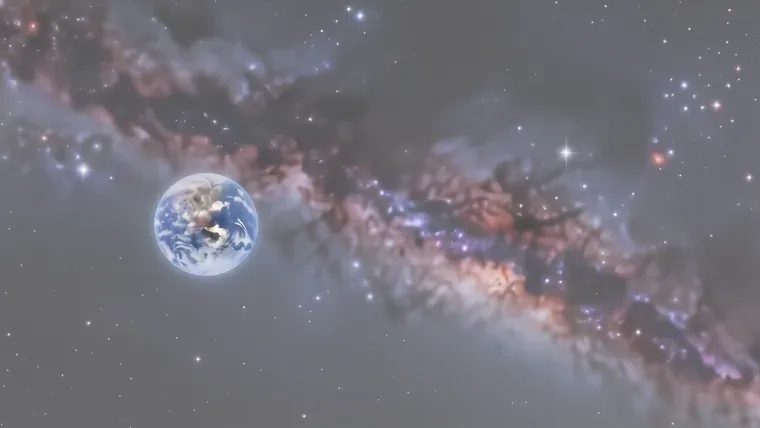
Stellar color depends on surface temperature. While many people assume all stars are white, they actually span a spectrum from deep red to brilliant blue. This variation occurs because the kinetic energy of molecules on a star’s surface dictates the wavelength of emitted light. Hotter surfaces produce shorter wavelengths that appear blue, whereas cooler surfaces emit longer wavelengths that appear red or orange.
The Physics of Stellar Temperature
Temperature drives color. It is physics. When molecules move at high speeds on a stellar surface, they generate intense heat so that the resulting electromagnetic radiation shifts toward the shorter, blue end of the visible spectrum. This relationship follows specific laws of thermodynamics.
Light travels in waves. Wavelengths determine hue. A star with a surface temperature of 30,000 K emits most of its energy in the ultraviolet and blue ranges, while a star at 3,000 K emits primarily in the red and infrared regions. These differences are measurable through spectral analysis.
Astronomers use spectrographs. They look for lines. By examining the unique bandwidths of atoms within a star’s light, scientists can identify chemical compositions because certain elements absorb specific frequencies while others allow them to pass through entirely. This method provides more data than simple visual observation.
The human eye is limited. We see white. In low-light conditions, our retinas rely on rods rather than cones, which means we struggle to distinguish subtle color shifts when a star is dim. This physiological constraint often makes many stars appear white or gray even if they possess a distinct tint.
Atmospheric interference adds noise. Air bends light. When a star like Sirius sits low on the horizon, its light passes through thick layers of varying air density so that the radiation refracts and scatters into a rapid display of colors. This effect is often called scintillation.
The Spectral Classification System
Astronomers use seven main classes. They use letters. The system organizes stars from hottest (O-type) to coolest (M-type), although each class includes numerical subcategories from 0 to 9 to refine the temperature readings. This hierarchy provides a standardized way to catalog the cosmos.
Class O stars are blue. They are rare. These massive objects maintain temperatures often exceeding 30,000 K because their intense gravitational pressure forces nuclear fusion at extreme rates. Rigel in the constellation Orion is a prominent example of this high-temperature class.
Class B and A stars follow. They appear white. Most stars in these categories, such as Vega or Sirius, maintain temperatures between 7,000 K and 25,000 K, which results in a brilliant white or bluish-white appearance to the naked eye. These stars are common in many young stellar clusters.
Yellow stars occupy the middle. The Sun is one. Our Sun is classified as a G2 dwarf star with a surface temperature of approximately 5,800 K, although it would appear much whiter if viewed from a position outside our atmosphere. Other examples include Capella, which shows a distinct yellowish hue through a telescope.
Class K and M stars are cooler. They look orange or red. K-type stars like Aldebaran display orange tones, while M-type stars like Betelgeuse reach temperatures as low as 3,000 K because they have moved into later stages of stellar evolution. These redder stars are the most abundant in the galaxy.
- O-type: Blue (>30,000 K)
- B-type: Blue-white (10,000–30,000 K)
- A-type: White (7,500–10,000 K)
- F-type: Yellow-white (6,000–7,500 K)
- G-type: Yellow (5,200–6,000 K)
- K-type: Orange (3,700–5,200 K)
- M-type: Red (<3,700 K)
Why Green Stars Are Missing
Green stars do not exist. Physics forbids it. While a star might have a peak emission near the green part of the spectrum, it also emits massive amounts of red and blue light so that the human eye perceives the combined wavelengths as white. This overlap prevents any single color from dominating.
The math is clear. Energy spreads out. A star with a surface temperature of 6,000 K emits significant green radiation, but because it simultaneously emits high levels of red and blue light, the resulting visual signal is a neutral white or pale yellow. We see the sum, not the parts.
Binary systems create illusions. Colors can trick us. In some double star systems, such as the one containing Antares, a bright orange primary star sits near a much fainter companion so that the high contrast makes the secondary appear emerald green to some observers. This is an optical effect of perception.
- The Sun: G2V (Yellow-white)
- Sirius: A1V (White)
- Betelgeuse: M-type (Red)
- Rigel: B-type (Blue-white)
- Vega: A0V (Blue-white)
Observing Color Through Instruments
Naked eyes deceive. Telescopes reveal truth. While the atmosphere causes stars to twinkle with many colors, a high-quality telescope allows an observer to see the actual surface hue of a star without the interference of turbulent air. This clarity is essential for serious study.
Magnification matters. Use low power. When using a telescope, it is often better to use the lowest magnification possible so that you can observe the star’s color in its natural context without the distortions caused by high-power optics. This approach helps prevent eye fatigue.
Color indicates age. Stars evolve. Younger, more massive stars tend to be blue because they burn through their hydrogen fuel at much higher temperatures than older, smaller stars. As a star like our Sun ages, it will eventually expand and cool into a red giant.
Red giants are large. They are dying. When a star exhausts its core hydrogen, it begins fusing heavier elements which causes the outer layers to expand and cool, resulting in a shift from yellow or white to a deep, glowing red. Betelgeuse is currently in this advanced evolutionary stage.
White dwarfs are small. They are hot. After a red giant sheds its outer layers, only the dense core remains, which can reach very high temperatures even though the total luminosity of the object is quite low. These remnants often appear as tiny, white points of light.
The Role of Atmospheric Turbulence
The sky is active. Air moves constantly. Because the Earth’s atmosphere consists of multiple layers with different temperatures and densities, starlight undergoes constant refraction as it travels toward our eyes. This process creates the shimmering effect known as twinkling.
Scintillation affects brightness. It changes color. During a particularly windy or cold night, a bright star like Sirius might appear to flash through the entire visible spectrum in less than 0.5 seconds because the light is being bent rapidly by moving air pockets. This makes the star look like a multicolored jewel.
Horizon effects are real. Light travels far. When you look at a star near the horizon, its light must pass through much more of the atmosphere than when it is directly overhead, so the shorter blue wavelengths are scattered away and leaving only the redder tones. This is why the sun looks red at sunset.
- High altitude: Less turbulence, clearer colors.
- Low altitude: High turbulence, more color shifting.
- Clear sky: Better spectral definition.
- Cloudy sky: Diffuse light, no distinct stellar color.
The study of stellar color provides a direct window into the life cycles of these distant objects. By measuring the specific wavelengths of light reaching our instruments, astronomers can determine whether a star is a newborn blue giant or a dying red dwarf. This data allows us to map the history and future of our galaxy.
Frequently asked questions
Why do stars have different colors?
Stellar color is driven by surface temperature. Hotter stars emit shorter wavelengths that appear blue, while cooler stars emit longer wavelengths that appear red.
Do green stars exist in space?
No, green stars do not exist because a star emitting green light also emits significant amounts of red and blue light, which the human eye perceives as white.
What is the temperature range for different star types?
Class O stars exceed 30,000 K and appear blue, while M-type stars are cooler than 3,700 K and appear red.
Why do stars twinkle with different colors near the horizon?
Atmospheric turbulence causes light to refract and scatter. When a star is low on the horizon, its light passes through thicker layers of air, creating a scintillation effect.
More in Stars
How far away is the nearest star in light years?
Discover how far Proxima Centauri is from Earth and learn about its physical characteristics, planetary system, and distance measurements.

Methods used by scientists to calculate the distance to stars
Explore how astronomers use the cosmic distance ladder, from trigonometric parallax to standard candles and redshift, to measure stellar distances.
Reasons for the descent of stars from the heavens and their final
Learn why meteoroids appear as falling stars, how friction creates light during atmospheric entry, and where these cosmic fragments ultimately end up.
Shooting stars: An enigmatic phenomenon explained
Discover the science behind shooting stars, from the mechanics of atmospheric entry to the chemical composition of meteorites and predictable meteor showers.