What is the color of the stars within the Big Dipper constellation?
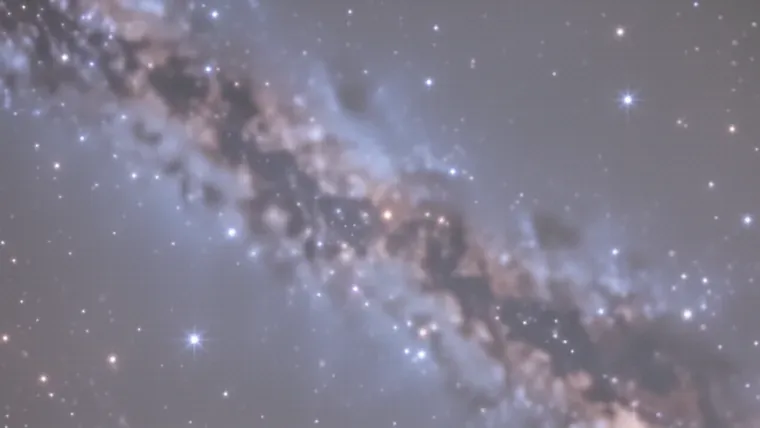
The stars of the Big Dipper do not share a single color. While the pattern appears as a cohesive white shape to the naked eye, the individual stars vary from yellowish-white to blue-white because their surface temperatures and spectral classes differ significantly. Dubhe (α UMa) and Merak (β UMa) appear distinctly yellowish due to their classification as K-type giants, whereas Alkaid (η UMa) shows a cooler, whiter hue compared to the hotter stars in the bowl.
Spectral Diversity in the Asterism
The colors reflect temperature. Most observers see white. Although the human eye struggles to resolve fine chromatic details at low light levels, professional photometry reveals a range of spectral types across these seven points. Dubhe maintains a magnitude of 1.8 and shows a yellowish tint because its effective temperature is lower than the stars in the handle.
The stars differ. They are not identical. While the Big Dipper looks like a uniform tool, the physical reality involves diverse stellar evolution stages that dictate their perceived color. Merak has an apparent magnitude of 2.4. It appears white-yellow to sensitive observers because it is a subgiant star.
Mizar (ζ UMa) is complex. It is a double star. Because Mizar is actually composed of four individual components, its total light output results in a complex composite color that can shift depending on the specific component being resolved by a telescope. Alcor (80 UMa) sits nearby. It has a magnitude of 4.0. An observer must have high visual acuity to see it after they focus on the brighter Mizar.
The handle stars vary. They appear whiter. Alkaid (η UMa) is a blue-white star because its spectral type indicates a much higher surface temperature than the “pointer” stars in the bowl. It has a magnitude of 1.9.
The Moving Group and Stellar Motion
The stars move. They are not fixed. While the Big Dipper appears stable during a human lifetime, the five inner stars form a moving cluster that travels through space at high velocities. This group includes Merak, Phecda, Megrez, Aliot, and Mizar. Dubhe and Alkaid remain outside this group.
They drift apart. The shape changes. Because Dubhe and Alkaid move in different directions than the central five stars, the ladle will lose its recognizable form over long timescales. Astronomers calculate that the pattern will transform significantly within 50,000 years. The bowl will likely open wider as the stars migrate.
The geometry shifts. It is not permanent. After approximately 100,000 years pass, the current configuration of the Big Dipper will cease to exist because the divergent velocities of the individual stars will have pulled them into a new arrangement. Dubhe and Benetnash will move in an opposite direction to the rest of the cluster.
The distances vary. They are not equal.
- Dubhe (α UMa): 124 light-years
- Merak (β UMa): 79 light-years
- Phecda (γ UMa): 84 light-years
- Megrez (δ UMa): 81 light-years
- Aliot (ε UMa): 81 light-years
- Mitsar (ζ UMa): 78 light-years
- Alkaid (η UMa): 101 light-years
Navigation and Celestial Markers
The pointers work. They find Polaris. If you draw a straight line from Merak to Dubhe, the trajectory leads directly to the North Star because these two stars act as a celestial compass for northern observers. This method remains a primary way for beginners to learn the sky.
Other stars follow. They provide paths. While the pointers are most famous, extending a line from Megrez to Phecda can lead an observer toward Regulus in the constellation Leo. This technique works because the geometric relationship between these constellations is fixed in the current epoch.
The handle leads. It points away. Following the curve from Aliot through Mitsar to Alkaid helps locate Arcturus and Spica after you trace the arc of the handle across the sky. This mnemonic helps students remember the path.
Navigation is ancient. It is reliable.
- Find Polaris: Extend the line from Merak to Dubhe five times.
- Find Regulus: Extend the line from Megrez to Phecda.
- Find Castor: Draw a diagonal from Megrez to Merak and extend it five times.
Deep Sky Objects in Ursa Major
Galaxies hide nearby. They are faint. While the stars of the Big Dipper dominate the visual field, deep-space objects like M101 reside within the same celestial region. M101 is a spiral galaxy that appears flat to modern telescopes.
Clusters exist too. They are distant. Because M81 and M82 are separated by an angle of only 38 arcminutes, they appear as a close pair of galaxies located approximately 7 million light-years away from Earth. These objects form the core of a nearby galaxy group.
Nebulae are closer. They are bright. The Owl Nebula (M97) is a planetary nebula that sits much closer to us within our own Milky Way galaxy. It requires moderate magnification to see clearly.
The region is dense. It holds secrets. On 16 February 2018, Professor Chen Hualin captured an image of the Big Dipper from Dakawa, Morogoro, Tanzania, which demonstrated how local atmospheric conditions affect the clarity of these stars. This observation provides a ground-based perspective on the constellation’s brightness.
Cultural Interpretations of the Stars
Names vary widely. They reflect history. While Westerners call it the Big Dipper, many cultures see a completely different object because their folklore relies on different visual metaphors. The Irish often called it the Plow.
The bear is common. It is old. Because the name “Arctos” appears in ancient Greek texts and is linked to hunting traditions, many scholars believe the bear association is one of the oldest celestial interpretations. This connection persists in both Indo-European and Vedic Indian traditions.
Chinese views differ. They see a bucket. The Northern Bucket (Beidou) served as a practical timekeeping tool because its handle aligned closely with the celestial pole during ancient observations. This helped farmers track the seasons.
The stars have many identities.
- Scandinavia: Karlsvagnen (Charles’s Wagon)
- Italy: Grande Carro (Great Wagon)
- Finland: Otava (Salmon Net)
- Vietnam: Sao Banh Lai Luong (Big Rudder Stars)
- Philippines: Tabo (Water Pot)
The patterns change. They are not static. Although the stars themselves are relatively stable on human timescales, the cultural stories attached to them evolve as different civilizations rise and fall. The Big Dipper remains a constant guide for those looking upward.
Frequently asked questions
Why do the stars in the Big Dipper have different colors?
The stars vary from yellowish-white to blue-white because their surface temperatures and spectral classes differ. For example, Dubhe is a K-type giant with a lower temperature, while Alkaid is a hotter blue-white star.
How can I use the Big Dipper to find Polaris?
You can find the North Star by drawing a straight line from Merak to Dubhe. These two 'pointer' stars act as a celestial compass for northern observers.
Will the shape of the Big Dipper ever change?
Yes, the pattern will transform significantly within 50,000 years and cease to exist in its current configuration after approximately 100,000 years due to divergent stellar velocities.
What are some different names for the Big Dipper?
Cultural names include Karlsvagnen (Charles's Wagon) in Scandinavia, Beidou (Northern Bucket) in China, and the Plow in Irish tradition.
More in Stars
How far away is the nearest star in light years?
Discover how far Proxima Centauri is from Earth and learn about its physical characteristics, planetary system, and distance measurements.

Methods used by scientists to calculate the distance to stars
Explore how astronomers use the cosmic distance ladder, from trigonometric parallax to standard candles and redshift, to measure stellar distances.
Reasons for the descent of stars from the heavens and their final
Learn why meteoroids appear as falling stars, how friction creates light during atmospheric entry, and where these cosmic fragments ultimately end up.
Shooting stars: An enigmatic phenomenon explained
Discover the science behind shooting stars, from the mechanics of atmospheric entry to the chemical composition of meteorites and predictable meteor showers.