Which dwarf planet is the biggest in the solar system?
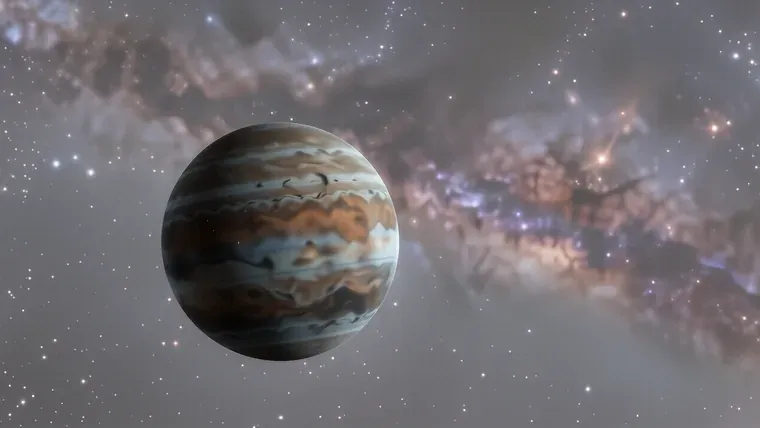
Eris is the largest dwarf planet in the solar system by mass. While Pluto was long considered the primary occupant of its orbital niche, the 2005 discovery of Eris revealed a body that is 27% more massive than Pluto. This finding forced a reevaluation of planetary classification because the presence of such large objects in the Kuiper Belt meant that the traditional definition of a planet was no longer sustainable.
The Definition of a Dwarf Planet
The International Astronomical Union (IAU) established specific criteria for what constitutes a planet in 2006. A celestial body must orbit the Sun. It must possess sufficient mass to assume a nearly round shape through its own gravity. Most importantly, it must have cleared the neighborhood around its orbit. Dwarf planets fail this final requirement. They exist alongside many other objects of similar size and mass within their orbital paths.
The distinction is clear. Planets are solitary masters of their orbits. Dwarf planets share their space with thousands of other bodies. This classification prevents the solar system from containing dozens or hundreds of official planets. It creates a middle ground between the major planets and small asteroids.
The transition from “planet” to “dwarf planet” was not a simple administrative change. It was a response to new data. Before 1992, astronomers primarily recognized a single asteroid belt located between Mars and Jupiter. The discovery of the Kuiper Belt changed everything. This vast region beyond Neptune contains millions of icy objects, so scientists needed a way to categorize these bodies that were too large to be mere rocks but too crowded to be planets.
- Ceres: Located in the main asteroid belt.
- Pluto: Located in the Kuiper Belt.
- Eris: Located in the Kuiper Belt.
- Makemake: Located in the Kuiper Belt.
Eris and the Mass Hierarchy
Eris is a heavy object. It was discovered in 2005, and its mass immediately challenged existing models. The diameter of Eris is approximately 2,326 kilometers. Although it may be slightly smaller in volume than Pluto depending on specific measurements, its density ensures it remains the most massive “non-planet” we have identified.
The orbit of Eris is extreme. It ranges from 38 to 98 astronomical units (au) from the Sun. This distance means that a single revolution takes roughly 560 years. Because it spends so much time in the deep freeze of the outer solar system, its surface is composed mostly of rock and ice.
The discovery of Eris was a catalyst for change. When Mike Brown and his team identified this body, they realized Pluto could not hold its status alone. If Pluto were a planet, then Eris would have to be one as well. This logic applied to many other objects in the Kuiper Belt. The IAU had to act quickly to prevent a taxonomic crisis.
Comparison of Mass and Scale
Pluto remains a significant object in this discussion. Its diameter is 2,376 kilometers, which makes it slightly larger than Eris in width. However, mass is the deciding factor for gravitational dominance. Pluto’s mass is only 0.0021 times that of Earth. Eris exceeds this by a significant margin.
The scale of these bodies is difficult to visualize. Pluto orbits at distances between 4 and 7 billion kilometers from the Sun. Its orbit is highly elongated, so it occasionally moves closer to the Sun than Neptune does. This eccentricity is common among Kuiper Belt objects.
| Body | Diameter (km) | Mass Comparison |
|---|---|---|
| Eris | ~2,326 | 1.27x Pluto |
| Pluto | ~2,376 | Base |
| Makemake | ~1,460 | Smaller than Pluto |
| Ceres | ~940 | Smallest recognized |
The Complex Geology of Pluto
Pluto is more than a frozen rock. It is a geologically active world. In 2015, the New Horizons probe provided the first close-up views of its surface. This mission revealed a landscape that is incredibly diverse. We see mountains, plains, and nitrogen ice glaciers.
The Sputnik Planum is a prominent feature. This large depression spans over 1,000 kilometers. It appears to be an impact crater that has undergone significant erosion, so it now looks like a collection of cells. These cells are tens of kilometers in size. The surface here is composed of nitrogen ice, which flows more easily than water ice.
Pluto’s internal structure is differentiated. It has a dense core made of silicate minerals and water ice. Above this lies a mantle of pure water ice. The outermost layer consists of frozen nitrogen. This layering suggests that Pluto underwent significant heating in its past.
The moon Charon is also vital to Pluto’s system. Charon has a diameter of 1,205 kilometers. It is the largest moon in the solar system when compared to its primary planet. The two bodies are so close that they orbit a common center of mass located outside Pluto. This makes them a binary system.
The surface of Charon differs from Pluto. While Pluto has methane and nitrogen, Charon is covered in water ice. Researchers at the Gemini Observatory have identified ammonia hydrate and water crystals on its surface. These findings suggest the possibility of cryogeysers.
Other Major Kuiper Belt Residents
Makemake is another significant dwarf planet. It was discovered in 2005 with a diameter of about 1,460 kilometers. Its orbit takes 310 years to complete one revolution. The surface is extremely flat and covered in methane ice slabs.
The temperature on Makemake is low. It averages -240 degrees Celsius. Because the surface is so smooth, researcher Mike Brown has noted that one could potentially skate across it. This flatness is a result of the specific way methane ice settles on the surface.
Sedna represents the extreme edge of our known territory. Discovered in 2003, Sedna has an incredibly elongated orbit. It reaches distances that take it far beyond the Kuiper Belt into the scattered disc. Its surface is reddish, which suggests a complex chemistry involving organic compounds or tholins.
The Mystery of the Outer Reach
Sedna’s orbital period is massive. It takes thousands of years to circle the Sun once. This makes it one of the most distant objects studied in detail. Its existence raises questions about the gravitational influence of passing stars or even a distant “Planet Nine.”
Other smaller bodies exist in this region too. 2012 VP113 is an exotic object with a diameter of roughly 450 km. It has a pinkish hue. Scott Shepherd, one of its discoverers, suggests this color comes from water methane ice mixed with stony rock inclusions. Its orbit is one of the longest recorded, lasting about 4,300 years.
The Kuiper Belt is not a static place. It is a graveyard of primordial material. Many of these objects were likely ejected from the inner solar system by the gravity of Jupiter or Neptune. They remain as fossils of the early solar system’s formation.
- Makemake: 310-year orbit.
- Sedna: Extremely elongated orbit.
- 2012 VP113: 4,300-year orbit.
- Eris: 560-year orbit.
The Future of Planetary Science
We have only identified a fraction of the dwarf planets. Estimates suggest there could be up to 10,000 such objects in our solar system. As telescopes like the James Webb Space Telescope (JWST) and upcoming surveys improve, we will find more. Each discovery changes our understanding of mass and orbit.
The definition of a planet might change again. If we find an object larger than Mars in the Kuiper Belt, the IAU will face another dilemma. The boundary between a “large” dwarf planet and a “small” regular planet is mathematically thin. We rely on current definitions to maintain order in our catalogs.
Data from Gaia DR3 continues to refine the positions and motions of these distant bodies. This precision allows us to calculate orbits with much higher accuracy than was possible during the 20th century. We are moving from a period of discovery to a period of detailed characterization.
The study of dwarf planets is the study of our origins. These objects are composed of the same materials that built the gas giants and the terrestrial planets. By looking at the nitrogen ice on Pluto or the methane on Makemake, we see the raw ingredients of the solar system.
The sheer number of potential dwarf planets suggests that the outer solar system is much more crowded than we once thought. We are learning that the “empty” space beyond Neptune is actually a dense field of icy worlds. Each one holds a piece of the history of our sun’s birth.
Frequently asked questions
Which dwarf planet has the most mass?
Eris is the largest dwarf planet in the solar system by mass, being approximately 27% more massive than Pluto.
Is Pluto larger than Eris?
Pluto is slightly larger in diameter at approximately 2,376 km, whereas Eris has a diameter of about 2,326 km, but Eris remains more massive.
What are the criteria for a dwarf planet?
According to the IAU, a dwarf planet must orbit the Sun and be nearly round due to its own gravity, but it fails to clear the neighborhood around its orbit.
Where are Eris and Pluto located?
Both Eris and Pluto are located in the Kuiper Belt, a vast region of icy objects beyond Neptune.
More in Stars
How far away is the nearest star in light years?
Discover how far Proxima Centauri is from Earth and learn about its physical characteristics, planetary system, and distance measurements.

Methods used by scientists to calculate the distance to stars
Explore how astronomers use the cosmic distance ladder, from trigonometric parallax to standard candles and redshift, to measure stellar distances.
Reasons for the descent of stars from the heavens and their final
Learn why meteoroids appear as falling stars, how friction creates light during atmospheric entry, and where these cosmic fragments ultimately end up.
Shooting stars: An enigmatic phenomenon explained
Discover the science behind shooting stars, from the mechanics of atmospheric entry to the chemical composition of meteorites and predictable meteor showers.