What is the star at the end of the Little Bear's tail?
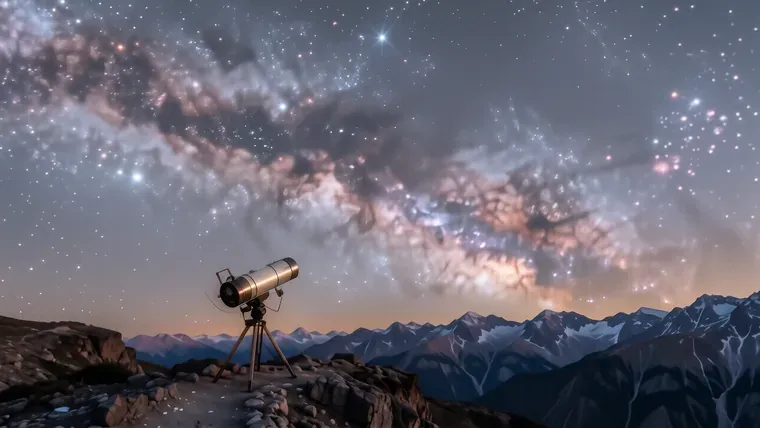
The star at the end of the Little Bear’s tail is Polaris, also known as the North Star. It occupies the position of Alpha Ursae Minoris and sits approximately 447 light-years from Earth. Because it resides almost directly above the north celestial pole, its altitude in degrees above the horizon matches the observer’s latitude.
The Mechanics of Ursa Minor
Ursa Minor is a small constellation. It covers 256 square degrees. Although many people focus on the much larger Big Dipper, the Little Bear remains essential for navigation because it provides a fixed point in a rotating sky. Most observers find it by following the “pointer stars,” Dubhe and Merak, which form the outer edge of the Big Dipper’s bowl.
The constellation is circumpolar. It never sets. While the stars of the Little Dipper appear to rotate counterclockwise around the pole, Polaris stays nearly stationary. This stability allowed Phoenician sailors to navigate open seas for over a millennium after they first recognized this celestial characteristic.
Finding it requires patience. Look north. You can verify your position by measuring the angle of Polaris above the horizon using your hands, because the angular distance between an adult’s thumb and index finger is roughly 16 to 18 degrees. This technique works well on clear nights in high latitudes like Moscow or Saint Petersburg.
The constellation is small. It ranks 56th in size.
The Complex Nature of Polaris
Polaris is not one star. It is a triple star system. While it appears as a single point of light with a magnitude of 1.97, telescopes reveal a much more complex structure. The primary component, Polaris Aa, is a yellow supergiant that is approximately 50 times larger than our Sun.
The system has companions. It is a trinary system. Because the primary star is so massive and bright, the smaller components require significant magnification to see. William Herschel identified the companion star, Polaris B, in 1779 after observing it through his instruments. This star is a main-sequence object that orbits the supergiant at a distance of approximately 2400 astronomical units.
The brightness changes. It is a Cepheid variable. Polaris exhibits periodic fluctuations in its luminosity because it undergoes physical pulsations. Although these variations have become less intense over the last century, the star remains the nearest known Cepheid to Earth.
A third component exists. It is Polaris B. This star completes an orbit around the central supergiant every 30 years.
The Other Stars of the Little Bear
The constellation contains seven main stars. They form a bucket shape. While Polaris sits at the end of the handle, other stars like Cohab and Ferkad act as the “Guardians of the Pole.” These two stars appear to orbit Polaris because of their proximity to the celestial pole.
Cohab is quite bright. It has a magnitude of 2.08. This star is a giant that shines 130 times more brightly than our Sun, although it sits much further away at approximately 131 light-years. It is roughly 2.2 times more massive than the solar standard.
Ferkad is also significant. It is a white giant. Because this star rotates at a velocity of 180 km/s, it possesses a gas disk around its equator that causes brightness fluctuations. This phenomenon classifies Ferkad as a shell star with a magnitude of approximately 3.05.
Yildun is closer to us. It is 172 light-years away. This white dwarf rotates so rapidly that its shape becomes noticeably flattened at the poles.
The remaining stars are fainter. They include Urodelus, Alifa, and Anwar al-Farkadain. Urodelus is a binary system located 347 light-years away, where an orange giant is periodically eclipsed by a white main-sequence star every 39.5 days. This eclipsing behavior makes it an Algol-type variable.
Mythology and Cultural Identity
Different cultures saw different things. The Greeks had many tales. One legend involves the nymph Callisto, who was transformed into a bear by Hera after Zeus fell in love with her. Zeus eventually placed her in the sky as Ursa Major so that she could remain among the stars forever.
The Little Bear has other origins. Some stories name the stars as the Hesperides. These were the daughters of Atlas who guarded the golden apples in the garden of Hera.
Kazakh traditions offer a different view. They believed Polaris was a nail that held the sky in place. While the Big Dipper was seen as a horse, the Little Dipper functioned as the harness attached to the neck of that celestial animal.
Indian mythology describes a monkey. This monkey hangs from its tail. It remains connected to the very pole of the world.
The Greeks also spoke of Zeus’s nurses. Rhea hid Zeus in a cave on Mount Ida to protect him from Cronus. After he grew into a powerful deity, Zeus immortalized his caretakers Melissa and Kinosura by placing them in the heavens as the Big and Little Dippers.
Deep Sky Objects and Meteors
The constellation is mostly stars. It lacks many bright nebulae. However, it does contain the Ursa Minor dwarf galaxy, which was discovered by A. G. Wilson at the Lowell Observatory in 1954. This satellite of the Milky Way consists primarily of ancient stars that formed roughly 14 billion years ago.
Meteors arrive in December. The Ursids occur annually. While the peak usually happens on December 22nd, the rate can vary significantly depending on the position of Comet Tuttle. In 1945, observers recorded a massive outburst of 120 meteors per hour, although the standard ZHR is much lower.
NGC 3172 is nearby. It is a starburst galaxy. Because this galaxy has an exceptionally high rate of star formation, it is often referred to as Polarissima Borealis. It sits about 67 million light-years away from our solar system.
The sky changes over time. Polaris will not stay here. Due to the Earth’s axial precession, the North Star changes every few thousand years. By the year 3200, the star Cepheus Gamma will take over this position. Eventually, Vega will become the pole star around the year 13000.
Vega is very hot. It has a temperature of 9900 K. Although it is a young star at only 170 million years old, its brightness will dominate the northern sky in the distant future.
Frequently asked questions
How far away is Polaris from Earth?
Polaris is located approximately 447 light-years from Earth. It serves as the North Star because it sits almost directly above the north celestial pole.
Is Polaris a single star or a system?
Polaris is actually a trinary star system. The primary component, Polaris Aa, is a yellow supergiant that is about 50 times larger than our Sun.
How can I find the Little Bear in the night sky?
You can find Ursa Minor by following the 'pointer stars' Dubhe and Merak at the outer edge of the Big Dipper's bowl. Look north to locate the constellation.
What are the Ursid meteors?
The Ursids are an annual meteor shower that peaks around December 22nd. They are associated with Comet Tuttle and can occasionally produce significant outbursts.
More in Stars
How far away is the nearest star in light years?
Discover how far Proxima Centauri is from Earth and learn about its physical characteristics, planetary system, and distance measurements.

Methods used by scientists to calculate the distance to stars
Explore how astronomers use the cosmic distance ladder, from trigonometric parallax to standard candles and redshift, to measure stellar distances.
Reasons for the descent of stars from the heavens and their final
Learn why meteoroids appear as falling stars, how friction creates light during atmospheric entry, and where these cosmic fragments ultimately end up.
Shooting stars: An enigmatic phenomenon explained
Discover the science behind shooting stars, from the mechanics of atmospheric entry to the chemical composition of meteorites and predictable meteor showers.