Where can we find the star Arcturus?
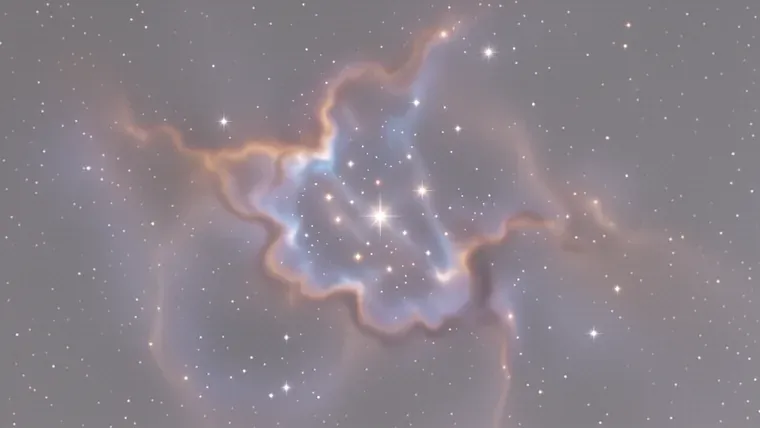
Arcturus is located in the constellation Boötes, which some sources identify within the Volopassus grouping. You can find it by following a wide arc from the handle of the Big Dipper toward the bright star Spica. It appears as a distinct orange-red point in the sky because its spectral class K1.5 III indicates a cooler temperature than our Sun.
Locating Arcturus in the Night Sky
Finding this star is easy. Most observers use the “arc to Arcturus” method because the handle of the Big Dipper provides a clear geometric guide. You trace a curve from the bowl’s end through the stars until you hit the orange glow. It is bright. With an apparent magnitude of -0.05, it ranks as the fourth brightest star in the entire night sky.
The visibility depends on your hemisphere. Northern observers see it most clearly during the spring and summer months while those in the southern hemisphere catch glimpses during winter and spring. It sits 19 degrees north of the celestial equator. This position makes it accessible to anyone north of 71° south latitude.
You can see it early. On clear evenings, Arcturus often appears just after sunset because its high luminosity allows it to pierce the twilight. It is a guide. Many sailors used this specific stellar position for navigation throughout history so that they could maintain their course across open oceans.
The star reaches its peak visibility annually around April 27. You should look toward the southern sky in the Northern Hemisphere to find it at its highest point. It shines alone. Although many stars cluster together, Arcturus remains a solitary and easily identifiable beacon for amateur astronomers.
Physical Properties and Stellar Evolution
Arcturus is an orange giant. Its radius measures approximately 25 to 27 times that of our Sun because the star has expanded as it exhausts its core hydrogen. It is massive. The star possesses a mass roughly 1.1 to 1.5 times greater than the solar mass.
The temperature is lower. While the Sun burns at 5,726 K, Arcturus maintains a surface temperature between 4,000 and 4,300 K. This makes it look orange. Its luminosity exceeds the Sun’s output by at least 100 times because of this massive surface area.
The star is old. It has existed for approximately 7.1 billion years, which means it has already moved past the main sequence phase of its life cycle. It is aging. As it consumes its remaining helium, the outer layers will eventually drift away into space.
A white dwarf remains. After the star sheds its envelope, a dense core will persist as a white dwarf surrounded by a planetary nebula. This process is inevitable. We cannot witness this transformation because the timeline for such stellar death spans millions of years.
The light is intense. On a bolometric scale, Arcturus emits 180 times more total energy than the Sun because it radiates heavily in the infrared spectrum. It is bright. This high energy output explains why it remains visible even when the sky is not perfectly dark.
The Arcturus Stream and Galactic Origins
Arcturus does not move alone. It travels with a group of 52 stars known as the Arcturus Stream because they share similar velocities and chemical compositions. They move fast. The star traverses space at approximately 122 km/s, which is a very high proper motion for a star at this distance.
The origin is extragalactic. Astronomers believe these stars originated in a dwarf galaxy that collided with the Milky Way about 2 billion years ago so that they were incorporated into our galactic halo. They are outsiders. This theory explains why Arcturus has a lower heavy metal content than most stars born within our own disk.
The movement is perpendicular. Its trajectory cuts across the galactic plane at a sharp angle because it retains the momentum from its original home galaxy. It is fast. This specific motion distinguishes it from the local population of stars that follow more circular orbits around the galactic center.
Data from Gaia DR3 supports these kinematic observations. The precision of modern astrometry allows us to map these stellar flows with high accuracy. It is complex. While we continue to refine these models, the connection between the Arcturus Stream and a swallowed dwarf galaxy remains the leading scientific hypothesis.
Historical Observations and Cultural Significance
Ancient people watched it. In Mesopotamia, the star was linked to the god Enlil while Greek mythologies cast it as the “Guardian of the Bear.” It had names. The name Arcturus itself derives from the Greek term for the protector of Ursa Major.
The 1933 Chicago World’s Fair used its light. Organizers attempted to use the star’s radiance to power spotlights on May 27, 1933, at 9:15 p.m. Central Time, because they wanted to link the exposition to the 1893 fair. It was a feat. They directed telescopes toward the star so that photocells could convert the light into an electrical current.
The distance was miscalculated. At the time of the Chicago event, astronomers believed Arcturus was 40 light-years away, although modern measurements place it at approximately 36.7 light-years. The error occurred. Because light takes time to travel, the electricity used in 1933 actually represented light that left the star in 1896.
It appears in literature. Science fiction writers often use the name for fictional worlds, such as David Lindsay’s 1920 novel Journey to Arcturus. It is a trope. Even Douglas Adams mentioned “Arcturan mega camels” in his writing to add a sense of cosmic scale to his humor.
The star was seen in daylight. In 1635, it became the first star outside our solar system observed during the day because astronomers used specialized telescopic equipment. It is rare. Most stars vanish in the sun’s glare, but Arcturus possesses enough magnitude to remain visible for a short period after sunrise.
Proximity and Future Trajectory
The distance is changing. Arcturus is currently about 36.6 light-years from Earth, although its high velocity means this number fluctuates over long timescales. It moves. Because of its current path, the star is actually moving away from us for the immediate future.
A close approach is coming. Scientists predict that Arcturus will swing closer to our Sun in approximately 4,000 years because its orbital path brings it through the local stellar neighborhood. It will pass. We will not be here to see it, but the gravitational influence might affect the outer solar system.
The visibility will end. After roughly one million years, the star will move so far away that it will no longer be visible to the naked eye. It will fade. This departure is a consequence of its high proper motion and its current trajectory out of our local viewing window.
Current measurements are precise. Using JPL Horizons data, we can track the exact coordinates and distance of the star in real time. It is constant. Even as the star moves through the galaxy, its position remains a fixed point for astronomers calculating stellar parallax.
The star stays bright. Despite its age and its movement, Arcturus remains one of the most reliable markers in the northern sky. It is a beacon. You can find it tonight by looking up and following the arc from the Big Dipper.
Frequently asked questions
How do I find Arcturus in the night sky?
You can find Arcturus by following a wide arc from the handle of the Big Dipper toward the bright star Spica. It appears as a distinct orange-red point in the sky.
How bright is the star Arcturus?
Arcturus has an apparent magnitude of -0.05, making it the fourth brightest star in the entire night sky.
What is the distance from Earth to Arcturus?
Modern measurements place the star at a distance of approximately 36.7 light-years from Earth.
Why does Arcturus look orange?
It appears orange because it is a K1.5 III spectral class star with a surface temperature between 4,000 and 4,300 K, which is cooler than our Sun.
More in Stars
How far away is the nearest star in light years?
Discover how far Proxima Centauri is from Earth and learn about its physical characteristics, planetary system, and distance measurements.

Methods used by scientists to calculate the distance to stars
Explore how astronomers use the cosmic distance ladder, from trigonometric parallax to standard candles and redshift, to measure stellar distances.

Reasons for the descent of stars from the heavens and their final
Learn why meteoroids appear as falling stars, how friction creates light during atmospheric entry, and where these cosmic fragments ultimately end up.
Shooting stars: An enigmatic phenomenon explained
Discover the science behind shooting stars, from the mechanics of atmospheric entry to the chemical composition of meteorites and predictable meteor showers.