What are the names of the stars in a constellation?
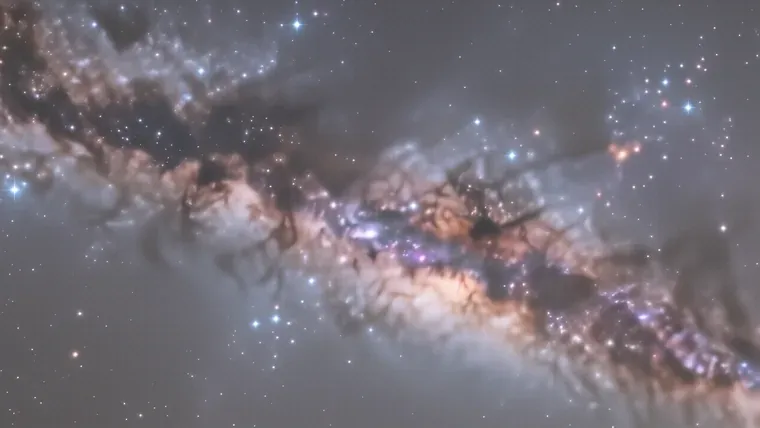
Most stars in a constellation lack individual names. While people often associate constellations with mythological figures like Orion or Cassiopeia, the vast majority of stars within these patterns are identified by technical designations or Greek letter designations based on their brightness. Only approximately 270 celestial bodies currently possess unique proper names because most stars are too dim or too numerous to warrant individual titles.
The Bayer System and Stellar Nomenclature
Astronomy requires order. In 1603, Johann Bayer published Uranometria, which provided the first comprehensive map of the night sky using a systematic naming convention. He assigned Greek letters to stars within a constellation based on their apparent magnitude, so that observers could identify them regardless of their specific mythological associations.
The system is logical. The brightest star receives the designation Alpha ($\alpha$), followed by Beta ($\beta$), Gamma ($\gamma$), and so on, although the sequence sometimes skips letters or uses Latin characters when multiple stars share similar brightness levels. This method allows astronomers to communicate clearly about a star’s relative position in a constellation without needing a unique proper name for every single point of light.
Bayer was a lawyer. He pursued astronomy with professional precision while he documented the positions of stars and created artistic depictions of the heavens. His system remains a standard in modern catalogs because it provides a consistent framework for identifying stellar members within a recognized constellation.
The letters change. As telescopes improved, astronomers began using lowercase Latin letters and even uppercase characters to distinguish between stars that were previously indistinguishable to the naked eye. This expansion ensured that as more stars were discovered within existing constellation boundaries, they could still be integrated into the established Bayer hierarchy.
Arabic Roots and Descriptive Names
Many star names are Arabic. When the Roman Empire declined, Arab scholars preserved and advanced scientific knowledge while they developed their own methods for stellar identification. They avoided Greek mythological names because their religious traditions favored descriptive terms that focused on the physical position of a star within its constellation.
Names are practical. For instance, the star Fomalgaut in South Pisces translates to “mouth of the fish” because it sits at the edge of the celestial pattern. Similarly, Betelgeuse in Orion means “the giant’s armpit,” which describes its location near the shoulder of the hunter.
Redundancy occurs frequently. There are over a dozen stars named Deneb, a term meaning “tail,” because many constellations feature an elongated structure that ends in a bright star. You might see a Deneb in the constellation of the Eagle or the Whale, so you must use the constellation name to avoid confusion.
The names vary. While the Greeks focused on epic tales, the Arabs prioritized utility through their linguistic choices. This legacy persists today in stars like Altair, which means “flying eagle” in the constellation Aquila.
Technical Catalogs and Modern Designations
Proper names are rare. Most modern astronomers prefer catalog numbers because these designations provide specific coordinates and physical data that a name like “Sirius” cannot convey. For example, Sirius is identified as HD 48915 in the Henry Draper catalog, which contains spectroscopic data for 225,000 celestial objects.
Numbers are precise. A catalog entry tells an astronomer exactly where to point a telescope because it links the object to a specific coordinate system. Using a name like “Polaris” is fine for casual observers, but professional research relies on identifiers from the Gaia DR3 mission or the JPL Horizons system.
The IAU regulates everything. The International Astronomical Union holds the sole authority to officially name space objects so that there is no confusion caused by commercial star-naming services. These companies sell certificates that have no standing in the scientific community because they lack any official astronomical validation.
Cataloging continues. As our sensors become more sensitive, we find millions of new objects that require alphanumeric codes rather than poetic titles. This prevents the nomenclature from becoming cluttered with names that hold no scientific value.
The Case of Canis Major
Canis Major is large. It covers 380 square degrees and holds the 43rd position in terms of area among all 88 recognized constellations. This region contains several notable stars, including Sirius, which is the brightest star in the entire night sky with a magnitude of -1.46.
Sirius is complex. It is a binary system consisting of Sirius A, a white main-sequence star, and Sirius B, a white dwarf that orbits every 50 years. The distance between these two components varies from 8.1 to 31.5 astronomical units, although they remain gravitationally bound in a tight dance.
Other stars shine here. Adara ($\epsilon$ CMa) is a binary system located 430 light-years away, while Wesen ($\delta$ CMa) is an F-type supergiant situated 1,800 light-years from Earth. These stars provide distinct targets for observers because they offer varying levels of brightness and spectral characteristics.
The constellation contains more than just stars. It hosts the Messier 41 star cluster, which is approximately 190 to 240 million years old, and the dwarf galaxy located 25,000 light-years away. These objects add depth to the region because they represent different stages of galactic evolution.
- Sirius ($\alpha$ CMa): Magnitude -1.46; distance 8.6 light-years.
- Adara ($\epsilon$ CMa): Magnitude 1.5; B2 spectral class.
- Wesen ($\delta$ CMa): Magnitude 1.83; F-type supergiant.
- Aludra ($\eta$ CMa): Magnitude 2.38; blue supergiant.
Brown Dwarfs and Unsuccessful Stars
Some objects fail. A brown dwarf is a celestial body that lacks the mass to trigger the proton-proton (pp) cycle, so it never becomes a true star. Shiv Kumar determined in 1963 that the minimum mass required for hydrogen fusion is approximately 7% of the Sun’s mass, which equals about 70 Jupiters.
Mass determines fate. If a protostar falls below this threshold, it can only burn deuterium, which is a heavy isotope of hydrogen. This process provides a brief period of luminosity before the object settles into a long, dim existence as a brown dwarf.
Binary systems help. Astronomers often detect these “failed stars” by observing their influence on a companion star because the brown dwarf’s gravity causes the visible star to wobble. This radial velocity method allows us to find objects that emit almost no light of their own.
WD 0032-317 is interesting. Located in the constellation Sculptor, this white dwarf has a companion labeled WD 0032-317B that is actually a massive brown dwarf. The two bodies orbit each other every 2.5 hours, so the intense radiation from the white dwarf keeps one side of the brown dwarf at 9,000 degrees Celsius.
The heat is extreme. While the day side of the brown dwarf is scorching, the night side remains relatively cool at around 2,000 degrees. This temperature gradient creates powerful winds that move heat across the surface, although we cannot observe these weather patterns directly without advanced spectroscopy.
The Legacy of Myth and Science
History shapes our view. The ancient Egyptians used the rising of Sirius to predict the flooding of the Nile, because this event was essential for their agricultural cycles. This connection between a star and human survival gave the star a name that carried immense weight in their culture.
Names can be strange. The star Castor in Gemini has a literal translation of “beaver,” which might seem odd to modern listeners. However, these names reflect the linguistic and cultural layers that have accumulated over thousands of years of observation.
Astronauts create nicknames. During the Apollo missions, NASA astronauts sometimes used personal handles for stars to aid navigation while they were in transit. Virgil Ivan Grissom is credited with naming a star “Navi,” which is simply “Ivan” spelled backward.
Science moves forward. We continue to name objects after discoverers, such as “Popper’s star,” which was identified by Daniel Popper in the 1940s. While these names are not always official, they honor the individuals who expand our understanding of the cosmos.
The sky remains vast. Every night, new data from telescopes like JWST adds more points to our maps, so the task of naming and cataloging will never truly end. We observe the stars not just as points of light, but as a complex, evolving ledger of physical processes.
Frequently asked questions
How are stars in a constellation typically named?
Most stars use the Bayer system, which assigns Greek letters based on brightness, or technical catalog numbers. Only about 270 celestial bodies have unique proper names.
Why do many star names have Arabic roots?
Arab scholars preserved scientific knowledge and used descriptive terms for stellar positions. For example, Betelgeuse in Orion means 'the giant's armpit'.
What is the difference between a star name and a catalog designation?
Proper names like Sirius are used by casual observers, but professional astronomers use precise identifiers like HD 48915 from the Henry Draper catalog for specific coordinates.
What makes an object a brown dwarf instead of a star?
A brown dwarf lacks the mass required to trigger hydrogen fusion. According to research, an object must be at least approximately 7% of the Sun's mass to become a true star.
More in Stars

How far away is the nearest star in light years?
Discover how far Proxima Centauri is from Earth and learn about its physical characteristics, planetary system, and distance measurements.

Methods used by scientists to calculate the distance to stars
Explore how astronomers use the cosmic distance ladder, from trigonometric parallax to standard candles and redshift, to measure stellar distances.

Reasons for the descent of stars from the heavens and their final
Learn why meteoroids appear as falling stars, how friction creates light during atmospheric entry, and where these cosmic fragments ultimately end up.

Shooting stars: An enigmatic phenomenon explained
Discover the science behind shooting stars, from the mechanics of atmospheric entry to the chemical composition of meteorites and predictable meteor showers.