When Orion constellation becomes visible and how to see it
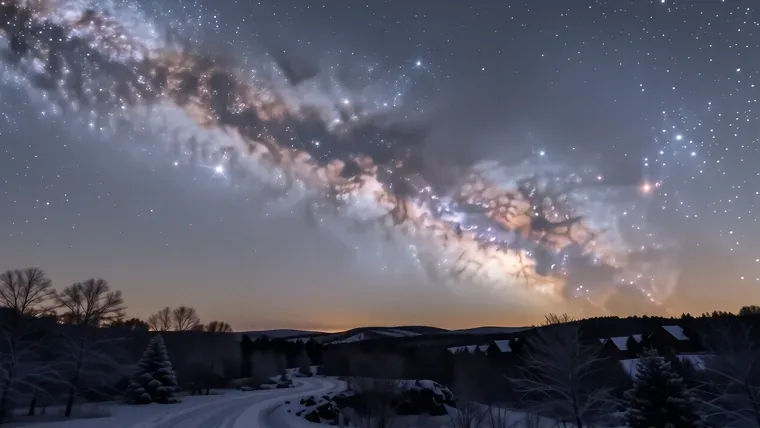
Orion becomes visible in the northern hemisphere middle latitudes starting in mid-August. It reaches its most prominent position between November and January when it climbs high above the horizon. Observers see the constellation throughout the fall, winter, and the first half of spring until mid-April.
Seasonal Visibility and Timing
The hunter appears early. In September, Orion rises in the early morning hours and remains visible for approximately 2 hours before the sun reaches the horizon. You can find it easily. Because the constellation sits on the celestial equator, people in both hemispheres can view its stars throughout the year.
Visibility shifts with months. By October, the constellation rises during the night so that observers can track its movement across the sky until dawn. It is bright. In November, Orion appears in the late evening, which provides the most consistent viewing opportunities for amateur astronomers.
The peak is winter. Between November and January, the constellation reaches its highest point in the sky because the Earth’s tilt allows for optimal viewing angles. It looks clear. During these months, the stars form a distinct silhouette that remains recognizable even under light-polluted skies.
The Orionid Meteor Shower
Dust clouds remain. The Orionids originate from the debris left by comet 1P/Halley, which is a periodic comet that returns to the Sun every 76 years. They move fast. These particles travel at a velocity of approximately 66 km/sec when they enter our atmosphere.
The peak occurs annually. On the night of October 20-21, 2022, the International Meteor Organization forecasted a ZHR of 20 meteors per hour. The Moon was helpful. Since the Moon was only 21% full on that date, its light did not interfere with the observation of the white and colorful streaks.
Look to the southeast. The radiant point appears above and to the left of Betelgeuse after the clock strikes 21:09. It is fast. While most meteors appear white, some exhibit shades of red, blue-green, or orange because of their chemical composition and speed.
Historical records exist. Edward C. Herrick first documented these meteors in October 1839 and 1840. He was precise. Alexander Stuart Herschel later predicted the shower’s recurrence and counted 14 meteors in October 1864 while observing from his station.
The comet is distant. 1P/Halley last encountered the Sun in 1986, so it will not return to the inner solar system until July 2061. It is far. The Earth intersects the comet’s orbital path twice every year, creating both the May Aquarids and the October Orionids.
Principal Stars of the Hunter
Rigel dominates the lower region. This blue supergiant, also known as Beta Orionis, sits approximately 772.51 light-years away from Earth. It is bright. Rigel outshines the Sun by a factor of 85,000 because its massive core undergoes intense nuclear fusion.
Betelgeuse occupies the shoulder. This red supergiant has a visual magnitude of 0.42 and sits roughly 643 light-years away. It is large. Although its exact diameter is difficult to measure due to mass loss, it appears as a variable star with a primary cycle of 6 years.
Bellatrix shines nearby. Known as Gamma Orionis, this blue-white giant is located about 240 light-years from our solar system. It is hot. The star emits 6400 times more sunlight than the Sun because its spectral class is B2 III.
The belt contains three stars. Mintaka, Alnilam, and Alnitak form a nearly straight line that many cultures call the Three Kings. They are aligned. If you extend a line from the southeastern end of the belt, it leads directly to Sirius in Canis Major.
Alnilam is central. This supergiant star has an apparent magnitude of 1.70 and sits about 1,300 light-years away. It is blue. The stellar wind from Alnilam reaches speeds of 2,000 kilometers per second so that it creates a surrounding molecular cloud called NGC 1990.
Mintaka is the westernmost belt star. This binary system consists of a B-type giant and an O-type star that orbit each other every 5.63 days. It is dim. The combined brightness of the system decreases by 0.2 magnitudes when the stars eclipse one another.
Alnitak marks the eastern end. This system includes a blue supergiant with a mass 28 times that of the Sun. It is old. William Herschel discovered the nebula associated with this star on February 1, 1786, while he was mapping the sky.
Saif sits in the southeast. Known as Kappa Orionis, this blue supergiant is located approximately 720 light-years from Earth. It is white. The star’s energy is emitted largely in the invisible spectrum so that it appears fainter than its luminosity suggests.
Nair Al Saif is part of the sword. This spectroscopic double star has a 29-day orbit and sits 1,300 light-years away. It is bright. Because the stellar winds from the two stars collide, the system emits significant amounts of X-ray radiation.
Nebulae and Stellar Nurseries
The Orion Nebula is famous. Also called M42, this emission nebula is located approximately 1,600 light-years away and spans 33 light-years in diameter. It is green. Johannes Cisat first observed this diffuse gas cloud back in 1618.
The Trapezium resides within. These four young stars sit at the center of M42 because they formed from the same collapsing gas cloud. They are hot. Only a small portion of the surrounding dust is visible under a telescope because the young stars heat the local medium.
The Horsehead Nebula is dark. This absorbing nebula, designated B33, sits 0.5° south of Alnitak and relies on a bright background for visibility. It is distinct. The shape appears clearly because the nearby star Zeta Orion irradiates the surrounding hydrogen gas.
The Running Man is blue. This reflection nebula, NGC 1977, consists of both a nebula and a star cluster located near M42. It is cold. While the stars reflect light off cosmic dust, the dark regions between them create a silhouette of a running figure.
The Flame Nebula glows. Officially designated as NGC 2024, this complex formation sits near the sigma star. It is bright. Because the nebula contains both emission and dark dust, it resembles a fierce fire when viewed through an instrument.
Barnard’s Loop is vast. This large semicircle is the result of multiple supernova explosions within the Orion Cloud. It is wide. The loop covers much of the eastern side of the constellation so that it remains a primary target for amateur photographers.
The Witch’s Head is faint. Known as IC 2118, this nebula is illuminated by the light from Rigel. It is gray. Although it is difficult to see without magnification, the nebula provides evidence of supernova remnants in the region.
M78 is reflective. Pierre Messier discovered this group of nebulae in 1780 while he was cataloging bright celestial objects. It is far. The nebulae are located in the northeastern region of the constellation near the star xi Orionis.
Cultural and Mythological Interpretations
Greek myths describe a hunter. Orion was the son of Poseidon who eventually met his end due to the wrath of Artemis. He is legendary. After his death, the goddess placed him among the stars so that his memory would endure forever.
Inca traditions differ. The Chimu kingdom referred to Orion’s belt as Pata, which means “Captured.” It is symbolic. They believed the moon sent two stars to apprehend a thief and hand him over to the vultures.
Armenian history identifies him. The constellation is known as Hayk in honor of a famous patriarch. He was great. According to local belief, the soul of Hayk ascended to the heavens to become this specific pattern of stars.
Ancient Russians used different names. They referred to the constellation as Kruzhiliya or Kolo. It was common. These names reflect how early observers categorized the stars based on their perceived shapes and movements.
Croatia holds ancient evidence. A ceramic vessel from the Vucedolian culture, dating between 3000 and 2600 BC, depicts Orion alongside Cassiopeia. It is old. This discovery proves that humans have tracked these specific stellar patterns for several millennia.
Astronomical Objects and Measurements
GJ 3379 is nearby. This red dwarf is only 17.5 light-years away from our solar system. It is small. Because it was located only 4.3 light-years from the Sun approximately 163,000 years ago, its movement through space is significant.
Lambda Orion is a blue star. This O8III type star sits 1,100 light-years away and has a visual magnitude of 3.39. It is bright. The system contains a companion blue-white dwarf that remains only 4.4 arc seconds from the primary star.
Phi Orion consists of two systems. Phi 1 is located 1,000 light-years away while Phi 2 is much closer at 115 light-years. They are separate. Although they appear near each other, their distances from Earth differ by nearly 900 light-years.
Pi Orion forms a shield. This group of stars includes Pi-3, which is a white dwarf located only 26.32 light-years away. It is bright. Because this star has a mass of 1.2 solar masses, scientists believe it may host Earth-sized planets.
Sigma Orion contains five stars. The primary binary component, Sigma Orion AB, is separated by only 0.25 arc seconds. It is young. It takes approximately 170 years for these two hydrogen-fusing dwarfs to complete a single orbit around each other.
V380 Orion illuminates a nebula. This triple star system sits 1,000 light-years away and lights up the NGC 1999 reflection nebula. It is hot. A large black spot exists in the center of this nebula because narrow jets of gas have cleared the dust.
Eta Orionis is a variable. This Beta Lyrae type system is located 900 light-years from Earth. It is blue. The brightness changes as one star passes in front of the other during their orbital cycle.
The sky remains active. New research into M42 suggests that a black hole with 100 times the mass of the Sun might exist near the Trapezium. It is heavy. If this is confirmed, it would be the closest known black hole to our solar system.
Rigel and Betelgeuse will change. These massive stars are only about 10 million years old. They are young. Because they burn through fuel so quickly, they will eventually end their lives in type 2 supernova explosions.
Betelgeuse may expand. When it finally explodes, the star is predicted to become as large as the Moon for a few weeks. It is bright. This event will be visible during both the day and the night once the core collapses.
Rigel will shrink. After its supernova, the star will diminish until it becomes a tiny dot similar in size to a quarter of the Moon. It is small. The collapse of such a massive object changes the entire appearance of the Orion constellation for observers on Earth.
The stars continue to shine. While these cosmic events occur in the distant future, the current brightness of the hunter provides a consistent guide for astronomers. You can watch the movement of the belt as it tracks across the sky each winter.
Frequently asked questions
What months are best to see the Orion constellation?
Orion reaches its most prominent position between November and January. It is visible from mid-August through mid-April in northern hemisphere middle latitudes.
When does the Orionid meteor shower peak?
The Orionids peak annually on the night of October 20-21. The shower is caused by debris from comet 1P/Halley and can produce a ZHR of approximately 20 meteors per hour.
How far away is the star Rigel?
Rigel, also known as Beta Orionis, is a blue supergiant located approximately 772.51 light-years away from Earth.
What is the Orion Nebula?
The Orion Nebula, or M42, is an emission nebula located about 1,600 light-years away. It spans 33 light-years in diameter and contains the Trapezium star cluster at its center.
More in Constellations
How to see the appearance of Cassiopeia in the night sky
Learn how to identify the W-shaped Cassiopeia constellation and locate deep sky objects like M52, M103, and the Cas A supernova remnant.
The best time to observe the Hydra constellation
Discover the ideal months for viewing the Southern Hydra constellation and learn about its brightest stars, nearby galaxies, and visibility requirements.
Through which constellations does the sun pass?
Discover the thirteen astronomical constellations the Sun traverses along the ecliptic, including Ophiuchus, and how they differ from astrological signs.
What an incredible creature the bear is in nature and sky
Explore the dual nature of bears as biological predators like the polar bear and celestial markers such as the Ursa Major constellation.