When the inaugural satellite embarked on its journey through the
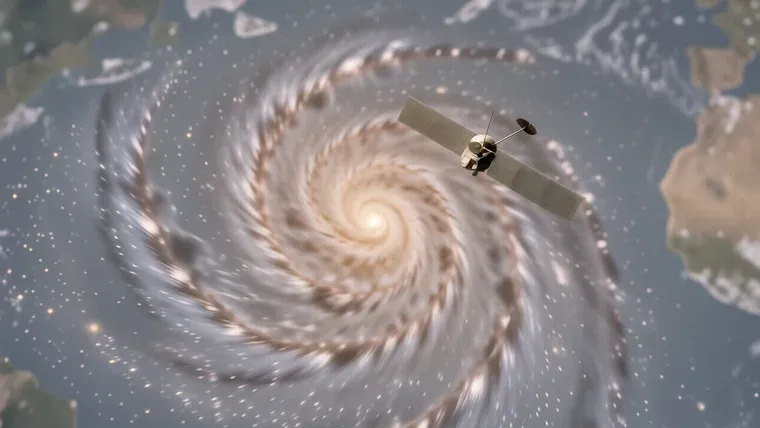
Sputnik-1 launched into Earth orbit on 4 October 1957 at 22:28:34 MSC. The Soviet Union used an R-7 intercontinental ballistic missile to place the 83.6 kg sphere into an elliptical trajectory. This event initiated the space age. It changed everything.
The engineering of PS-1
The satellite carried the codename PS-1. This stood for “the most basic satellite number 1.” Designers built the craft using two aluminum alloy hemispheres that were joined together by 36 bolts to ensure a tight seal. It was small. The diameter measured exactly 0.58 meters. Inside the pressurized enclosure, engineers placed an electrochemical unit and a radio transmitting device so that the machine could broadcast its signal back to ground stations.
The internal systems required careful management. A fan provided air circulation because the heat generated by the electronics needed to be distributed evenly throughout the shell. Temperature and pressure sensors monitored the environment constantly. The satellite also contained a thermoregulation system and an on-board electrical automation unit. It worked well. These components functioned for 92 days before the craft finally succumbed to atmospheric drag.
The mission had specific scientific goals. While the payload lacked complex laboratory instruments, the radio signals allowed researchers to study the ionosphere. They tracked how radio waves propagated through different layers of the atmosphere after the satellite emitted its characteristic “beep” sounds. These pulses lasted approximately 0.3 seconds each. Scientists used these data points to calculate upper atmospheric density.
The development phase was intense. Engineers began work in the autumn of 1956. They conducted rigorous testing on a vibration test bench and within a thermal chamber during the late spring of 1957. The project required absolute precision. Sergei Korolev led the design team through these difficult trials. He worked alongside M. V. Keldysh and M. K. Tikhonravov to refine the propulsion and stabilization systems.
The satellite’s trajectory was elliptical. It reached an apogee of 947 km and a perigee of 228 km. The craft completed 1440 orbits around the planet. It traveled 60 million kilometers in total. This distance represents the vast scale of its journey through the vacuum.
The launch at Tyura-Tam
The launch site was highly secretive. It was known as Tyura-Tam, a testing facility for the USSR Ministry of Defense located east of the Aral Sea in Kazakhstan. This location later became the Baikonur Cosmodrome. The R-7 rocket provided the necessary thrust. It was a powerful machine. The mission almost failed because an engine experienced a delay in entering its required mode during the ascent phase.
The flight sequence was tense. After 295 seconds of powered flight, the satellite separated from the central block. The first signal arrived immediately. Engineers watched the telemetry with intense focus while the spacecraft reached its intended orbital altitude. Success arrived by a narrow margin. One engine shut down just one second before the automatic cancellation timer would have aborted the entire mission.
The launch occurred on a Friday. It was 4 October 1957. The world reacted with shock. While many assumed the Soviet Union lagged behind in technological development, this successful deployment proved their advanced capabilities in rocketry and orbital mechanics. The news spread quickly. TASS released an official announcement regarding the achievement shortly after the signal was confirmed by ground stations.
The rocket technology evolved rapidly. The R-7 served as the foundation for many future heavy-lift vehicles. It used a unique design involving twelve steering engines that also functioned as thrust engines for the second stage. This configuration allowed for greater control during the transition to orbit. The design was efficient. Modern Soyuz rockets still utilize the fundamental architecture established during this era of rapid development.
Scientific and social impact
The “beeps” reached many ears. Radio enthusiasts across the globe attempted to intercept the 0.3-second pulses. Some students in a laboratory in Kettering, England, were among the first to record these signals. The magazine Radio published instructions for listeners so that anyone with a receiver could participate in the observation. It was a global event.
The data provided new insights. Astronomers used the satellite’s deceleration to measure atmospheric friction. This helped them understand how gas density changes at high altitudes. Before this, scientists relied on aerostats, although these balloons could not reach the necessary heights for accurate measurements. The results were concrete. They improved models of the upper atmosphere significantly.
The event triggered a space race. The United States responded with the Explorer 1 mission on 1 February 1958. This satellite weighed only one-tenth of the Soviet craft. Competition intensified. While the political tension of the Cold War drove much of this progress, the scientific benefits to humanity were immense and lasting. We entered a new era.
The cultural landscape shifted too. Filmmakers began exploring space themes in movies like the 1972 documentary Taming of the Fire. In 1999, the film October Sky depicted the fascination that such events inspired in ordinary citizens. People looked up. The sky no longer seemed like a solid barrier but rather a gateway to the unknown.
The legacy remains visible today. A 99-meter tall monument called “To the Conquerors of Space” stands on Prospekt Mira in Moscow. It was unveiled in 1964. Another statue appeared in Korolev in 2007 to celebrate the 50th anniversary of the launch. These structures honor the engineers. They remind us of the moment human technology first left the cradle of Earth.
The descent and disappearance
The satellite did not last forever. It stayed in orbit for exactly 92 days. Eventually, the drag from the upper atmosphere slowed its velocity. Gravity took hold. The craft entered the denser layers of the atmosphere on 4 January 1958, where it burned up due to intense friction. It is gone. No physical fragments of Sputnik-1 remain on the surface of the Earth.
The visual observations were often misunderstood. Many people claimed to see a bright light moving across the night sky without telescopes. These observers were actually watching the second stage of the rocket, known as the central block, because it occupied the same orbital path. The satellite itself was too small. Its 0.58-meter diameter meant it lacked the reflective surface area required for naked-eye visibility.
The mission’s end was quiet. The radio transmitters ceased functioning after two weeks of operation. The orbit decayed gradually while the spacecraft moved through the thinning gases of the thermosphere. This process is natural for low Earth orbit objects. We now track thousands of such objects using sophisticated radar and optical systems to prevent collisions.
The history of spaceflight continues. From the early days of PS-1, we have moved toward permanent human presence in orbit. The International Space Station now hosts international crews. It is much larger than any early satellite. We use these platforms so that we can conduct long-term biological and physical experiments in microgravity.
The journey started with a beep. That simple sound signaled the end of terrestrial isolation. Humans have since landed on the Moon and sent probes to the edges of the solar system. We continue to explore. Each new mission builds upon the trajectory first established by that small aluminum sphere in 1957.
Frequently asked questions
When was the first satellite launched into orbit?
Sputnik-1 was launched into Earth orbit on 4 October 1957 at 22:28:34 MSC using a Soviet R-7 intercontinental ballistic missile.
How long did the Sputnik-1 mission last?
The satellite remained in orbit for exactly 92 days, eventually burning up in the atmosphere on 4 January 1958.
What were the physical dimensions of the PS-1 satellite?
The craft, codenamed PS-1, was a sphere with a diameter of exactly 0.58 meters and a mass of 83.6 kg.
What scientific data did the inaugural satellite provide?
By tracking radio signals, researchers were able to study the ionosphere and calculate upper atmospheric density based on how waves propagated through different layers.
More in Galaxies
A comprehensive list of names for celestial objects
Explore how astronomers use astronymics and cosmonymics to name stars, planets, and galaxies according to strict IAU protocols.
Methods for measuring the distance to celestial bodies
Explore the cosmic distance ladder, from trigonometric parallax and radar ranging to standard candles like Cepheid variables and Type Ia supernovae.
Methods for measuring the mass of celestial bodies
Explore how astronomers use orbital mechanics, binary star systems, and spectral broadening to calculate the mass of planets, stars, and galaxies.
Exploring the science of cosmology and the universe
Discover how modern cosmology explains the Big Bang, dark energy, and the evolution of our universe from its 13.8 billion year history to its eventual fate.