Exploring the science of cosmology and the universe
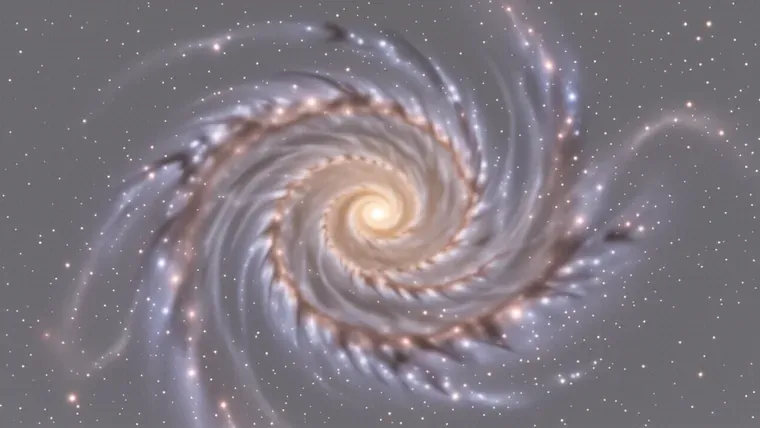
Modern cosmology investigates the origin, evolution, and eventual fate of the entire universe through the lens of physics and astronomy. It relies on the Big Bang theory to explain how space and time emerged from an initial state approximately 13.799 ± 0.021 billion years ago.
From Geocentrism to Heliocentrism
Ancient models varied widely. Aristotle proposed a geocentric system where a spherical Earth sat at the center of concentric celestial spheres. He believed the universe remained unchanging throughout eternity because he assumed the heavens were composed of an immutable fifth element called ether. This view dominated for centuries. Most people accepted it.
The paradigm shifted later. Nicolaus Copernicus challenged this geocentric view in the 16th century by proposing a heliocentric model where planets orbit the Sun. He synthesized various historical works to argue that the solar system is inertial, although his model still relied on circular rather than elliptical orbits. Johannes Kepler eventually refined this idea. He established three laws of planetary motion.
The debate continued for a time. Harlow Shapley argued at Mount Wilson that the Milky Way constituted the entire universe. Heber Curtis disagreed during the Great Debate on April 26, 1920, in Washington, D.C., because he believed spiral nebulae were independent “island universes.” This disagreement lasted until Edwin Hubble provided empirical evidence.
Hubble changed everything. In 1923 and 1924, he identified Cepheid variable stars within the Andromeda Galaxy. This discovery proved that Andromeda existed far beyond our own galaxy’s boundaries. The universe was larger than anyone imagined. It was massive.
The Relativistic Revolution
Einstein transformed physics. He published “Cosmological Considerations of the General Theory of Relativity” in 1917 to address the structure of the cosmos. His equations initially suggested a static universe, so he introduced the cosmological constant $\Lambda$ to prevent gravitational collapse. This was a mathematical fix. It worked temporarily.
Friedman found a different path. In 1922, Alexander Alexandrovich Friedman derived a nonstationary solution from Einstein’s field equations. He proposed that the universe could expand or contract from an initial singularity because he treated space as a dynamic fabric rather than a rigid stage. This changed the math. The universe moved.
Expansion became visible. Edwin Hubble observed cosmological redshift in 1929, which showed that distant galaxies are receding from us. This observation provided the empirical foundation for the Big Bang theory. It confirmed Friedman’s mathematical predictions. Space is growing.
The model evolved further. Georges Lemaître proposed the Big Bang concept in 1927, suggesting the universe began from a “primeval atom.” This idea gained traction after Arno Penzias and Robert Woodrow Wilson detected cosmic microwave background radiation in 1964. They found this isotropic signal while testing a horn antenna at Bell Labs. It was everywhere.
Modern data is precise. The Planck Space Observatory provided highly accurate measurements of the early universe’s properties. Scientists determined the age of the universe to be 13.8 billion years after analyzing temperature fluctuations in the cosmic background. These numbers are solid. We know them.
Composition and Dark Components
The universe is mostly invisible. Data from the Planck 2014 meeting in Ferrara, Italy, revealed a specific composition for our cosmos. It consists of 4.9% atomic matter, 26.6% dark matter, and 68.5% dark energy. This distribution defines our reality. Dark matter is strange.
Dark matter provides gravity. Fritz Zwicky first proposed its existence to explain why galaxy clusters stay together despite their visible mass. It does not interact with electromagnetic radiation, so we cannot see it directly through telescopes. We only detect its pull. Gravity is the key.
Dark energy drives expansion. While dark matter pulls things together, dark energy pushes space apart at an accelerating rate. This acceleration was discovered through observations of distant supernovae in the late 1990s. It dominates the cosmic budget. Space expands faster.
The Lambda-CDM model integrates these parts. It uses the cosmological constant ($\Lambda$) and Cold Dark Matter (CDM) to parameterize the Big Bang. This model aligns with most observational data from the Cosmic Background Explorer (COBE) and the Wilkinson Microwave Anisotropy Probe (WMAP). It is the standard.
Observations confirm this. The Hubble Extreme Deep Field (XDF), finalized in September 2012, shows galaxies dating back 13.2 billion years. Every point in that image represents a distinct galaxy because light takes billions of years to reach our detectors. These are ancient lights.
The Timeline of Cosmic Eras
The universe began in the Planckian era. This is the earliest possible epoch where gravitational interaction became distinct from other fundamental forces. We cannot observe this directly. Physics breaks down here.
Quark particles emerged next. During this period, the strong and weak interactions separated while the universe underwent rapid cooling. This era allowed for the formation of more complex structures. Matter began to clump. It was chaotic.
Recombination changed the light. As the universe cooled, electrons combined with nuclei to form neutral atoms. This transition made the universe transparent to radiation, so the cosmic microwave background could finally travel through space. Light escaped at last.
Stars and galaxies formed later. This ongoing era includes the birth of our solar system and the complex structures we see today. The process continues. We are part of it.
The timeline follows a sequence:
- Planckian era (emergence of gravity)
- Quark epoch (separation of forces)
- Era of recombination (transparency to radiation)
- Galaxy formation (structure building)
The Fate of the Cosmos
Density determines the end. Astronomers have calculated the “critical density” required to stop the expansion of the universe. If the actual density exceeds this value, gravity will eventually halt the expansion. The universe would collapse.
A Big Crunch is possible. If the density is high enough, the universe might undergo a contraction phase that ends in a singularity. This would mirror the Big Bang in reverse. It is a violent end.
Heat death is more likely. Most current evidence suggests the universe will continue expanding indefinitely because dark energy appears to be a constant force. This leads to a state where matter is too dispersed to form stars. The lights go out.
The Big Rip remains a theory. In this scenario, the acceleration of dark energy becomes so intense that it overcomes all gravitational and electromagnetic bonds. It would tear galaxies, stars, and even atoms apart. Space would shred.
Different models exist:
- The Big Crunch (collapse)
- The Heat Death (maximum entropy)
- The Big Rip (structural disintegration)
- The Big Bounce (cyclic expansion/contraction)
On March 17, 2014, astronomers at the Harvard-Smithsonian Center for Astrophysics detected gravitational waves. These ripples in spacetime provide direct evidence for cosmic inflation and the early Big Bang dynamics. They confirm our models. The signal was real.
Frequently asked questions
How old is the universe according to modern science?
The universe is approximately 13.8 billion years old, a figure determined by analyzing temperature fluctuations in the cosmic microwave background.
What is the composition of the universe?
The cosmos consists of 4.9% atomic matter, 26.6% dark matter, and 68.5% dark energy.
What are the different theories regarding the fate of the universe?
Possible outcomes include the Big Crunch (collapse), Heat Death (maximum entropy), the Big Rip (structural disintegration), or a Big Bounce (cyclic expansion).
What is the difference between dark matter and dark energy?
Dark matter provides gravitational pull that helps galaxy clusters stay together, while dark energy acts as a repulsive force that drives the accelerating expansion of space.
More in Galaxies
A comprehensive list of names for celestial objects
Explore how astronomers use astronymics and cosmonymics to name stars, planets, and galaxies according to strict IAU protocols.
Methods for measuring the distance to celestial bodies
Explore the cosmic distance ladder, from trigonometric parallax and radar ranging to standard candles like Cepheid variables and Type Ia supernovae.
Methods for measuring the mass of celestial bodies
Explore how astronomers use orbital mechanics, binary star systems, and spectral broadening to calculate the mass of planets, stars, and galaxies.
The study of celestial objects: Astronomy and its foundations
Explore the scientific discipline of astronomy, from historical observations and telescope types to specialized branches like astrophysics and cosmology.