A comprehensive list of names for celestial objects
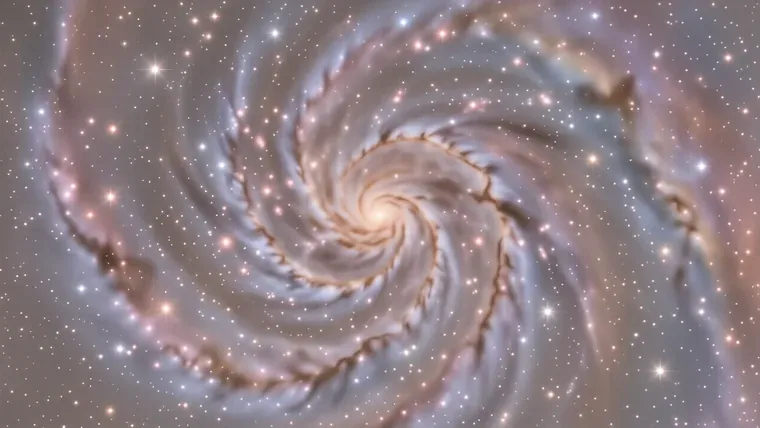
Celestial nomenclature follows strict protocols established by the International Astronomical Union (IAU). While ancient cultures used folk names to navigate or track seasons, modern astronomers rely on alphanumeric designations because the sheer volume of discoveries makes unique mythological names impractical for every single star or asteroid.
The Mechanics of Naming
Naming is a science. It is called astronymics and cosmonymics. Astronomers distinguish between the two because they describe different scales of cosmic structure. Cosmonymics focuses on large-scale zones like galaxies, nebulae, and constellations. These names, such as the Milky Way or the Orion nebula, identify broad regions of space.
Astronymics deals with individual objects. This includes stars, planets, and comets. A single star like Vega has an astronym. We use these specific labels so that researchers can communicate findings without confusion. The IAU manages these official lists to prevent the chaos of unofficial naming.
The process is rigorous. Most new objects receive numerical codes instead of poetic titles. For example, a newly discovered asteroid might be labeled P/2013 R3 after its discovery date and sequence. This method remains efficient because the number of detected objects increases every year as telescope sensitivity improves.
Some exceptions exist. Astronomers often use nicknames for objects that possess distinct visual shapes. The moon Mimas has a massive Herschel crater that is 130 km in diameter and 10 km deep. This feature makes it look like the Death Star from cinema, so people call it that frequently.
The IAU rejects commercial naming. You cannot buy a star name through a certificate. Official names derive from mythology, surnames of scientists, or terrestrial locations because these sources provide a stable, internationally recognized vocabulary.
Exoplanets and Strange Worlds
Planets vary wildly. They are not all rocky or gaseous. Kepler-7 b is an exoplanet with a density 30 times lower than water on Earth. It behaves like a giant sphere of foam because its composition is so light.
Some worlds are violent. HD 189733 b appears blue and calm from a distance. However, it experiences wind speeds of 8,700 kilometers per hour while it rains molten glass across its surface. This environment makes life impossible.
The temperature can be extreme. 55 Cancri e orbits its star so closely that a year lasts only 18 hours. It maintains a surface temperature of 1,648 degrees Celsius. Some models suggest one third of its mass consists of diamond because of the high carbon content and intense pressure.
We find strange ice too. Gliese 436 b sits 33 light-years away from our solar system. It is a hot Neptune with a temperature of 300 degrees Celsius. The water on this planet exists as “Ice X” because the massive gravitational pressure keeps it solid despite the heat.
Rogue planets roam free. PSO J318.5-22 does not orbit a star. It is six times larger than Jupiter and drifts through the void alone. This occurs when a planet is ejected from its original solar system during a period of gravitational instability.
- Kepler-7 b: Low density (30x less than water).
- 55 Cancri e: 18-hour orbital period.
- HD 189733 b: 8,700 km/h winds.
- Gliese 436 b: Presence of “Ice X” ice.
Nebulae and Stellar Nurseries
Nebulae are clouds. They consist of gas and dust. Some nebulae act as stellar nurseries where new stars form from collapsing clumps of hydrogen. Others are the remnants of dead stars that exploded long ago.
The Eagle Nebula is famous. It contains the Pillars of Creation, which are dense columns of gas and dust. These pillars were likely destroyed by a supernova 6,000 years ago. We still see them because they are 7,000 light-years away so the light is just reaching us now.
NGC 2070 is much larger. It is an emission nebula in the Goldfish constellation. This object is part of the Large Magellanic Cloud. It is powered by the wind of the pulsar PSR B0531+21 after a massive supernova event.
Some nebulae look like objects. The Witch’s Head nebula, or IC 2118, sits in the Eridanus constellation. It is 1,000 light-years away. The bright star Rigel provides the radiation that makes the nebula’s shape visible to our telescopes.
The Kiel Nebula contains a feature called the “Finger of God.” This part of the nebula looks like an extended digit. People often use this visual resemblance to argue about theology, although it is simply a result of gas distribution.
A soap bubble drifts in the sky. This symmetrical nebula resides in the Swan constellation. It has a shape that resembles a literal bubble. Scientists use these descriptive names so that observers can quickly identify specific structures during a session.
Galactic Structures and Voids
Galaxies are massive. The Milky Way is 100,000 light-years wide. It is also about 1,000 light-years thick. Our solar system orbits the galactic center every 225 million years while we travel through this vast structure.
Voids exist in the dark. The Void of Volopassus spans 300 million light-years. It was first identified in 1981 by researchers including Robert Kirchner and Paul Schechter. Most galaxies in this region sit only on the periphery.
Some voids are larger. A second void in the southern sky is 3.5 billion light-years wide. This size challenges current Big Bang theories because the universe might not be old enough for such a gap to form through natural drift.
Black holes reside in centers. Sagittarius A* sits at our galaxy’s core. It has a mass of 4.5 million suns. This gravitational sink consumes matter while it creates an environment where new stars can still emerge nearby.
Quasars emit immense light. APM 08279 + 5255 is located 12 billion light-years away. It shines 100 billion times brighter than the Sun. We also detected water surrounding it that is 140 trillion times larger than Earth’s oceans.
The Hercules-North Corona is a massive structure. It stretches across 10 billion light-years. A teenager on Wikipedia actually named this object before scientists officially did so. The community kept the name because it was already widely recognized in the digital space.
Stellar Evolution and Death
Stars die. They leave behind remnants. A white dwarf is a dense core left after a star like our Sun exhausts its fuel. Some white dwarfs, like those in AR Scorpius, behave like pulsars because they emit radioactive beams.
Pulsars spin fast. They emit electromagnetic radiation in regular pulses. This happens when a massive star collapses and leaves a rapidly rotating neutron star behind. The timing of these pulses allows astronomers to study the internal physics of compact objects.
Hypervelocity stars move quickly. US 708 travels at 1,200 kilometers per second. It was once part of a binary system. One star likely cannibalized the other so the resulting explosion propelled US 708 out of the galaxy.
Supernovae scatter dust. This stardust is the building component of planets and life. The SOFIA telescope observed Sagittarius A East to see how this dust survives explosions. It found that dense gas regions act as a shield for about 7-20 percent of the particles.
Asteroids can break apart. The asteroid P/2013 R3 was destroyed by sunlight. The solar wind caused it to rotate until it fractured into ten pieces. Each piece weighed roughly 200,000 tons.
- White Dwarfs: Remnants of low-mass stars.
- Pulsars: Rapidly rotating neutron stars.
- Hypervelocity Stars: Moving at >1,000 km/s.
- Supernovae: Explosions that create heavy elements.
Tools of Observation
Telescopes see the invisible. The Chandra X-ray Observatory detects high-energy radiation. It was launched on July 23, 1999. It studies hot areas like galaxy clusters and the matter surrounding black holes.
The Hubble Space Telescope provides optical views. It has been in orbit since 1990. It captured the famous Pillars of Creation images. These photos help us understand how stars form within dense clouds of gas.
TESS searches for planets. This NASA mission launched on April 18, 2018. It uses the transit method to find small worlds. By watching for dips in brightness, it has confirmed dozens of exoplanets.
The Paranal Observatory is in Chile. It sits at an altitude of 2,635 meters. The Very Large Telescope there can see stars that are four billion times dimmer than what the human eye perceives. This allows for deep-space study from the Atacama Desert.
Xuntian is a new tool. This Chinese space telescope will orbit Earth in 2024. It features a wide field of view. It aims to observe 40% of the sky over a ten-year period to study dark matter.
The distance to objects changes our perspective. Light takes 8.3 minutes to reach us from the Sun. It takes 4.25 years to reach Proxima Centauri. Looking at distant stars means we are looking into the past because the light traveled for ages before hitting our eyes.
Frequently asked questions
What is the difference between astronymics and cosmonymics?
Cosmonymics refers to naming large-scale zones like galaxies and nebulae, while astronymics is used for individual objects such as stars, planets, and comets.
Can you buy an official name for a star?
No, the IAU rejects commercial naming. Official names must derive from stable sources like mythology, scientific surnames, or terrestrial locations.
How are new astronomical objects typically named?
Most new discoveries receive numerical codes rather than poetic titles, such as the asteroid P/2013 R3, to ensure efficient communication among researchers.
What makes an exoplanet like 55 Cancri e unique?
55 Cancri e has an extremely short orbital period of only 18 hours and maintains a surface temperature of 1,648 degrees Celsius.
More in Galaxies
Methods for measuring the distance to celestial bodies
Explore the cosmic distance ladder, from trigonometric parallax and radar ranging to standard candles like Cepheid variables and Type Ia supernovae.
Methods for measuring the mass of celestial bodies
Explore how astronomers use orbital mechanics, binary star systems, and spectral broadening to calculate the mass of planets, stars, and galaxies.
Exploring the science of cosmology and the universe
Discover how modern cosmology explains the Big Bang, dark energy, and the evolution of our universe from its 13.8 billion year history to its eventual fate.
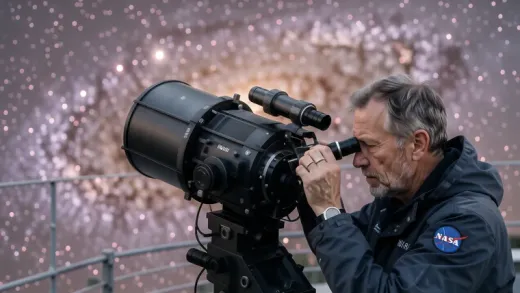
The study of celestial objects: Astronomy and its foundations
Explore the scientific discipline of astronomy, from historical observations and telescope types to specialized branches like astrophysics and cosmology.