The study of celestial objects: Astronomy and its foundations
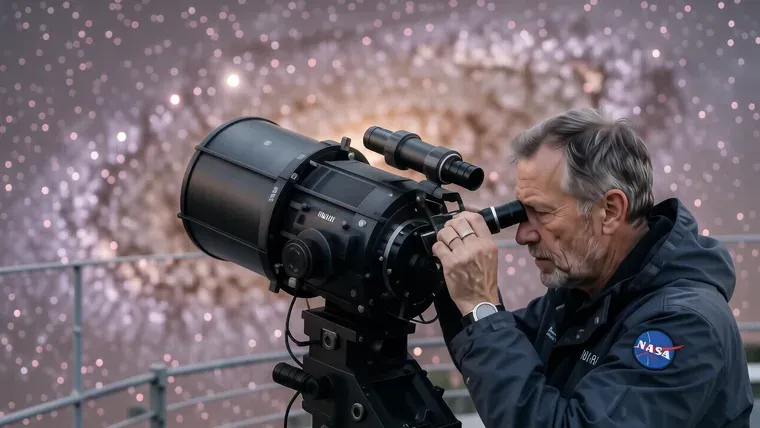
Astronomy involves the application of mathematics, physics, and chemistry to study celestial objects and the fundamental laws governing the universe. It is a rigorous science. While many people associate the field with simple stargazing, modern practitioners use complex data from space-based observatories like the James Webb Space Telescope to investigate everything from black holes to the chemical composition of distant nebulae.
The Foundations of Celestial Observation
The history of sky-watching began with the naked eye. Humans have always looked up. Ancient civilizations used the stars to organize their lives because they needed to track seasonal changes for agriculture and survival. The Nebra sky disk, which dates back to the Bronze Age, functions as one of the oldest known star maps in existence. It is old.
The Greeks advanced these early observations significantly. Hipparchus compiled a catalog containing over 800 stars using only his eyes. He developed a brightness scale that astronomers still use today, although modern magnitudes are measured with much higher precision. Aristarchus of Samos also attempted to calculate the distances between the Earth, Moon, and Sun, even if his specific figures were inaccurate.
Sky-watching changed forever in the 17th century. The telescope arrived. Galileo Galilei used early telescopic technology to observe the lunar surface and the four largest moons of Jupiter, which allowed him to prove that not everything revolved around the Earth. This shift moved astronomy from philosophical speculation into a data-driven discipline.
The field expanded through new technology. Photography arrived in the 1840s. This allowed for more accurate stellar catalogs because researchers could capture light that the human eye might miss during brief observation windows. By the late 19th century, spectroscopy enabled scientists to determine the chemical makeup of stars by analyzing how they divide light into different wavelengths.
Observatories grew in scale. They moved to remote areas. The Royal Greenwich Observatory was established in 1675 so that sailors could have more precise maps for maritime navigation.
Practical Tools for the Amateur Astronomer
Beginners should avoid expensive equipment initially. Start small. A telescope with a diameter of 90 mm to 150 mm provides a sufficient entry point for most new observers. If you live in a city, a 90-120 mm refractor works well because it uses lenses to collect light while remaining portable.
Refractors use lenses. Reflectors use mirrors. A reflector telescope with a diameter of at least 150 mm is better for observing faint nebulae or galaxies because the mirror design avoids chromatic aberration, which creates multicolored halos around bright objects. Many beginners prefer Dobson alt-azimuth mounts. They are simple. You just point the tube and look through the eyepiece without needing complex motorized tracking.
Avoid electronic mounts early on. Batteries die. In cold climates, electronic controllers often fail because the hardened lubricant inside the rotation mechanism freezes during winter nights. It is frustrating. You might find it more productive to join a local astronomy club to try different instruments before committing your own funds.
Digital tools assist navigation. Use apps. Software like Stellarium or SkySafari helps you identify constellations by pointing your smartphone at the sky. A green laser pointer also helps when observing with a group, provided you do not point it at aircraft. It costs between ₽1,000 and ₽4,000 in many regions.
Observing requires patience. The Moon is bright. On 1 and 31 August 2023, observers could witness two supermoons, which occurs when a full moon reaches its perigee and appears larger than usual.
Specialized Branches of the Discipline
Astronomy is not a single subject. It is many. The field splits into observational astronomy, which gathers raw data, and theoretical astronomy, which builds mathematical models to explain that data. These branches overlap constantly because a theory is useless without empirical evidence to support it.
Astrometry measures positions. It is ancient. This sub-discipline focuses on the precise movement of the Sun, Moon, and planets so that scientists can predict eclipses and meteor showers with high accuracy. Exoplanetology is a modern extension of this work. It searches for planets orbiting stars outside our own solar system.
Planetary astronomy studies our neighbors. Mars has red valleys. Researchers in this branch investigate the formation and geological evolution of moons, asteroids, and planets within our own solar system. Astrophysics applies the laws of physics to these bodies. It seeks to understand why stars burn and how galaxies form.
Cosmology looks at the whole. The universe expands. This branch investigates the origin and ultimate fate of the cosmos, often utilizing the Big Bang theory as a primary framework for understanding the early universe. It includes studies of dark matter and dark energy. These forces remain largely mysterious.
Other specialized fields include:
- Astrochemistry: The study of molecular reactions in space.
- Astrobiology: The search for life beyond Earth.
- Stellar astronomy: The study of star life cycles.
- Galactic astronomy: The study of the Milky Way.
Professional Paths and Academic Requirements
Becoming an astronomer requires intense study. It is difficult. In Russia, students must pass high-level entrance exams with scores often exceeding 270 points in core subjects like physics and mechanics. Most programs last between 5 and 5.5 years.
Universities provide the training. Moscow State University is a common choice. Other prominent institutions include MIPT and the Special Astrophysical Observatory, which is located in Arkhyz at an elevation of 2070 meters. This facility houses the six-meter BTA telescope, which is used exclusively by professional scientists for deep-space research.
The work varies widely. Some astronomers are observers. Others are theorists who spend their time using computer modeling to simulate cosmic events like supernova explosions or galactic collisions. Both roles require high levels of analytical thinking and spatial reasoning.
Salaries depend on specialization. They vary. A researcher focusing on star mapping might earn around 18,500 rubles, while someone modeling the universe with specialized software may start at 32,100 rubles. Significant discoveries can sometimes lead to bonuses ranging from 30,000 to 70,000 rubles.
Professional astronomers often perform these duties:
- Maintaining sensitive optical and radio equipment.
- Recording detailed observation logs.
- Mentoring students at the university level.
- Collaborating on international research projects.
Distinguishing Science from Superstition
Astronomy and astrology share roots. They were once one. Ancient peoples believed celestial movements directly influenced human fate, so they used star patterns to guide religious and social decisions. This connection persisted through the Renaissance when monarchs employed astronomers as advisors.
The scientific method changed everything. Astronomy is a science. It relies on verifiable data and mathematical proofs, whereas astrology has become a pseudoscience that lacks empirical evidence. Modern astronomy uses telescopes and spectroscopy to study physics, while astrology relies on symbolic interpretations of zodiac signs.
The zodiac is inaccurate. Earth’s orbit is irregular. Because the Earth’s position has shifted over thousands of years, the Sun’s actual position in the sky no longer aligns with the traditional astrological signs. A person born under Taurus might technically be an Aries based on current celestial coordinates.
Astronomy seeks truth. Astrology seeks meaning. One uses the electromagnetic spectrum to measure X-rays and radio waves, while the other uses star charts to make personal predictions. The distinction is clear in any academic setting.
The sky remains a mystery. We are small. Even with the James Webb Space Telescope launched on 25 December 2021, we have only begun to scratch the surface of what lies in the deep reaches of space.
Frequently asked questions
What is the difference between a refractor and a reflector telescope?
Refractors use lenses to collect light, while reflectors use mirrors. A reflector with a diameter of at least 150 mm is often better for observing faint nebulae because it avoids chromatic aberration.
How long does it take to study astronomy professionally in Russia?
Most academic programs last between 5 and 5.5 years, and students must pass high-level entrance exams with scores often exceeding 270 points.
What are the main branches of astronomy?
The field is divided into observational astronomy, which gathers data, and theoretical astronomy, which builds mathematical models. Other branches include astrometry, exoplanetology, and cosmology.
Is there a difference between astronomy and astrology?
Yes, astronomy is a science based on verifiable data and the scientific method, whereas astrology is a pseudoscience that relies on symbolic interpretations of zodiac signs.
More in Galaxies
A comprehensive list of names for celestial objects
Explore how astronomers use astronymics and cosmonymics to name stars, planets, and galaxies according to strict IAU protocols.
Methods for measuring the distance to celestial bodies
Explore the cosmic distance ladder, from trigonometric parallax and radar ranging to standard candles like Cepheid variables and Type Ia supernovae.
Methods for measuring the mass of celestial bodies
Explore how astronomers use orbital mechanics, binary star systems, and spectral broadening to calculate the mass of planets, stars, and galaxies.
Exploring the science of cosmology and the universe
Discover how modern cosmology explains the Big Bang, dark energy, and the evolution of our universe from its 13.8 billion year history to its eventual fate.