Jupiter astounds us with its immense size, as it is the largest celestial body in the solar system. Positioned in the fifth orbital position, it is the fifth planet farthest from the Sun and is classified as a gas giant. Typically, we do not consider this type of celestial object for potential colonization due to its inhospitable conditions. However, there is speculation that beneath its thick atmospheric layers, lies not only a habitable environment, but also the potential for living organisms.
A colossal and enigmatic planet
Due to its immense size, Jupiter has been recognized by ancient civilizations, who incorporated the planet into various myths and even deified it. Orbiting this celestial body is a family of 79 moons, with the most prominent four having been identified by Galileo Galilei.
Scientists tend to focus their attention on the satellites, such as Europa, due to the possibility of subsurface oceans and potential forms of life. Jupiter and its fellow giants are often overlooked. It is important to bear in mind its intense gravitational pull, as well as its extreme temperatures, which can reach up to +153°C (and even up to 6000°C at greater depths). However, the most significant aspect is that Jupiter lacks a solid surface.
The theory of Carl Sagan

There were individuals who had the belief that Jupiter could potentially support life (specifically within its internal regions). A fascinating notion was put forth by the renowned astronomer and science popularizer, Carl Sagan.. During the 1970s, he postulated the possibility of life existing within the upper layers of Jupiter’s atmosphere. However, this hypothesis did not rely on oxygen, but rather on ammonia..
Carl Sagan went so far as to create models for three distinct categories of potential extraterrestrial life and assigned them unique names:
– Synkers. These are minuscule organisms that reproduce rapidly and have large offspring. This is crucial because there are perilous convection currents. Simply venturing beyond a certain layer can result in being drawn down to a lower level.
– Floaters. Imagine colossal creatures that surpass the size of cities. They have a shape resembling balloons, releasing helium from their “bodies” and retaining hydrogen, enabling them to float within the atmosphere.
– Hunkers. These are veritable predators that derive great satisfaction from devouring floaters.
While scientists may not currently view this theory with great seriousness, Sagan conducted calculations based on chemical and physical data to support his ideas.
The existence of a sea
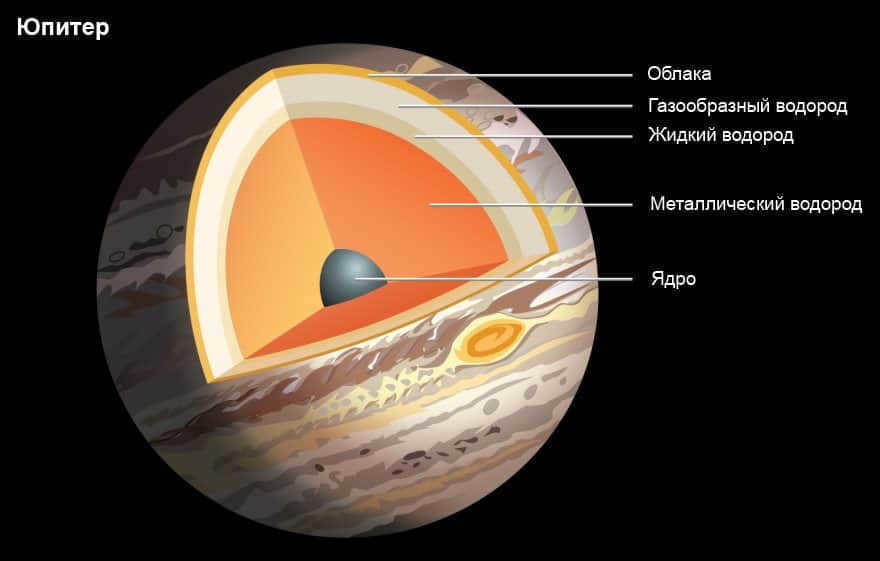
The structure inside Jupiter
There is a theory that suggests that deep within Jupiter, there are conditions similar to those on Earth. However, what is even more fascinating is the presence of a massive ocean, which is about half a million times larger than the oceans on Earth. This ocean is composed of ammonia, methane, water, and salts.
It is believed that this environment could potentially be a suitable place for the origin of life, as the necessary energy sources, such as sunlight, ultraviolet radiation, lightning, and radioactivity, are present. However, proving or disproving this hypothesis is challenging, as it is not possible for anyone to physically descend to such depths or observe it from a distance.
P.S.
Therefore, we are not currently embarking on a quest to locate floating objects or explore the possibility of an ocean on Jupiter. However, all of these concepts serve as a reminder of the incredible era in which we exist and the wealth of knowledge at our disposal. By the way, one of the projects aimed at establishing colonies is contemplating a journey to Jupiter. However, this endeavor would necessitate the creation of an incredibly sturdy structure resembling an airship. Furthermore, the colonists would need to exercise extreme caution in order to survive at a particular altitude, as there is a significant risk of being caught in an air current that would violently separate them from the colony.
Discover “Hitech” on
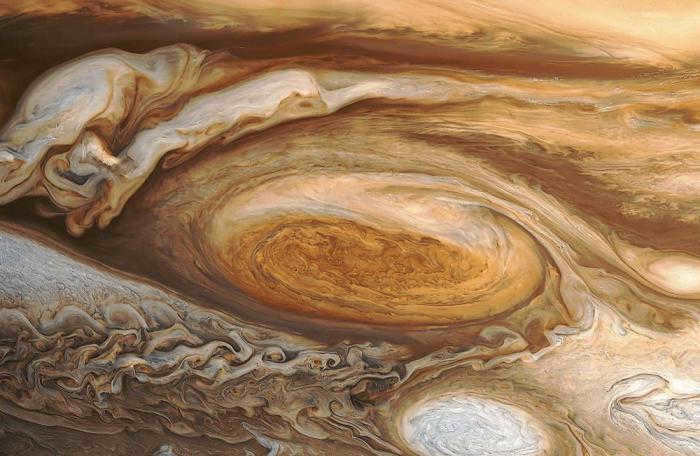
The Great Red Spot appears to be immortal – it is a massive crimson atmospheric cyclone that has persisted since its discovery.
What exactly is the Great Red Spot?
The Great Red Spot (GRS) can be found on Jupiter – it is an atmospheric cyclone believed to be the largest in the entire solar system. The GRS is diminishing in size while also changing color and shifting parallel to the equator.
Scientifically speaking, it is an enormous hurricane measuring up to 40,000 km in length and approximately 12,000-14,000 km in width. The winds within the GRS reach speeds of up to 500 km/h and the temperature is around -160 °C. However, it is not constant; for instance, the central region of the GRS is slightly warmer than its edges.
Astronomers have recently observed that the Great Red Spot (BKP) is gradually decreasing in size. Approximately 100 years ago, the spot was 50% larger and significantly brighter.
What lies within the Great Red Spot?
In recent times, scientists have gained insight into the internal characteristics of the spot. While its diameter spans approximately 16 thousand kilometers, information regarding its depth has been lacking. To determine the depth and structure of the BKP, researchers have utilized microwave and gravity measurements.
The Juno mission, also known as “Juno,” has studied Jupiter using data from the microwave radiometer MWR. This instrument enables scientists to peer into the planet’s clouds from a distance of approximately 550 kilometers.
Based on the findings of the probe, researchers have discovered that the spot is of remarkable size and extends below the cloud level. In other words, it lies beneath the point of water and ammonia condensation.
This indicates that the depth of the spot could be approximately 350-500 km, while the adjacent jets reach depths of 3,000 km.
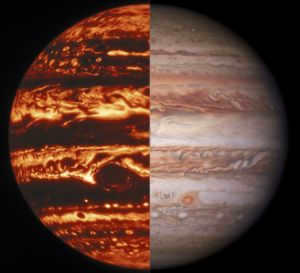
In Jupiter’s atmosphere, astronomers have observed a distinct characteristic – there is a correlation between the direction of the vortices and their temperature. For instance, vortices that move in the same direction as the planet’s rotation exhibit higher temperatures at the upper levels and lower temperatures at the lower levels. Conversely, vortices that move in the opposite direction display higher temperatures at the lower levels and lower temperatures at the upper levels.
What are the remaining questions about the atmosphere and spot of Jupiter?
Currently, astronomers have yet to determine the formation process of Jupiter’s atmospheric belts – these bands of clouds appear as white and red stripes that are separated by opposing wind currents.
According to the Juno mission, these belts are believed to form due to the movement of ammonia gas, which follows a rhythmic up and down flow pattern.
Furthermore, scientists have not been able to definitively explain why the spot has taken on such a vibrant red color. Additionally, the formation of the BKP remains uncertain.
What are the plans for further research on the Great Red Spot and Jupiter?
Currently, the Juno spacecraft is in orbit around Jupiter, where it has been since 2016.
The primary objective of the mission is to investigate Jupiter’s gravitational and magnetic fields, as well as to analyze its atmosphere and gather more data to support the hypothesis of a solid core within the planet.
The Great Red Spot continues to captivate astronomers, as its origins and mechanisms are still not fully comprehended by contemporary science. This atmospheric phenomenon serves as an example of space weather that cannot be replicated under terrestrial conditions, thus making it crucial to await new insights from the Juno mission.
Learn more
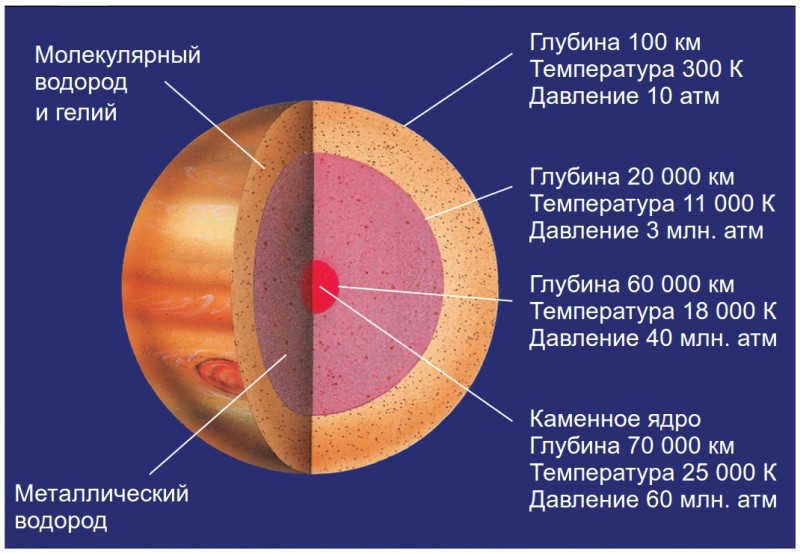
In yet another article within our mini-series discussing the largest celestial body within our solar system, we explore the composition of Jupiter.
The inner structure of Jupiter still remains uncertain to scientists, although the prevailing model suggests that Jupiter can be divided into:
- The atmosphere, which is further divided into an outer layer, a middle layer, and a lower layer.
- A layer consisting of metallic hydrogen
- The solid rocky core.
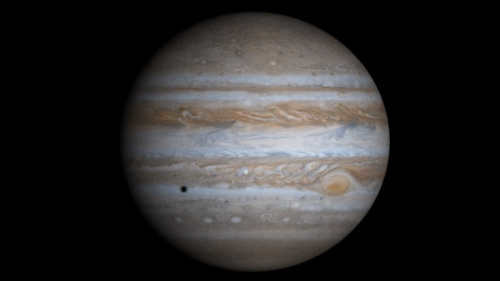
Let’s examine in detail the composition of Jupiter based on the current knowledge of researchers.
The Atmospheric Composition of Jupiter
The Galileo lander has conducted extensive research on Jupiter’s atmosphere, revealing that it primarily consists of hydrogen and helium. The ratio of helium to hydrogen molecules in terms of quantity is approximately 0.157, meaning there are 157 helium molecules for every thousand hydrogen molecules. Additionally, the mass fraction of helium in the atmosphere is roughly 23%. This ratio is comparable to that of the Sun. Through spectral analysis and examination with Galileo, scientists have discovered the presence of water, methane, hydrogen sulfide, and ammonia in the atmosphere. Although trace amounts of other elements have been detected, they are minimal. The presence of water in Jupiter’s upper atmosphere is believed to be a result of collisions with comets, such as the notable Shoemaker-Levy 9, which entered the giant planet’s atmosphere from July 16-22, 1994.
The approximate percentages of the elements in Jupiter’s atmosphere are as follows:
- Hydrogen: around 90%
- Helium: about 10%
- Water
- Ammonia
- Methane
- Hydrogen sulfide
- Argon
- Krypton
- Xenon
- Ethane
- Acetylene
- Trace amounts of other compounds
The composition of Jupiter’s atmosphere is responsible for its distinct banded appearance. The lighter bands, known as zones, have a higher concentration of ammonia, which makes them denser and appear brighter. The darker bands, known as belts, are less dense and allow for a clearer view of the planet’s interior.
The presence of phosphorus, sulfur, and carbon compounds in certain layers of Jupiter’s surface could potentially explain the reddish color, although this is currently just a hypothesis.
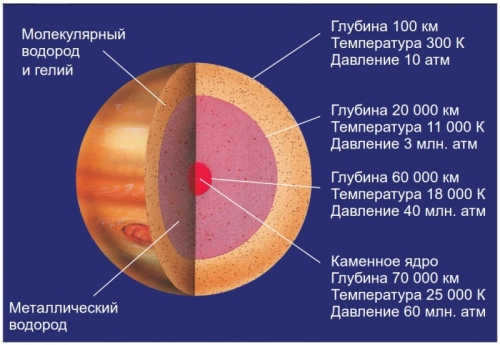
Beneath the layers of clouds lies a zone of liquid hydrogen that can extend up to 25,000 kilometers deep within the planet.
A layer of metallic hydrogen
The gravitational force of the planet’s upper layers causes immense pressure and high temperatures (estimated to be up to 36,000 °C) in its inner regions, resulting in the separation of hydrogen protons and electrons within these regions.
It is highly unlikely that Jupiter possesses a solid nucleus. The core of Jupiter is believed to consist of liquefied rock and various metallic substances. While scientists cannot definitively confirm the presence of a solid core within the planet, gravitational measurements and comparisons to Earth indicate a strong likelihood that there is no solid core. The data suggests that the core resembles a scalding soup of diverse elements.
It appears that our solar system is quite a fascinating realm. Frequently, scientists presume that the surface or composition of a celestial entity would be homogeneous and mundane. However, in actuality, the mundane scenery is substituted by a intricate topography or composition that operates according to its own still unidentified principles. That is the misstep that occurred with Titan and Pluto. And the initial scientific information from the Juno probe indicates that the same error was made with Jupiter – it has turned out to be considerably more intricate and captivating than previously believed.

Basic details
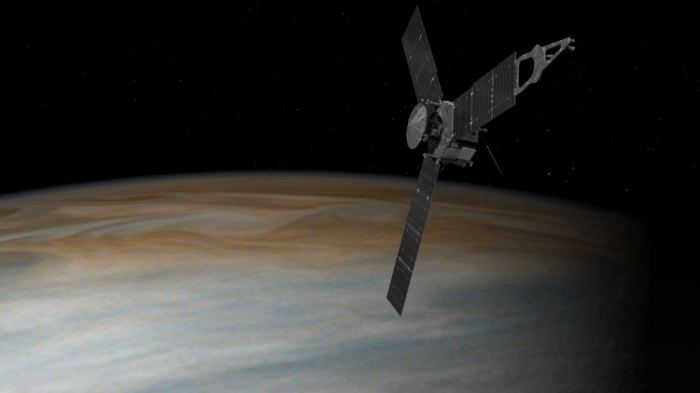
The Juno spacecraft, named after Jupiter’s wife in mythology, has been in operation since July 2016, orbiting the planet in a highly elliptical trajectory near the poles. While most spacecrafts orbiting Jupiter take 53 days to complete one revolution, Juno’s flyby near the planet only lasts about two hours. Originally planned to transition to a 14-day orbit, a malfunction in the propulsion system has left Juno in its current 53-day orbit. Equipped with various scientific instruments, Juno is able to study beneath the planet’s cloud layer, with its visible camera serving as a secondary tool. More information about Juno’s mission, journey, and equipment can be found here. Prior to Juno, the Galileo probe was the only spacecraft to orbit Jupiter, operating from 1995 to 2003. Galileo was intentionally sent into Jupiter’s atmosphere to prevent contamination of its satellites with terrestrial microorganisms and to collect scientific data about the upper atmosphere during its descent.
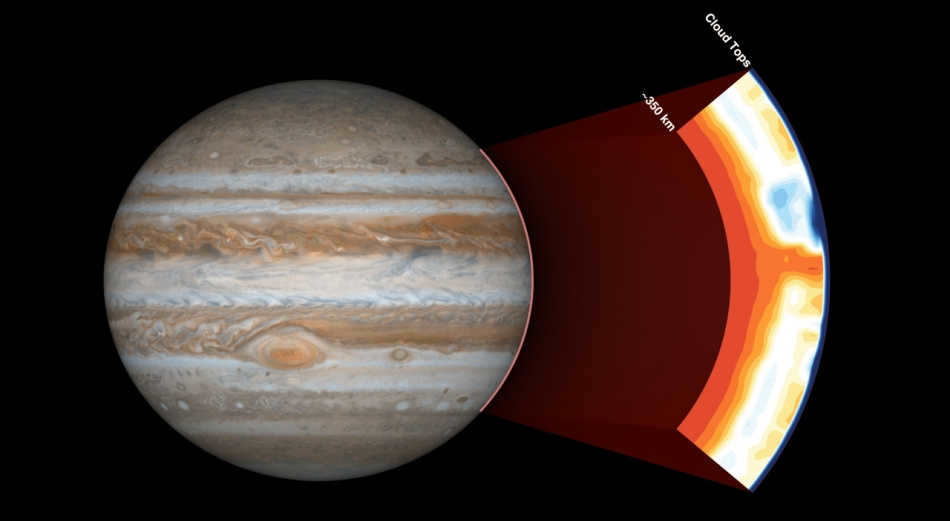
Source: NASA
The MWR microwave radiometer measured the distribution of ammonia beneath Jupiter’s cloud layer. The color scale indicates the amount of ammonia, with red representing higher levels and blue representing lower levels. Surprisingly, the distribution of ammonia was not uniform at shallower depths than expected under the cloud layer. This suggests that Jupiter is not as evenly mixed as scientists had previously thought. The unexpected data transmitted by Galileo during its final descent can now be explained by this uneven distribution. In 2003, scientists initially believed that Galileo had encountered a random warmer patch, but it is now understood that the probe’s descent in different parts of the atmosphere will yield unique results due to the complexity of Jupiter’s structure.
The equatorial ammonia belt, depicted as a crimson stripe at the core, remains unexplained. It could potentially share similarities with Earth’s Hadley cell, in which humid air ascends near the equator, contributing to the circulation of Earth’s atmosphere. Alternatively, this may not be the case, as Jupiter’s solid surface, which restricts circulation, is located much farther from the upper atmosphere compared to Earth. It is plausible that this equatorial ammonia band reaches significant depths, and only future missions that delve even deeper will be able to unveil its secrets.
A soft center
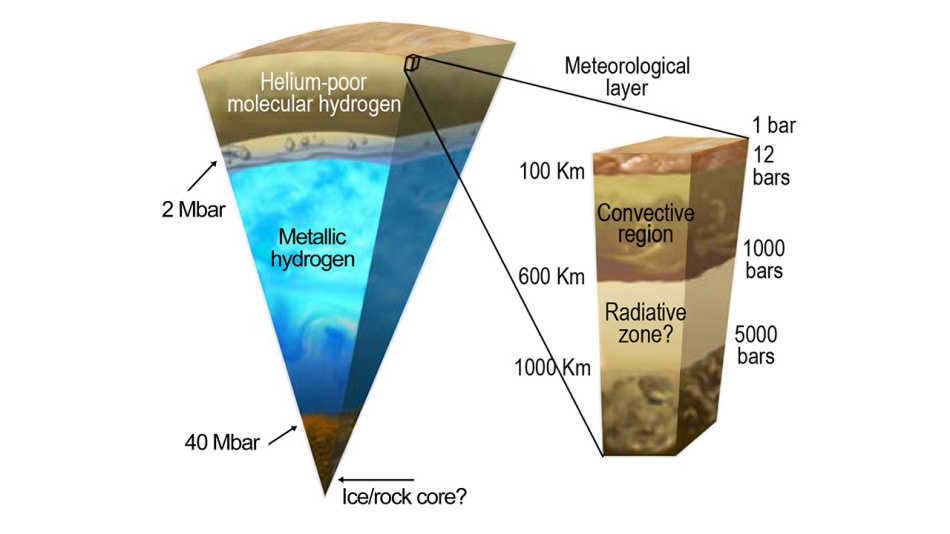
The composition of Jupiter, according to NASA
An expressive magnetic field
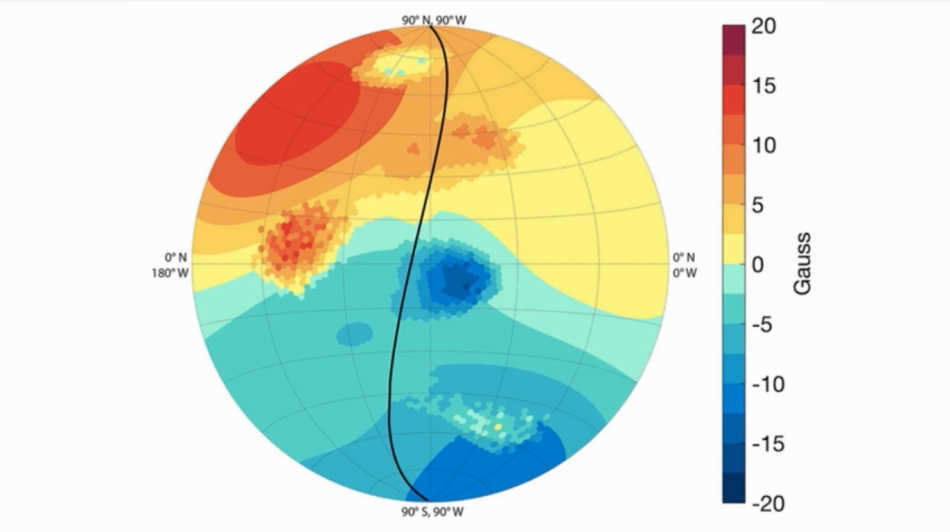
Source: NASA
The magnetic field of Jupiter has also brought some unexpected findings. Firstly, it has been discovered to be more “expressive” than anticipated – areas where it was expected to be strong turned out to be even stronger, and areas where it was expected to be weak turned out to be even weaker. Furthermore, the magnetic field was found to be uneven. In the image above, the black line represents the Juno spacecraft’s path. The five distinct areas of interest indicate where the magnetic field deviated from the background (red – stronger, blue – weaker) in order to produce the data collected along the black path. The irregularity of the magnetic field may suggest that the planetary dynamo is situated above the zone of metallic hydrogen, within the molecular hydrogen zone.
Polar auroras at the south pole, as captured in ultraviolet light by NASA
With its polar orbit, Juno has the unique ability to observe the planet from both above and below, providing the first comprehensive view of the intricate polar aurora systems. In the provided animation, the satellite Io generates the outermost stroke with its long tail. It is interesting to note the presence of colored areas, specifically white, green, and red. The red areas appear to be zones where electrons are ejected, which is quite uncommon as aurora borealis typically involve charged particles entering the atmosphere.
Just as impressive
Even the impressive gadgets, such as the stellar sensor that is utilized to ascertain the precise location of the spacecraft in outer space, have found a way to contribute to scientific research. The advanced solar panels, which were absent in previous vehicles (as they relied on radioisotope generators instead), have been transformed into dust detectors. The inertial systems have successfully recorded the effects of micrometeorite impacts, while the stellar sensor has managed to capture the ejected particles.
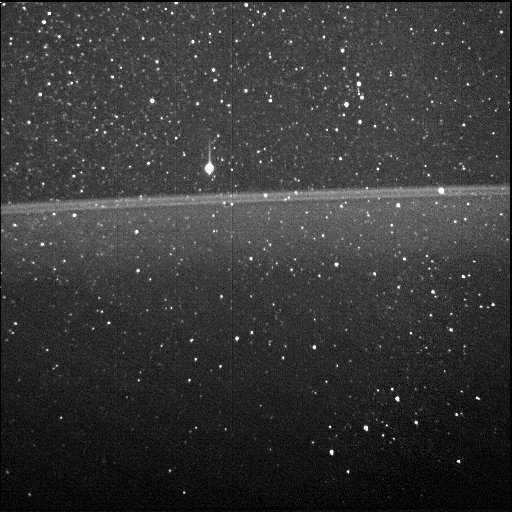
Source: NASA
This image represents a groundbreaking achievement as it captures Jupiter’s rings from an unprecedented perspective. The photograph was taken by the Juno spacecraft, which was positioned approximately 5,000 kilometers away from the planet. Utilizing a star sensor, Juno was able to capture this remarkable image. Notably, the background of the photograph features the upper portion of the Orion constellation, with the prominent star Betelgeuse shining brightly.
Blending the realms of art and science
Several outcomes derived from this endeavor can be classified as a harmonious fusion of both science and art. When Juno ventured into Jupiter’s ionosphere, it utilized the antennas of its Waves instrument to capture and record plasma waves. These captured waveforms were then slowed down by a factor of 60, resulting in an auditory representation of the immense gas giant. The pure, high-frequency tones detected are likely indicative of Juno’s interaction with the ionosphere, although further investigation is required to fully comprehend this phenomenon.
Additionally, one cannot help but be awe-struck by the breathtaking visuals made possible through the employment of JunoCam’s optical camera. As exemplified by this composite image of Jupiter’s south pole, painstakingly stitched together from multiple photographs, the poles are typically only partially illuminated due to the slight tilt of the planet’s rotation axis. However, thanks to the dedicated efforts of passionate enthusiasts in the field of image processing, we are able to witness the pole in all its resplendent glory.
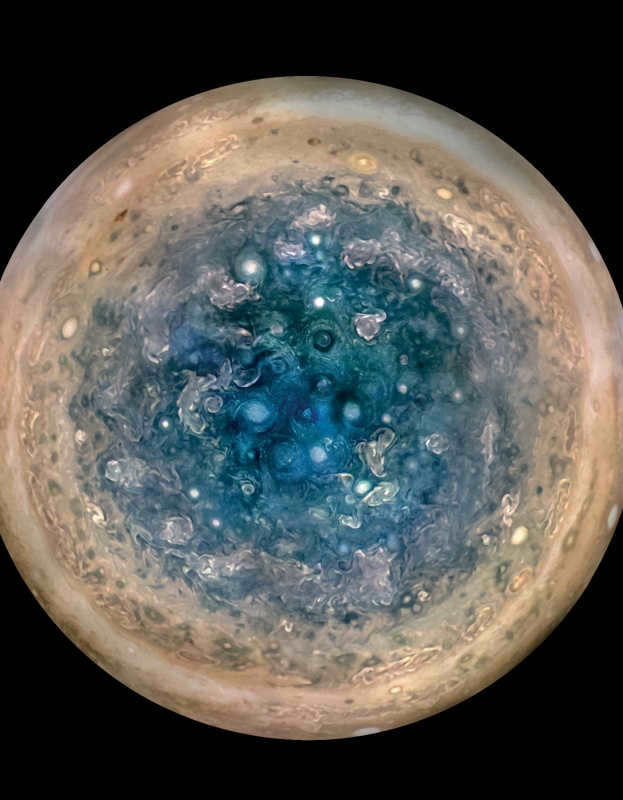
Full-size image, Credits: NASA/JPL-Caltech/SwRI/MSSS/Betsy Asher Hall/Gervasio Robles
From this image, we can easily observe the magnetic pole and rotation axis of Jupiter. Similar to Earth, they are relatively close to each other.
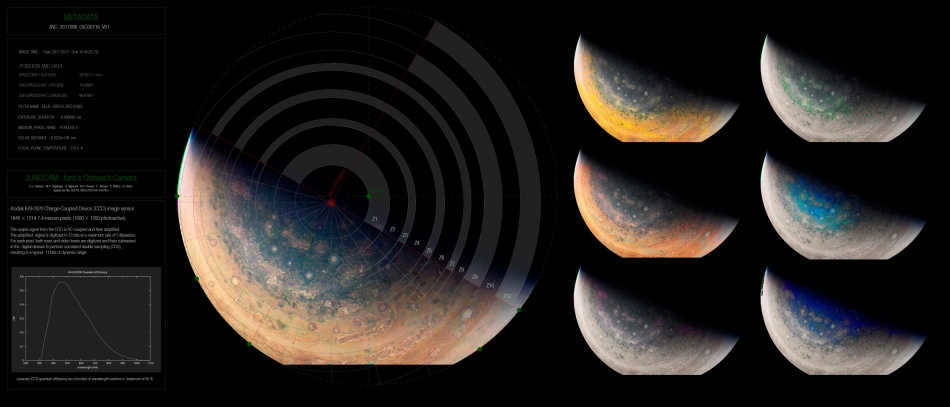
Full-size image, by collage author _CLEAR_, NASA image
In this photograph, we can observe clusters of clouds close to latitude 38. These clusters, which appear bright and small, are created by squall lines that form due to a cold atmospheric front. These squall lines have a width of approximately 25 kilometers. On our planet, squall lines that occur ahead of a cold front generate powerful downward currents and wind shear, which pose a significant threat to aircraft. The white color of these clouds suggests that they are primarily composed of water and/or ammonia ice.
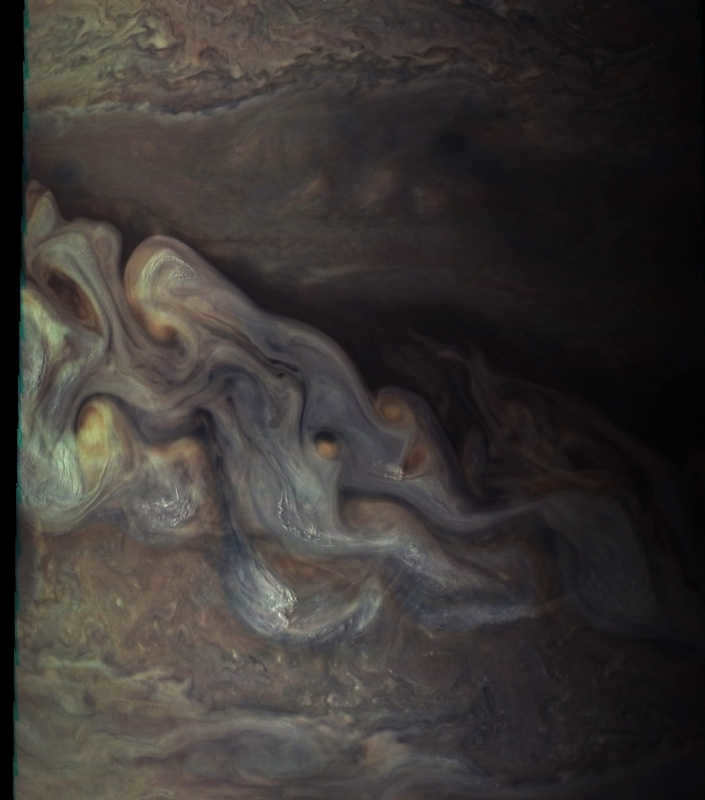
Full size photo, source: NASA
Summary
On July 11, during its upcoming orbit, Juno will have a captivating experience as it flies over the Great Red Spot, a massive cyclone that has been swirling in Jupiter’s atmosphere for over three centuries. Undoubtedly, we can expect to uncover more fascinating scientific discoveries and capture breathtaking images.
It is a common sight to see humans standing on the surface of Earth, and in the future, possibly on Mars. However, when we look at the planet Jupiter, we can’t help but wonder if we would be able to stand or walk on its surface.
What lies beneath Jupiter’s atmosphere?
For a moment, let’s disregard the extreme conditions such as gravity, atmospheric pressure, high temperature, and wind that this enormous planet possesses, and simply descend through the atmosphere. What we will witness is an unparalleled spectacle. If we were to penetrate through the atmosphere, Jupiter would reveal itself as a colossal expanse of liquid hydrogen, resembling the appearance and behavior of mercury. The sole disparity being that hydrogen is merely 60% as dense as water. Consequently, one would need to plunge for tens of thousands of kilometers in order to reach the scorching, molten, rocky core, which conceivably may be solid.
The internal composition of Jupiter remains a mystery to scientists. Unraveling this mystery is a primary objective of the Juno mission, which recently achieved orbit around the gas giant. By employing precise gravitational and electromagnetic measurements, the probe aims to create a comprehensive map of the planet’s hidden secrets concealed beneath its cloudy exterior.
Distinctive Characteristics of the Atmosphere
Jupiter is acknowledged for its warm nature. At the uppermost layer of its atmosphere, temperatures soar to 900 Kelvin (or 630 degrees Celsius). As we descend through the layers, the temperature declines while pressure and wind speeds intensify. At 156 kilometers into the atmosphere, the conditions for electronic devices begin to deteriorate. The Galileo probe, which descended into Jupiter’s atmosphere in 1995, tragically succumbed to these harsh conditions. The temperature at this point reaches 153 degrees Celsius, and the pressure escalates to 23 atm.
Nevertheless, since the Galileo mission took place 20 years ago, it is plausible that Juno, equipped with state-of-the-art technology, will be able to surmount this obstacle. At a depth of 500 kilometers within the atmosphere, visibility considerably diminishes due to the presence of dense ammonia clouds. Wind speeds in this region reach a staggering 100 meters per second.