Steps to achieve your dream of becoming an astronaut
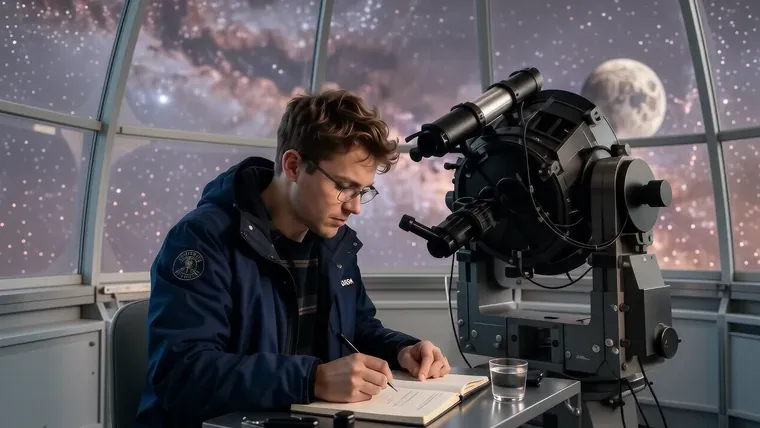
Becoming an astronaut requires meeting specific educational, physical, and psychological benchmarks set by space agencies like NASA or Roscosmos. You must obtain a degree in engineering, biology, physics, or computer science while maintaining peak cardiovascular health to endure the high G-forces experienced during launch and reentry. Most candidates undergo years of rigorous training in specialized facilities, such as the Gagarin Cosmonaut Training Center near Moscow, because the margin for error in orbital environments is zero.
Professional Pathways and Educational Foundations
The path is not singular. You can choose to be a pilot, an engineer, or a physician. Historically, pilots dominated the field. Out of more than 550 people who have traveled to space, 285 were pilots because they possessed the multitasking skills required for manual spacecraft control. They must monitor instrument panels while simultaneously coordinating with ground control and maintaining visual contact with the horizon.
It is a difficult choice. Modern astronautics shifted toward civilian expertise after several decades of military dominance. Engineers and programmers now make up more than 220 members of the space-faring population because the complexity of modern satellites and rockets demands deep technical knowledge. You might study at the Moscow Aviation Institute or Bauman Moscow State Technical University to build this foundation.
Training starts early. Many successful astronauts began in youth clubs like the G. S. Titov Youth Club of Cosmonautics in St. Petersburg, which has operated since 1961. These programs teach astronomy and aviation basics so that students develop a technical mindset before university. You can also find similar resources at the G. M. Grechko Planetarium in Nizhny Novgorod.
The requirements vary by agency. NASA requires a bachelor’s degree in a STEM field and at least 1,000 hours of jet aircraft flight time for certain roles. ESA candidates must be citizens of member states and possess strong research backgrounds, although piloting experience is encouraged rather than strictly mandatory. You must also maintain a blood pressure below 140/90 to pass medical screenings.
Physicality matters deeply. Regular exercise is not optional. While you do not need to be an Olympic athlete, you must possess the endurance to handle extreme physiological stress because the launch sequence can cause cardiac or respiratory strain.
The Selection Process and Psychological Screening
The numbers are slim. In 2012, Roscosmos received applications from only 304 individuals out of a population of 140 million. This creates a statistical reality where your chances might appear low, although the actual selection rate for qualified applicants can reach 20% once they pass initial paperwork. Most candidates fail because they provide incomplete documentation or lack the necessary medical records.
Psychology is the gatekeeper. Specialists use intensive testing to screen out 60-70% of applicants during the early stages. They evaluate memory, reaction time, and spatial awareness because an astronaut must process complex data while under intense pressure. A candidate might be rejected simply for having a low level of higher nervous activity.
It is mentally taxing. You will face isolation and sensory deprivation in specialized environments. One method involves the surdochamber, which is a soundproof room with dim lighting designed to study how humans react when external stimuli vanish. This testing ensures that you can maintain focus even when the silence of space feels overwhelming.
The interview process is intense. You must demonstrate leadership and effective communication skills during personal assessments. Agencies look for psychological stability and adaptability so that you can function effectively within a small, enclosed crew for months at a time.
Success requires patience. Clay Anderson famously applied to NASA 15 separate times before he was finally accepted into their training program. Persistence often outweighs initial rejection.
Physical Conditioning and Stress Testing
Gravity is an enemy. To prepare for the intense forces of reentry, candidates use massive centrifuges. These machines rotate at high speeds to simulate the G-forces that occur when a spacecraft enters the atmosphere, because the human body must learn to maintain consciousness under heavy loads.
Vestibular training is essential. You might use “Hilov’s swing,” which moves parallel to the ground to induce linear acceleration. This process often causes nausea or vomiting during the first few rotations, although it is necessary to adapt your inner ear to movement. A typical test involves 15 rotations to ensure your equilibrium remains stable.
Pressure changes are also tested. In a barocamera, you will experience simulated altitudes of 5,000 meters without an oxygen mask. This reveals how your body handles hypoxia so that doctors can determine your physiological safety margins before you ever leave Earth.
Thermal stability is another hurdle. Candidates enter thermal chambers at 70°C with 10% humidity to simulate the heat of a spacecraft’s interior. You must perform physical tasks in these conditions because the heat generated by your own body can quickly exceed the life support system’s capacity.
Training includes:
- Centrifuge runs for G-force tolerance.
- Barocamera sessions for pressure adaptation.
- Thermal chamber exposure for heat resistance.
- Hydro-laboratory dives for buoyancy training.
Simulating Weightlessness and Spacewalks
Weightlessness is hard to mimic. On Earth, the most effective method is parabolic flight in aircraft like the Tu-104 flying laboratory. During these flights, you experience roughly 40 seconds of microgravity per arc, which allows you to practice fine motor skills such as writing or eating.
Water provides a solution. The hydrolaboratory at the Cosmonaut Training Center uses large pools to simulate long-duration weightlessness. You will wear a mockup of a life support suit while scuba divers assist your movements because the aquatic environment closely replicates the feeling of being suspended in space.
Spacewalks require immense strength. The “Exit” simulator uses the 120-kilogram Orlan spacesuit to replicate the resistance of extravehicular activity. Every time you clench your fingers within the pressurized gloves, it feels like a heavy workout because the internal pressure makes every movement difficult.
Simulators also teach ship control. The TDK-7ST simulator uses full-scale replicas of the Soyuz crew compartment to practice docking and undocking procedures. You will use these devices to master manual control during malfunctions so that you can respond to emergencies without hesitation.
The training is long. It can take up to eight years to move from a candidate to a flight-ready astronaut. Even after completing all tests, there is no guarantee of a mission because crew assignments depend on many shifting variables.
Survival and Field Readiness
Nature provides the final test. Astronauts must undergo survival training in diverse environments like the taiga, deserts, or mountains. You might be dropped from a helicopter into a remote location with minimal supplies so that you can learn to manage resources under extreme stress.
The goal is endurance. You must reach a base camp while managing heat, sandstorms, or freezing temperatures. This training ensures that if a spacecraft lands off-target, the crew can survive until rescue teams arrive.
Psychological resilience is tested here too. Being isolated in a harsh environment forces you to rely on your teammates and maintain mental clarity. It is a test of character as much as it is a test of physical stamina.
Parachuting is another requirement. You will perform jumps from advanced fighter jets to develop spatial orientation. While the primary goal is not to become a master paratrooper, the experience teaches you to make split-second decisions during high-stress events.
The life of an astronaut is demanding. You will face:
- Extreme physical environments.
- Long periods of isolation.
- High-risk emergency scenarios.
- Rigorous daily training schedules.
The journey toward orbit begins with a single decision to study and train. Whether you pursue the path of a pilot or a researcher, the requirements remain uncompromisingly high. You must prepare your body and mind for a reality that most humans will never experience.
Frequently asked questions
What educational qualifications are needed to become an astronaut?
Candidates typically need a degree in STEM fields such as engineering, biology, physics, or computer science. NASA specifically requires a bachelor's degree in a STEM field for certain roles.
How much training is required to be flight-ready?
The training process is extensive and can take up to eight years to move from an initial candidate to a flight-ready astronaut.
What are the physical requirements for astronaut candidates?
Candidates must maintain peak cardiovascular health and have blood pressure below 140/90. They must also endure extreme physiological stress, such as high G-forces and thermal environments of 70°C.
How do agencies test for weightlessness during training?
Astronauts use parabolic flights in aircraft like the Tu-104 to experience roughly 40 seconds of microgravity per arc, and utilize hydrolaboratories with large pools to simulate long-duration weightlessness.
More in Solar System
Calculating the Earth's mass: A complex task
Learn how scientists use the gravitational constant and orbital mechanics to determine Earth's mass of approximately 5.9722 x 10^24 kg.
Discovering the current location of Voyager in interstellar space
Learn about the current location of Voyager 1 and 2, their distances from Earth, and how they navigate the harsh environment of interstellar space.
How many natural satellites does the earth possess?
Explore Earth's celestial companions, from the permanent Moon to transient quasi-satellites and cosmic dust clouds located at Lagrange points.
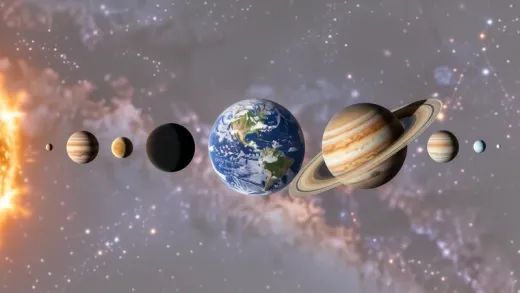
How many planets orbit the sun in second grade lessons
Learn how many planets orbit the sun and discover key facts about the eight official planets, from Mercury to Neptune, for students and educators.