The fall of the Tunguska meteorite: when and where it happened
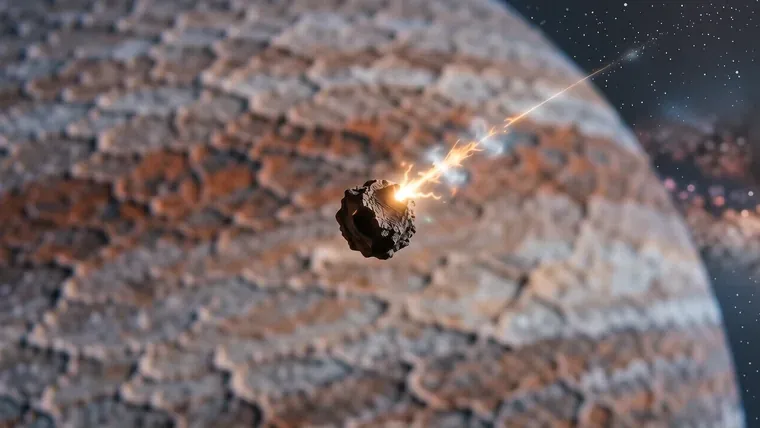
The Tunguska event occurred at approximately 07:14 local time on June 30, 1908, in the basin of the Podkamennaya Tunguska River in Eastern Siberia. A massive bolide exploded at an altitude between 5 and 45 kilometers, releasing energy estimated between 10 and 50 megatons of TNT. This blast flattened roughly 2,150 square kilometers of taiga forest, destroying approximately 80 million trees.
The Morning of the Explosion
The sky burned. Witnesses in the region reported a brilliant fireball that moved from the southeast toward the northwest. Observers noted the color shifted from red to yellow and finally to white because the intense heat altered the visual perception of the descending object. Many people felt an intense, searing heat similar to standing near an open flame.
The sound was deafening. It resembled thunderous reverberations that traveled over 1,000 kilometers from the epicenter. Seismographs across the globe registered the shockwave after the atmospheric pressure spiked from the sudden energy release. In the village of Alyoshkino, Izmail Sizykh reported that the ground shook so violently that he feared the end of the world.
The impact was massive. It flattened trees in a distinct butterfly pattern because the shockwave radiated outward from a central point of detonation. Interestingly, some trees at the very center of the blast remained upright although they were stripped entirely of their bark and branches. This anomaly suggests the explosion happened high above the ground rather than upon direct contact with the soil.
Evenk reindeer herders experienced the terror firsthand. Lyuchetkan, a member of the Korkogir family near the Vanavara factoria, described how the wind hurled timber and flames devoured the dry wood below. He lost 28 reindeer during the chaos while he sought refuge in a nearby swamp to escape the heat.
Scientific Expeditions and Early Findings
Research began late. The first comprehensive analysis appeared in the newspaper Siberia on July 15, 1908, following an earlier, less credible report by Alexander Averyanov. It took nearly two decades for formal scientific investigations to reach the remote Siberian wilderness.
Leonid Kulik led the way. In 1927, the Soviet mineralogist organized an expedition to locate the source of the destruction. He expected to find a large impact crater because the scale of the forest damage suggested a massive physical collision. Instead, he found a “lifeless forest” where the trees had been scorched and flattened by the blast.
The evidence was subtle. While Kulik did not find a primary meteorite mass, his team detected microscopic silicate and magnetite spheres. These tiny particles contain elements that likely originated from outer space so that researchers could confirm a celestial origin.
Kulik eventually changed his perspective on the event. He moved away from the idea of a single body passing through the Earth because the lack of a crater suggested the object had fragmented in mid-air. His findings shifted the focus toward an atmospheric explosion rather than a surface impact.
The forest grew back. The abundance of ash and humus allowed new vegetation to cover the site relatively quickly. This regrowth complicates modern efforts to identify the exact chemical signature of the original bolide.
Competing Hypothesies of Origin
Scientists disagree. For over a century, astronomers have debated whether the object was a stony asteroid or a fragmenting comet. A comet hypothesis suggests that the body was composed largely of ice and dust so that it vaporized completely during its descent.
The antimatter theory is bold. In 1948, Lincoln LaPaz proposed that the explosion resulted from a collision between matter and antimatter. This idea gained some traction because researchers found traces of radioactive isotopes in the wood samples taken from the site. However, most physicists remain skeptical of this explanation due to the extreme rarity of antimatter in our solar system.
Other theories exist.
- The comet hypothesis relies on the total lack of large debris.
- The asteroid theory suggests a stony body disintegrated under immense atmospheric pressure.
- Alexander Kazantsev proposed an artificial origin in 1946, suggesting a crashed alien spacecraft with an atomic engine.
- Some suggest a massive ball lightning event caused the localized destruction.
Nikola Tesla is often mentioned. Some theorists claim he conducted a high-energy wireless transmission experiment from Alaska that went wrong. This theory lacks concrete evidence because Tesla no longer owned the specific laboratory required for such a feat during the summer of 1908.
Modern Modeling and New Perspectives
NASA utilized computers. In 2019, a team used the PAIR mathematical model to simulate the event. They calculated 50 million different scenarios to determine the most likely trajectory and size of the object.
The results were specific. The NASA model estimated the meteorite diameter was between 70 and 80 meters. It also placed the explosion altitude at 12 to 17 kilometers, which aligns with many eyewitness accounts of the fireball’s behavior.
Russian researchers offered a different view in 2020. A team from the Siberian Federal University and the Lebedev Physical Institute suggested a “skimming” event. They hypothesized that a metallic iron asteroid measuring 100 to 200 meters in diameter entered the atmosphere at a shallow angle. This object may have traveled 3,000 kilometers at an altitude of 11 kilometers without ever touching the ground.
The iron theory explains the lack of debris. Because the object was moving at such high velocities, individual atoms likely sublimated into the atmosphere. These atoms would then mix with common iron oxides in the soil so that they become nearly impossible to distinguish from terrestrial minerals.
This “meteor body” concept changes the terminology. If the object never hit the surface, it technically functioned as a bolide rather than a traditional meteorite. This distinction helps resolve why no large crater was ever found by Kulik or his successors.
The Search for a Crater
Some scientists still look. Alexei Kiselev, a professor at Minin University, believes a crater might exist beneath the swampy terrain of the Southern Bog. He argues that the object did not explode in the air but rather upon contact with the ground.
The terrain is difficult. Kiselev and his team, including Andrei Antonov from the Institute of Applied Physics, spent days navigating through drizzly rain and thick forests. They reached the potential site after traveling 5,000 kilometers by plane and 70 kilometers by river.
The bog hides secrets. The epicenter sits on an ancient paleovolcano where the terrain is hilly and uneven. Kiselev noted that a swamp might have engulfed a small crater over the last century because the sediment layers are relatively young and flat.
Finding the site is hard. Even with modern tools, the complex topography of the Tunguska region makes definitive proof difficult to obtain. The team continues to analyze the circular formations in the bog to see if they match the mathematical requirements of an impact site.
Comparative Celestial Events
Tunguska was not alone. In August 1930, a similar event occurred in Brazil near the towns of Esperanza and Atalaya do Norti. A bright red sky preceded thunder-like sounds that were heard 240 kilometers from the epicenter.
The Vitimsky bolide is another example. In September 2002, a luminous object appeared near the village of Mama in the Irkutsk region. Witnesses described an illumination similar to the visible Moon because the object stayed bright in the taiga sky for a significant period.
These events provide data. By comparing the Brazilian and Vitimsky observations with Tunguska, astronomers can better understand the frequency of near-Earth object entries. Each event helps refine our ability to predict future atmospheric explosions.
The scale remains a warning. If the Tunguska object had detonated over a major city like St. Petersburg, the destruction would have been total. The remote location of the Podkamennaya Tunguska River basin saved countless lives during that summer morning.
Monitoring continues. Global networks now track near-Earth objects with much higher precision than was possible in 1908. We watch the skies so that we can develop strategies to prevent a similar encounter from occurring near populated areas.
Frequently asked questions
When and where did the Tunguska event occur?
The event took place at approximately 07:14 local time on June 30, 1908, in the Podkamennaya Tunguska River basin in Eastern Siberia.
How much energy was released during the Tunguska explosion?
The massive bolide explosion released an estimated energy between 10 and 50 megatons of TNT, flattening roughly 2,150 square kilometers of forest.
Why was no impact crater found at the Tunguska site?
The lack of a crater suggests the object fragmented in mid-air at an altitude between 5 and 45 kilometers rather than making direct contact with the ground.
What are the main scientific theories about the Tunguska object?
Scientists debate whether the object was a stony asteroid, a fragmenting comet, or even a metallic iron asteroid that 'skimmed' the atmosphere.
More in Solar System

Calculating the Earth's mass: A complex task
Learn how scientists use the gravitational constant and orbital mechanics to determine Earth's mass of approximately 5.9722 x 10^24 kg.
Discovering the current location of Voyager in interstellar space
Learn about the current location of Voyager 1 and 2, their distances from Earth, and how they navigate the harsh environment of interstellar space.

How many natural satellites does the earth possess?
Explore Earth's celestial companions, from the permanent Moon to transient quasi-satellites and cosmic dust clouds located at Lagrange points.

How many planets orbit the sun in second grade lessons
Learn how many planets orbit the sun and discover key facts about the eight official planets, from Mercury to Neptune, for students and educators.