The Sun's movement relative to Earth
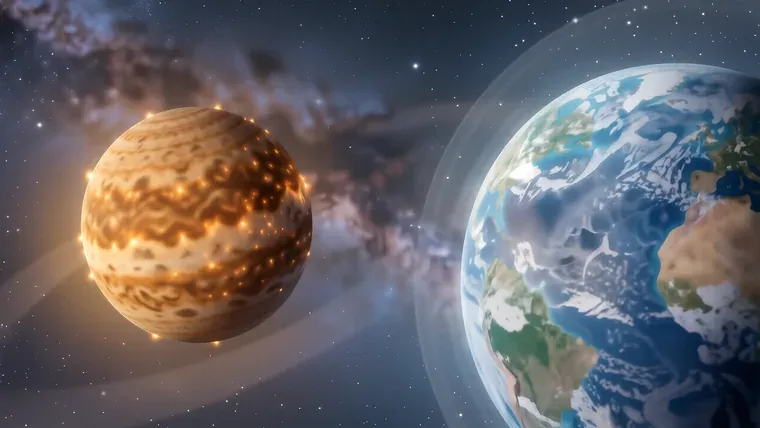
The Sun’s apparent movement across the sky results from two distinct motions: the Earth’s daily rotation on its axis and its annual revolution around the Sun. While the rotation creates the rising and setting of the Sun every 24 hours, the orbital path causes the Sun to shift its position against the background stars throughout the year. This seasonal shift follows the ecliptic, a circular path in the celestial sphere that changes based on the Earth’s axial tilt of approximately 23.44°.
Celestial Coordinates and Solar Position
The Sun does not sit still. It moves. To find its exact location, astronomers use three specific coordinate systems. First, they calculate the ecliptic coordinates, which define the position along the Sun’s yearly path. Because the Earth’s orbit is an ellipse rather than a perfect circle, the Sun’s speed varies depending on whether the planet is at perihelion or aphelion.
Calculations require precision. On 3 January 2010 at 8:53 a.m. local time, an observer in Lamlash, Scotland (55° 31’ 47.43” N, 5° 05’ 59.77” W) could record the Sun’s specific position. The process begins by determining $n$, the number of days since noon GMT on 1 January 2000 (J2000.0). After finding this value, one can compute the mean longitude of the Sun, which is adjusted for light aberrations so that the apparent position matches what an observer actually sees.
The math is complex. Astronomers often convert these ecliptic coordinates into the equatorial system to better relate the Sun to the celestial equator and the poles. This conversion uses the right ascension ($\alpha$) and declination ($\delta$). Because the Earth’s axis is tilted, the declination fluctuates between +23.44° and -23.44° over the course of a year.
The tilt matters. It defines the seasons.
- Calculate ecliptic longitude ($\lambda$).
- Determine the obliquity of the ecliptic ($\epsilon$).
- Convert to right ascension and declination using $\arctan2$ functions.
- Adjust for local observer latitude to find horizontal coordinates.
The Mechanics of Declination and Seasons
The Sun’s declination changes. It follows a wave. This variation determines how much direct sunlight reaches different latitudes during the year. During the northern spring, the Sun moves toward the north until it hits the celestial equator at the March equinox. Although the path looks like a smooth sine wave on a graph, the actual movement is slightly irregular because the Earth’s orbital speed changes as it nears perihelion in early January.
Seasons are not equal. They vary in length. The period from the March equinox to the September equinox lasts about 186 days, while the second half of the year takes only 179 days. This discrepancy occurs because the Earth moves faster when it is closer to the Sun. If the Earth’s orbit were a perfect circle, these intervals would be identical, but the elliptical shape forces this timing shift.
The tilt is constant. Mostly. The angle of 23.44° remains relatively stable over short periods, although it does change very slowly over thousands of years. At the June solstice, the Sun reaches its maximum northern declination. This peak happens because the North Pole is tilted most directly toward the solar rays at that specific point in the orbit.
The pattern repeats. Every year.
The December solstice brings the minimum declination of -23.44°. During this time, the Southern Hemisphere experiences summer while the Northern Hemisphere faces winter. The transition between these extremes creates the predictable cycle of weather and light that sustains life on Earth.
The Equation of Time and the Analemma
A clock is not a sundial. They differ. The difference between “mean solar time” (the steady time kept by clocks) and “apparent solar time” (the actual position of the Sun) is called the equation of time. This discrepancy can reach up to 16 minutes because the Earth’s axial tilt and elliptical orbit combine to create an irregular solar day.
The Sun wobbles. It traces a loop. If you were to photograph the Sun at the exact same time every day for one year, you would see a figure-eight shape known as an analemma. This curve exists because the Sun’s position in the sky varies both north-south and east-west. The vertical part of the loop represents the changing declination, while the horizontal part shows the equation of time.
The loop is distinct. It has two parts. The larger loop typically represents the Sun’s position during one part of the year, while the smaller loop covers the rest. This happens because the Earth’s orbital velocity is not constant throughout its 365.24-day journey. Astronomers use this figure to correct sundials so that they remain useful for telling time.
Observations prove it. It is visible.
- The analemma’s center represents the “mean Sun.”
- The vertical axis tracks declination in degrees.
- The horizontal axis tracks the equation of time in minutes.
- The shape is a direct result of orbital eccentricity and axial tilt.
Atmospheric Refraction and Observation
The atmosphere bends light. It shifts the Sun. When the Sun is near the horizon, it appears higher than its true geometric position because the Earth’s atmosphere acts like a lens. This effect, known as atmospheric refraction, can be quite significant when the Sun is at an altitude of only 10°. In such cases, the Sun might appear at 10.1° instead of its actual calculated elevation.
Observers must adjust. They need math. To find the true azimuth and elevation, one must combine the calculated solar position with a refraction correction. While this error is small when the Sun is overhead, it becomes a critical factor for navigators or anyone using a sextant near dawn or dusk.
The Sun’s width matters. It is 0.5°. Because the Sun is not a single point of light but a disk, the moment of “sunrise” depends on whether you define it by the center of the disk or the top edge. This adds another layer of complexity to precise solar timing.
Precision requires care. Even small errors matter.
The parallax effect also exists. It is tiny. The distance from the Earth’s center to the observer’s surface causes a shift of less than 0.0025°, although this is usually negligible for casual stargazing.
Solar Orientation and Navigation
The Sun guides us. It provides direction. For travelers without a compass, the Sun offers a reliable way to find cardinal directions. In the Northern Hemisphere, if you know the time, you can use a mechanical watch to find south. You simply point the hour hand at the Sun and bisect the angle between that hand and the 12 o’clock mark.
This method works well. Mostly. It is most accurate at higher latitudes because the projection of the Sun’s path becomes more distorted near the equator. If a person is lost in a tropical forest, they should rely on a gnomon rather than a watch. A gnomon is a simple vertical object that casts a shadow on a flat surface.
Shadows move predictably. They shift east to west. The shortest shadow of the day indicates astronomical noon, which is when the Sun crosses the local meridian. By finding this shortest point, an observer can establish a north-south line with high confidence.
Ancient tools remain useful. They are simple.
- A gnomon’s shadow moves opposite to the Sun.
- The shortest shadow marks the solar meridian.
- In the Northern Hemisphere, the shadow points north at noon.
- In the Southern Hemisphere, the shadow points south at noon.
The Solar Environment and Life
The Sun provides energy. It is vital. Beyond simple light, the Sun drives the Earth’s climate by heating the atmosphere unevenly. This uneven heating creates wind and ocean currents, which distribute heat around the planet. Without this constant input of thermal energy, the Earth would quickly freeze into a lifeless rock.
Biological rhythms depend on it. Life follows the light. Many organisms have developed circadian rhythms that synchronize with the day-night cycle. While some animals are nocturnal, most terrestrial life relies on the Sun’s predictable schedule to regulate metabolism and behavior.
The Sun is a star. It is a yellow dwarf. Although it appears yellow through our atmosphere due to scattering, its true color is closer to white. The core temperature reaches approximately 15.7 million degrees Celsius, which facilitates the thermonuclear fusion of hydrogen into helium. This process generates the radiation that eventually reaches our planet.
We must be careful. Sunlight can harm. While Vitamin D production is essential for bone health, excessive UV exposure causes skin damage and increases cancer risks. Protecting oneself with shade or clothing remains a necessity during peak solar hours.
The Sun’s distance is fixed. Mostly. At roughly 149.6 million kilometers, the Earth sits in the habitable zone where liquid water can exist. If the Sun were significantly closer, the planet would become a desert like Venus. As the Sun ages, it will gradually become hotter, so life on Earth will eventually face extreme conditions in several billion years.
Frequently asked questions
Why does the Sun's position change throughout the year?
The Sun's apparent movement is caused by Earth's annual revolution around the Sun and its axial tilt of approximately 23.44°. This tilt causes the Sun to shift along the ecliptic, creating different seasons.
What is the equation of time?
The equation of time is the difference between mean solar time and apparent solar time. Due to Earth's elliptical orbit and axial tilt, this discrepancy can reach up to 16 minutes.
What causes the Sun to trace a figure-eight shape called an analemma?
An analemma is formed because the Sun's position varies both north-south (declination) and east-west (equation of time). This occurs due to the Earth's orbital eccentricity and axial tilt.
How does atmospheric refraction affect solar observation?
The atmosphere acts like a lens, bending light and making the Sun appear higher than its true geometric position. This effect is particularly significant when the Sun is at a low altitude near the horizon.
More in Solar System

Calculating the Earth's mass: A complex task
Learn how scientists use the gravitational constant and orbital mechanics to determine Earth's mass of approximately 5.9722 x 10^24 kg.

Discovering the current location of Voyager in interstellar space
Learn about the current location of Voyager 1 and 2, their distances from Earth, and how they navigate the harsh environment of interstellar space.
How many natural satellites does the earth possess?
Explore Earth's celestial companions, from the permanent Moon to transient quasi-satellites and cosmic dust clouds located at Lagrange points.
How many planets orbit the sun in second grade lessons
Learn how many planets orbit the sun and discover key facts about the eight official planets, from Mercury to Neptune, for students and educators.