What is the biggest solar system? Exploring planetary scales
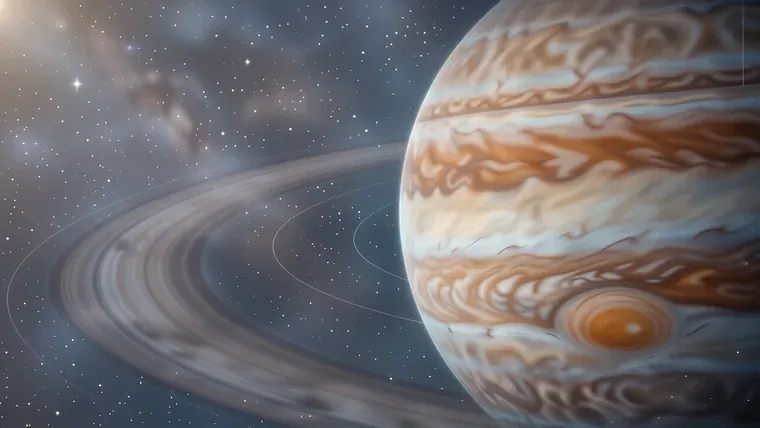
Jupiter is the largest planet in our solar system. It possesses an equatorial diameter of 143,884 kilometers. This mass exceeds Earth’s by a factor of 318 because the gas giant accumulated massive amounts of hydrogen and helium from the protoplanetary nebula during its early formation.
The scale of Jupiter
Jupiter dominates the solar system. It is massive. While Earth measures 12,742 kilometers across, Jupiter spans over 143,000 kilometers because it grew through rapid gas accretion in the early stages of the solar system. This scale makes it difficult to visualize. You could fit 1,319 Earths inside its volume.
The planet rotates rapidly. It spins fast. Jupiter completes one full rotation on its axis in approximately 10 hours so that the centrifugal force helps maintain its slightly oblate shape. This speed is much higher than Earth’s 24-hour cycle. The planet also possesses a powerful magnetic field. This field measures 20,000 times stronger than Earth’s because it generates from the movement of liquid metallic hydrogen within the deep interior.
Jupiter’s mass is immense. It is heavy. The planet contains 2.5 times the mass of all other planets combined, although it remains about 1,047 times lighter than the Sun.
The Great Red Spot is a famous feature. It is a storm. This massive anticyclone was first observed by astronomers in 1665 while its diameter has since shrunk from 40,000 kilometers to roughly 20,000 kilometers. The storm persists. It remains a constant presence in the Jovian atmosphere.
Planetary neighbors and comparisons
Saturn follows Jupiter in size. It is large. Saturn’s equatorial diameter reaches 0.84 times that of Jupiter because it also formed as a gas giant within the outer solar system. Its mass is 0.30 times the mass of Jupiter.
Uranus and Neptune are smaller. They are ice giants. Uranus has a diameter of 50,724 kilometers, while Neptune measures approximately 49,224 kilometers because their compositions differ significantly in terms of heavy elements and ice content. Uranus is colder. It reaches temperatures as low as -224 °C.
Venus is the hottest planet. It is scorching. Surface temperatures on Venus range from 460 to 480 °C because its dense carbon dioxide atmosphere creates a runaway greenhouse effect. The planet reflects light well. It reflects 76% of sunlight through its cloud layers so that it reaches a maximum stellar magnitude of -4.4.
Mercury is the smallest planet. It is tiny. After Pluto was reclassified as a dwarf planet in 2006, Mercury became the smallest official planet in our solar system.
The moons of the giants
Saturn holds many moons. It has 82. As of October 1, 2019, Saturn led the count with 82 known satellites because recent observations have identified several smaller bodies orbiting the ringed planet. Jupiter follows closely. It has 79 moons.
Ganymede is the largest moon. It is huge. This satellite of Jupiter measures 5,262 kilometers in diameter, which makes it larger than the planet Mercury because it possesses a thick icy mantle. Titan is second. It orbits Saturn.
Triton is a notable moon. It is cold. Voyager 2 measured temperatures on Triton at -235 °C because the moon lacks internal heat sources and sits far from the Sun. This temperature is only 38 °C away from absolute zero.
Small moons exist too. They are hard to see. Astronomers find it difficult to measure tiny satellites like Hippocampus, which measures 8 kilometers in diameter, because these objects appear only as point sources through telescopes.
- Ganymede (Jupiter): 5,262 km
- Titan (Saturn): 5,150 km
- Callisto (Jupiter): 4,878 km
- Triton (Neptune): Large relative to other moons
Extreme environments and geology
Mars hosts massive volcanoes. They are tall. Olympus Mons reaches a height of 25 km because the lack of tectonic plate movement on Mars allows volcanic hotspots to remain stationary for billions of years. The base is 550 km wide.
Neptune has high winds. It is windy. Wind speeds near the equator reach near-supersonic levels because the atmosphere moves at velocities exceeding 325 meters per second relative to the planet’s core. These winds are faster than any on Saturn.
The Moon has large craters. They are deep. The South Pole-Aitken basin measures 2,500 kilometers in diameter on the lunar far side because a massive impact occurred during the Moon’s early history. Only its mountainous rim is visible from Earth.
Pluto is a dwarf planet. It is icy. Its surface temperature stays around -233 °C in illuminated regions although shaded areas can be 20 °C warmer.
Comets and small bodies
Comet 2P/Encke is frequent. It moves fast. This comet has an orbital period of only 3.3 years so that it remains one of the most frequently observed periodic comets. It stays near the asteroid belt.
Halley’s Comet is famous. It is bright. Edmund Halley predicted its return in 1705 because he connected several historical sightings into a single orbital path. The Giotto spacecraft imaged its core in 1986.
Lexel’s comet came close. It was near. On July 1, 1770, the comet reached 0.015 astronomical units from Earth because its trajectory brought it within 2.244 million kilometers of our planet. Its coma appeared five times larger than the full Moon.
The Sun is the center. It is a star. The Sun’s diameter is 1,392,000 kilometers, which means it is 109 times larger than Earth because gravity has compressed its massive hydrogen core.
- 2P/Encke: 3.3-year period
- 1P/Halley: Observed 30 times since 239 B.C.
- Lexel’s Comet: Closest encounter in 1770
Searching for new worlds
Scientists look outward. They search far. A team from the California Institute of Technology suggests a ninth planet exists beyond Pluto because they observed gravitational anomalies in the Kuiper belt. This body may have a mass 10 times that of Earth.
The orbit is long. It is tilted. It takes approximately 15,000 years to complete one revolution because its distance from the Sun is immense. We cannot see it yet.
Jupiter’s rings are subtle. They are dark. While they are not visible from Earth, a NASA spacecraft confirmed their existence in 1979 so that we know they consist of three distinct components. The inner ring is called the halo.
The solar system spans 12 billion kilometers. It is vast. We continue to map these distances using astronomical units because the scale of space prevents the use of simple kilometers for all calculations.
Frequently asked questions
How much larger is Jupiter than Earth?
Jupiter's mass exceeds Earth's by a factor of 318, and you could fit approximately 1,319 Earths inside its volume.
Which moon is the largest in our solar system?
Ganymede is the largest moon, measuring 5,262 kilometers in diameter, which makes it larger than the planet Mercury.
What is the hottest planet in the solar system?
Venus is the hottest planet, with surface temperatures ranging from 460 to 480 °C due to a runaway greenhouse effect.
How many moons does Saturn have?
As of October 1, 2019, Saturn was recorded as having 82 known satellites.
More in Solar System
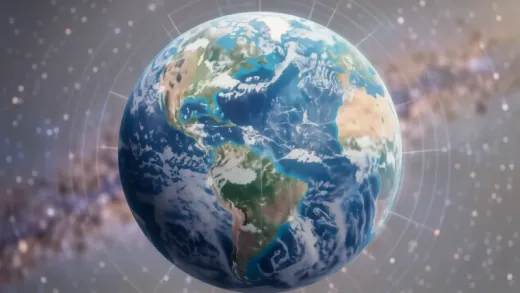
Calculating the Earth's mass: A complex task
Learn how scientists use the gravitational constant and orbital mechanics to determine Earth's mass of approximately 5.9722 x 10^24 kg.
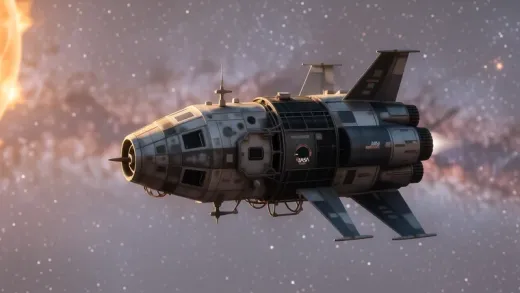
Discovering the current location of Voyager in interstellar space
Learn about the current location of Voyager 1 and 2, their distances from Earth, and how they navigate the harsh environment of interstellar space.
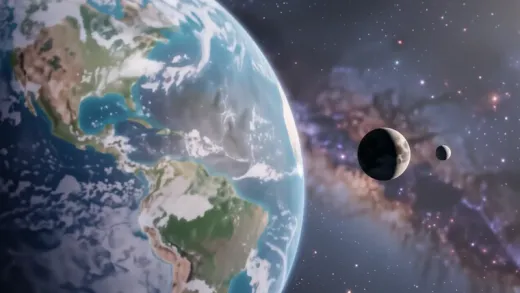
How many natural satellites does the earth possess?
Explore Earth's celestial companions, from the permanent Moon to transient quasi-satellites and cosmic dust clouds located at Lagrange points.
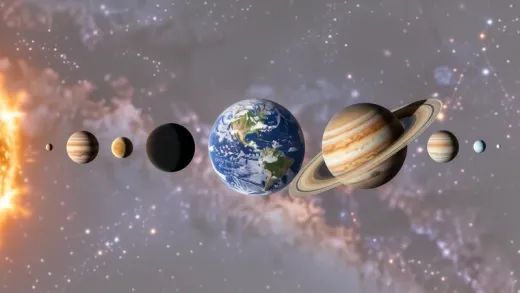
How many planets orbit the sun in second grade lessons
Learn how many planets orbit the sun and discover key facts about the eight official planets, from Mercury to Neptune, for students and educators.