What is the current number of satellites orbiting Jupiter in 2021?
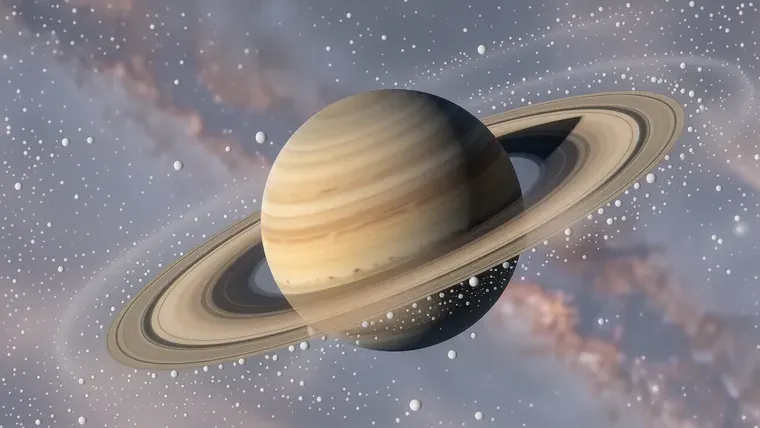
As of 2021, Jupiter has 79 confirmed satellites. This count includes the four massive Galilean moons and dozens of smaller, irregular bodies that orbit the gas giant at varying distances.
The Jovian Satellite System
Jupiter possesses a complex architecture of moons. It is vast. While the total count stands at 79, some researchers suggest the actual number may exceed 100 because many smaller objects remain too faint for current detection methods. These satellites are categorized by their orbital characteristics and physical properties.
The primary satellites are the largest. They orbit closest to the planet. These four bodies, known as the Galilean moons, formed alongside Jupiter from the original protoplanetary disk. They maintain nearly circular orbits within the equatorial plane of the gas giant. Their distances from the planetary core range from 420,000 km to approximately 1.8 million km.
The other satellites fall into different groups. Some are inner moons located near the planet’s edge. Others are outer or irregular satellites that follow highly elliptical and inclined paths. Many of these irregular bodies likely originated in different regions of the solar system before Jupiter captured them through gravitational influence.
- Primary moons: Io, Europa, Ganymede, Callisto.
- Inner moons: Small, rocky bodies close to the planet.
- Outer/Irregular moons: Distant, often captured objects with eccentric orbits.
The orbital dynamics of these moons are constantly shifting. Astronomers observe them changing positions daily because their orbital velocities differ significantly.
The Galilean Moons
Four moons dominate the Jovian system. They are massive. These bodies provide the most significant data regarding the history of our solar system through direct observation and space missions.
Io is the innermost Galilean moon. It is extremely active. Because of the intense gravitational tugging from Jupiter and the other large moons, Io experiences massive tidal heating that drives constant volcanic eruptions. This activity creates a surface composed of sulfur and silicate rock, which gives the moon its distinctive orange-yellow appearance. The density of Io is measured at 3530 kg/m³.
Europa lies just beyond Io. It is icy. Most scientists believe a liquid water ocean exists beneath its thick, frozen crust because the tidal heating provides enough internal warmth to prevent total solidification. This ocean might contain more than twice the volume of water found on Earth. The surface shows a complex network of faults and cracks.
Ganymede is the largest moon in the solar system. It is enormous. While Ganymede has a diameter 8% larger than the planet Mercury, its density of 1936 kg/m³ means it possesses less mass than Mercury by more than a factor of two. It is also the only known moon to possess its own intrinsic magnetic field.
Callisto is the outermost of the four. It is ancient. The surface of Callisto is covered in a dense layer of impact craters that have remained largely unchanged for billions of years. Its density is 1830 kg/m³, making it less dense than Io or Europa.
| Moon | Density (kg/m³) | Primary Characteristic |
|---|---|---|
| Io | 3530 | Extreme volcanism |
| Europa | ~1900-2000 | Subsurface ocean |
| Ganymede | 1936 | Magnetic field |
| Callisto | 1830 | Impact cratering |
Observing Jupiter in 2021
The year 2021 offers specific windows for terrestrial observation. August is key. On 20 August 2021 at 03:20 Moscow time, Jupiter reaches its point of opposition with the Sun.
Opposition occurs when Earth sits directly between the Sun and a planet. This alignment brings the planet to its closest distance to Earth for the year. During the 2021 opposition, Jupiter will be approximately 4.02 astronomical units away from Earth, which equals 60,138,440 kilometers.
The planet will appear exceptionally bright. It reaches a sidereal magnitude of -2.9m during this period. This brightness makes it the third most luminous object in the night sky, trailing only the Moon and Venus. Observers using telescopes can see more than just the planet’s disk.
The four Galilean moons are easily visible through binoculars or amateur telescopes. They appear as bright points of light arranged in a line. Because their orbital periods are relatively short, their configuration changes from one night to the next. You might see a moon transit the face of Jupiter or disappear into its shadow.
Jupiter reaches its highest point in the sky shortly after midnight during August. The angular size of the planet will reach 49 arc seconds. This measurement represents the largest visible diameter of the planet throughout the year.
The Nature of the Gas Giant
Jupiter is not a star. It is massive. Although it is composed primarily of hydrogen and helium like the Sun, it lacks the mass required to trigger thermonuclear fusion in its core.
To become a star, an object requires a mass at least 30 times greater than Jupiter’s current mass. Brown dwarfs are different. These substars possess roughly 70 times the mass of Jupiter, yet they still fail to initiate the sustained hydrogen fusion that defines a true star.
The term “failed star” is often used in popular science. This is technically inaccurate. A failure implies that the necessary conditions for success were met but not achieved, whereas Jupiter simply lacks the requisite mass entirely.
Jupiter’s gravity is immense. It acts as a vacuum cleaner for the solar system. Many of its 79 satellites are likely captured asteroids or comets that were pulled into stable orbits by this massive gravitational well.
The composition of the planet remains a primary focus for missions like the Juno spacecraft. Understanding the deep interior helps scientists model how gas giants form. The mass of all objects currently interacting with Jupiter is insufficient to push it toward stellar status.
Historical Context and Discovery
The study of Jovian satellites began centuries ago. It changed everything. The discovery of these moons provided the first concrete evidence that not all celestial bodies orbit the Earth.
Galileo Galilei first observed the four largest moons in 1610. He used a primitive telescope to document their positions. While there was historical debate regarding whether Simon Marius also discovered them, the names for the moons have remained consistent with those proposed by Marius.
These observations were transformative. They supported the heliocentric model of the solar system. Before this discovery, the geocentric view assumed everything revolved around our planet.
Space exploration has since provided much more detail than Galileo’s early sketches. In 1994, the world watched as Comet Shoemaker-Levy 9 struck Jupiter. This event allowed scientists to study the chemical composition of the Jovian atmosphere through the debris plumes.
In 2003, the Galileo spacecraft concluded its mission. It intentionally plunged into Jupiter’s atmosphere after seven years of orbiting the planet. This sacrifice provided the final high-resolution data sets from the mission before it was lost to the gas giant.
Future missions are already being planned. In 2022, there are scheduled satellite expeditions from EKA. By 2025, a dedicated journey to Europa is expected to take place so that researchers can investigate the potential for life in its subsurface oceans.
The count of 79 satellites will likely increase as technology improves. New telescopes and deep-space probes continue to find smaller, more distant objects. Every new discovery adds to our understanding of how gravity shapes the outer reaches of our solar system.
Frequently asked questions
How many moons does Jupiter have as of 2021?
As of 2021, Jupiter has 79 confirmed satellites, though researchers suggest the actual number may exceed 100 due to faint, undetected objects.
What are the four Galilean moons?
The four massive Galilean moons are Io, Europa, Ganymede, and Callisto. They orbit closest to Jupiter and maintain nearly circular orbits.
When is the next Jupiter opposition in 2021?
Jupiter reaches its point of opposition with the Sun on 20 August 2021 at 03:20 Moscow time, bringing it to a distance of approximately 60,138,440 kilometers from Earth.
Which moon in the Jovian system is the largest?
Ganymede is the largest moon in the solar system, possessing a diameter 8% larger than the planet Mercury.
More in Solar System
Calculating the Earth's mass: A complex task
Learn how scientists use the gravitational constant and orbital mechanics to determine Earth's mass of approximately 5.9722 x 10^24 kg.
Discovering the current location of Voyager in interstellar space
Learn about the current location of Voyager 1 and 2, their distances from Earth, and how they navigate the harsh environment of interstellar space.
How many natural satellites does the earth possess?
Explore Earth's celestial companions, from the permanent Moon to transient quasi-satellites and cosmic dust clouds located at Lagrange points.
How many planets orbit the sun in second grade lessons
Learn how many planets orbit the sun and discover key facts about the eight official planets, from Mercury to Neptune, for students and educators.