How high is the Sun at its highest point?
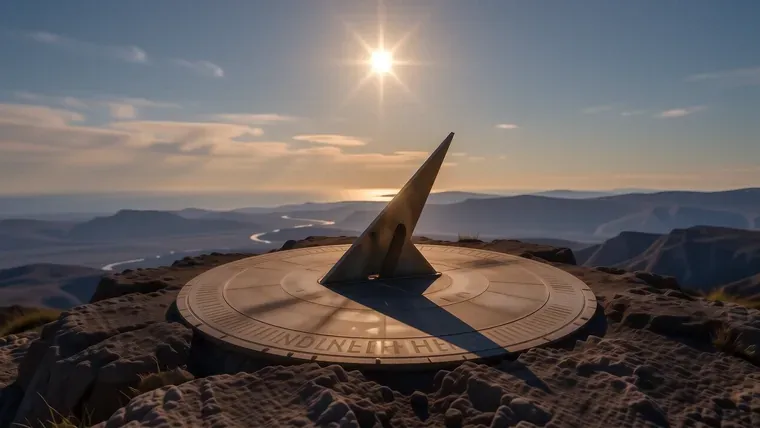
The Sun reaches its highest point in the sky at the zenith, which occurs when the solar disk is positioned directly overhead at a 90-degree angle to the local horizon. This specific geometric alignment only happens for observers located within the tropics, specifically between 23.44° North and 23.44° South latitude. For most people living in temperate or polar regions, the Sun never reaches the zenith, although it still achieves a maximum altitude during the summer solstice.
The Geometry of Zenith and Solar Altitude
The Sun is distant. It sits approximately 149.5 million kilometers from Earth. Because the Earth’s axis remains tilted at an angle of 23.44° relative to its orbital plane, the solar declination changes throughout the year. This tilt dictates how high the Sun appears in the sky at any given latitude.
The zenith is vertical. It is the point directly above an observer. While people often use “zenith” to describe the highest daily position of the Sun, astronomers define it as a specific coordinate in the local sky. If you are standing in the tropics, the Sun will eventually pass through this point because the Earth’s tilt allows the solar rays to strike those latitudes at a perpendicular angle.
Shadows disappear at noon. This happens only in the tropical light belt. Within the boundaries of the Tropic of Cancer and the Tropic of Capricorn, the Sun reaches a 90-degree angle of incidence. This creates a moment where objects cast no discernible shadow on the ground.
The solar path varies. It shifts based on your location. A person in Moscow, Russia, will see a very different maximum altitude than someone in Quito, Ecuador. On June 21, 2023, at 17:57 Moscow time, the summer solstice occurred, which meant the Sun reached its most northerly declination along the ecliptic.
- Tropic of Cancer: 23.44° N
- Tropic of Capricorn: 23.44° S
- Equator: 0° latitude
- Zenith angle: 0° (at the highest point)
Latitude and Seasonal Variations
The Earth rotates. It spins once every 24 hours. This rotation creates the daily cycle of rising and setting, while the orbital revolution around the Sun causes the seasonal shifts in solar altitude. Because the tilt is constant, the Sun’s path across the sky changes its maximum height every single day.
In the Northern Hemisphere, summer brings higher Sun positions. On June 21, the Sun reaches its highest point for the year in this hemisphere. In Moscow, the Sun reaches a peak altitude of 57.6° above the horizon during the summer solstice. This is significantly higher than the 10.8° altitude observed on the winter solstice of December 21.
The seasons flip. The hemispheres trade roles. While the Northern Hemisphere experiences its highest solar altitudes in June, the Southern Hemisphere experiences its summer solstice in December. During this time, the Southern Tropic receives the most direct sunlight because the Earth’s tilt directs the solar energy toward the southern latitudes.
Polar regions experience extremes. The Arctic and Antarctic circles sit at 66.56° North and South. In Murmansk, Russia, located at 68° 58’ N, the Sun stays above the horizon for a continuous period known as the polar day. This phenomenon lasts from May 22 to July 22 because the Earth’s tilt keeps the pole pointed toward the Sun during its orbit.
The Sun never sets. This is the polar day. In contrast, the polar night occurs when the Sun remains below the horizon for months at a time. Temperatures in these regions can fluctuate by as much as 65°C depending on how effectively the solar radiation warms the local atmosphere.
Time Zones and Solar Noon
Clocks do not match nature. Humans use artificial time. In 1930, the Soviet Union implemented “decree time,” which shifted the clocks one hour ahead of local solar time. This meant that the Sun reached its zenith at 13:00 instead of 12:00, because the state wanted to standardize time across vast distances.
The USSR changed rules again. In 1981, they reinstated summer time transitions. Consequently, the Sun would reach its highest point at 14:00 during the summer months and 13:00 during the winter. This discrepancy between solar noon and clock noon often confuses casual observers who expect the Sun to be at its peak at exactly 12:00.
Modern Russia uses permanent summer time. President Medvedev abolished the seasonal switch in recent years. Now, local clocks often differ from the natural biological clock by two hours. When the Sun is actually at its zenith, the clock might read 14:00, so people often feel a sense of temporal misalignment.
Solar noon is precise. It is the moment of maximum altitude. While we call it “noon,” the actual time depends on your longitude and your specific time zone. If you are far from the central meridian of your time zone, the Sun will reach its highest point much earlier or later than the official clock time.
- Standard solar noon: 12:00 local solar time
- Decree time zenith: 13:00
- Summer time zenith: 14:00
- Longitude effect: Varies by minutes
Azimuth and the Direction of the Sun
The Sun does not always rise in the east. This is a common misconception. The Sun only rises due east on the equinoxes, which occur around March 21 and September 23. On all other days, the sunrise point shifts toward the north or south depending on the season.
In the summer, the Sun rises in the northeast. It sets in the northwest. This happens because the Sun’s path is tilted toward the pole during the long days of the year. In Leningrad, for example, the azimuth of sunrise on December 22 is 143° from North, which is quite far from the true east.
Winter paths are different. The Sun rises in the southeast. It sets in the southwest. Because the Sun’s declination is negative during the winter months in the Northern Hemisphere, the entire arc of its journey stays closer to the southern horizon.
You can find North with a watch. Hold an analog watch horizontally. Point the hour hand at the Sun so that the line between the 12 and the hour hand bisects the North-South axis. This method works best in higher latitudes, although accuracy decreases as you move toward the equator.
The twilight period is colorful. It occurs before sunrise and after sunset. At the equator, this period lasts only 20 to 25 minutes. However, in polar regions, twilight can endure for several weeks because the Sun’s disk stays just below the horizon line.
Light Belts and Climate Zones
The Earth has five belts. These are defined by solar illumination. The tropical light belt sits between 23.44° N and 23.44° S. Within this zone, the Sun provides the highest intensity of heat because the rays strike the surface at a nearly 90-degree angle.
Temperate belts exist further out. These zones receive varying levels of sunlight throughout the year. In these regions, the Sun never reaches the zenith, although it still climbs to significant altitudes during the summer months. The amount of heat absorption depends on the angle of incidence.
Polar belts receive minimal light. The Arctic and Antarctic circles mark these boundaries. During the polar night, the Sun stays below the horizon for extended periods. This lack of direct solar radiation leads to much lower average temperatures compared to the tropical zones.
Climate is not just sunlight. Mountains and oceans matter too. While the angle of the Sun determines the potential heat, ocean currents and wind patterns redistribute that energy across the planet. A region might be at a low latitude but remain cool due to upwelling or cold currents.
The Sun’s energy is vast. It drives all life on Earth. Even a single ray of light can penetrate heavy cloud cover, although the intensity will be significantly lower than on a clear day. This constant flow of radiation maintains the atmospheric cycles that govern our weather.
The Sun moves through constellations. Its apparent path follows the ecliptic. In June, the Sun moves from Taurus into Gemini. This celestial movement provides the framework for the zodiac and helps astronomers track the Earth’s position in the solar system.
Frequently asked questions
Where does the Sun reach its highest point in the sky?
The Sun reaches its highest point at the zenith, which is directly overhead at a 90-degree angle. This only occurs for observers located within the tropics, between 23.44° North and 23.44° South latitude.
Does the Sun reach the same height every day?
No, the Sun's maximum altitude changes daily due to the Earth's 23.44° axial tilt. For example, in Moscow, the peak altitude is 57.6° during the summer solstice but drops to 10.8° during the winter solstice.
What is solar noon?
Solar noon is the precise moment of maximum solar altitude. While often associated with 12:00, the actual time depends on your specific longitude and time zone.
Why do shadows disappear in certain areas?
Shadows disappear at noon within the tropical light belt, between the Tropic of Cancer and the Tropic of Capricorn. In this zone, the Sun reaches a 90-degree angle of incidence.
More in Solar System

Calculating the Earth's mass: A complex task
Learn how scientists use the gravitational constant and orbital mechanics to determine Earth's mass of approximately 5.9722 x 10^24 kg.

Discovering the current location of Voyager in interstellar space
Learn about the current location of Voyager 1 and 2, their distances from Earth, and how they navigate the harsh environment of interstellar space.

How many natural satellites does the earth possess?
Explore Earth's celestial companions, from the permanent Moon to transient quasi-satellites and cosmic dust clouds located at Lagrange points.
How many planets orbit the sun in second grade lessons
Learn how many planets orbit the sun and discover key facts about the eight official planets, from Mercury to Neptune, for students and educators.