What is the title of the biggest asteroid in our solar system?
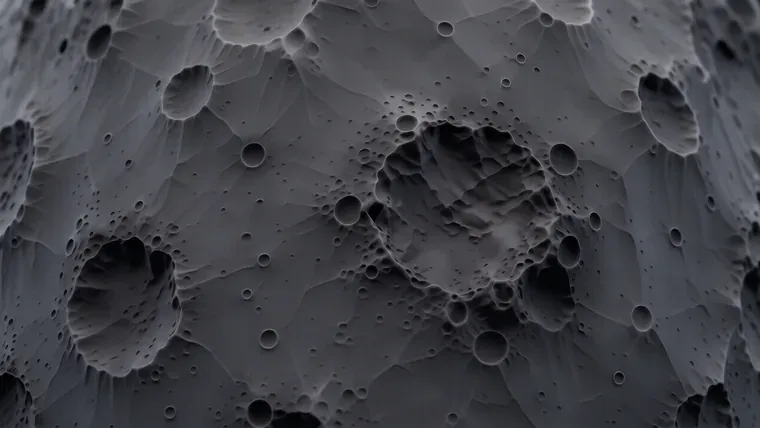
Vesta is the largest asteroid in our solar system. While Ceres holds a larger diameter of approximately 950 kilometers, the International Astronomical Union reclassified it as a dwarf planet in 2006 because its status as a planetary-mass object changed the taxonomic hierarchy. Vesta remains an asteroid. It has an average diameter of 525 kilometers and a maximum diameter of 573 kilometers.
The Classification of Ceres and Vesta
Ceres is massive. It orbits between Mars and Jupiter. Although it was discovered by Giuseppe Piazzi on 1 January 1801, it functioned as the primary asteroid in astronomical catalogs for over two centuries before its reclassification. This change occurred because the object meets the criteria for a dwarf planet through its nearly spherical shape and hydrostatic equilibrium.
Vesta is different. It is irregular. The asteroid’s dimensions of 578x560x458 kilometers deviate from a perfect sphere, so it does not meet the IAU requirements for dwarf planet status. This irregularity prevents it from being classified alongside Pluto or Ceres.
The distinction matters. Astronomers use specific metrics. While Ceres contains roughly one-third ice, Vesta consists of a differentiated interior with a molten mantle and a hot iron-nickel core. This internal structure suggests that Vesta underwent heating processes similar to those of terrestrial planets during its early formation.
Physical Characteristics of Vesta
Vesta rotates quickly. It spins every 5 hours and 20 minutes. The surface temperature fluctuates significantly, ranging from -3 to -106 degrees Celsius depending on solar exposure. Because the body lacks an atmosphere, there is no mechanism to redistribute heat across its surface.
The asteroid is rocky. It looks bright. Vesta’s reflectivity is four times greater than many of its larger counterparts in the belt. This high albedo allows it to be visible to the naked eye approximately once every three years when it reaches a minimum distance of 177 million kilometers from Earth.
Its shape is uneven. It is not round. Although Vesta appears somewhat spherical at a distance, its surface features indicate a violent history of impacts. These collisions have shaped the topography we observe through modern telescopic and spacecraft instrumentation.
The Impact of Reyasylvia
A massive crater exists. It is at the south pole. The Reyasylvia crater measures between 475 and 500 kilometers in diameter, so it dominates the southern hemisphere of the asteroid. This feature resulted from a colossal collision that stripped away the upper crust to expose the underlying mantle.
The crater is deep. It has a central peak. Within this basin, a central mountain reaches a height of 22 kilometers, which makes it the second highest peak in the solar system after Olympus Mons on Mars. This peak remains a focal point for researchers because it provides direct access to the asteroid’s internal composition.
The impact was violent. It created debris. After the collision occurred, many smaller fragments were ejected into space to form what astronomers call the “Vesta family,” which includes over 6,000 type V asteroids. Most of these fragments measure less than 10 kilometers in diameter.
Exploration via the Dawn Mission
NASA launched a probe. It was named Dawn. The spacecraft entered orbit around Vesta on 16 July 2011 after traveling through the asteroid belt for several years. This mission provided the first high-resolution topographic maps of the asteroid’s surface.
Data arrived in waves. The probe was successful. While orbiting the body, the Dawn spacecraft used its ion engines to maintain stability so that it could transmit detailed images and gravitational measurements back to Earth. These observations allowed scientists to calculate Vesta’s mass with high precision.
The mission ended in 2012. It moved on. On 5 September 2012, the probe left Vesta to begin its transit toward Ceres, which utilized the same ion propulsion technology that enabled its long-duration flight. This transition proved that automated probes could navigate between different celestial bodies within the belt.
The Hierarchy of Large Asteroids
Many asteroids exist. They vary in size. The list of the largest known objects includes several notable members that astronomers track closely for scientific and orbital reasons.
- Ceres: A dwarf planet with a 950 km diameter.
- Vesta: The largest true asteroid with a 525 km average diameter.
- Pallada: A carbonaceous object with a diameter of 512 kilometers.
- Hygeia: An asteroid measuring 407 kilometers in diameter.
- Interamnia: A dark object spanning 326 kilometers.
Each body has quirks. Some are light. Although Europa is large at 302.5 kilometers, it possesses a relatively low mass because its composition likely consists of porous rocks. This density difference distinguishes it from the more metallic or rocky bodies in the upper hierarchy.
Some asteroids have moons. Sylvia is one example. The Sylvia system is actually a collection of small rocks held together by gravity, so its diameter can fluctuate by up to 10% during its orbit. It also possesses two satellites named Romulus and Remus.
Other objects are dark. Hector is difficult to see. Because Hector is located near Jupiter and has low reflectivity, it was not fully studied until the 21st century despite being discovered in 1907. Its shape resembles a dumbbell or a bean due to its irregular mass distribution.
Orbital Dynamics and Earth Hazards
Asteroids move constantly. They follow paths. Most reside in the belt between Mars and Jupiter, but some belong to groups like the Apollos or Atens that cross Earth’s orbit.
The Yarkovsky effect matters. It shifts orbits. This phenomenon occurs because solar radiation heats an asteroid’s surface during the day, so the uneven re-radiation of heat acts as a tiny thruster that alters its trajectory over time.
Some objects are dangerous. 1950 DA is a threat. This Apollo-group asteroid has a Palermo Collision Hazard Scale rating of -1.42, which requires constant monitoring by NASA’s Sentry system. While it may not hit Earth in 2032, a potential collision could occur on 16 March 2880.
Bennu is also monitored. It is small. The OSIRIS-REx mission launched in September 2016 to collect regolith samples from Bennu so that scientists could understand the composition of near-Earth objects. Bennu has a mass between 60 and 78 million tons.
Binary systems exist too. 2009 FD is one. It consists of two co-orbiting bodies that are gravitationally bound, much like a double star system. The larger component measures between 120 and 180 meters in diameter.
The scale is useful. The Palermo scale helps. If an object has a rating of 0 or higher, a collision becomes difficult to avoid, although most known asteroids currently sit well below this threshold.
The History of Discovery
Astronomers worked hard. They found many. In the 18th century, mathematicians like Titius and Bode predicted the existence of a planet between Mars and Jupiter.
Piazza found Ceres. It was an accident. On New Year’s Eve in 1801, Giuseppe Piazzi was documenting stars when he noticed a rapidly moving object that he initially thought was a comet. He lost track of the object before he could name it.
Gauss solved the math. He used calculations. Carl Friedrich Gauss determined the location of the missing body through mathematical modeling, so he was able to rediscover Ceres and provide its official designation. This event changed how astronomers searched for minor planets.
Olbers found Vesta. He was German. Heinrich Olbers discovered Vesta in 1807, which added another major body to the growing catalog of the solar system. He also proposed that asteroids might be the remnants of a destroyed planet named Phaeton.
The search continues. Telescopes improve. While ground-based observation is difficult due to the small size and distance of these objects, automated space probes provide the most reliable data for modern planetary science.
Composition and Spectral Classes
Rocks vary widely. Some are carbon. Asteroids are categorized into different spectral classes based on their chemical makeup, such as C-type (carbonaceous), S-type (silicaceous), or M-type (metallic).
Vesta is metallic. It is dense. Because Vesta has a heavy iron-nickel core, it behaves more like a protoplanet than a simple pile of rubble. This differentiation is a key indicator of its thermal history.
Other bodies are porous. Europa is light. Researchers hypothesize that the low density of certain large asteroids results from a high concentration of porous matter within their structures. This makes them much lighter than a solid rock of the same volume.
Minerals change. Impacts occur. When asteroids collide, they undergo chemical reactions that can alter their surface composition over millions of years. These changes are visible in the varying tones of the asteroid belt.
The belt is vast. It contains many objects. Scientists have identified approximately 300,000 asteroids so far, although the majority of these are much smaller than the primary bodies like Vesta or Hygeia.
Observing the Asteroid Belt
Viewing is possible. Use binoculars. Vesta can reach a magnitude of 5.1, which makes it visible to those with decent optical equipment during its closest approaches.
It looks like a star. It does not twinkle. Although you cannot see surface details with a backyard telescope, you can observe the asteroid’s movement against the background of fixed stars over several nights.
The sky is dark. Most asteroids are hidden. Because many large asteroids like Euphrosyne have high carbon content, they reflect very little light and remain difficult to observe even with powerful instruments.
Distance is the main hurdle. Space is big. Even when an asteroid like 2010 AU118 approaches Earth, it remains a significant distance away, so the threat of impact remains statistically minute for the foreseeable future.
The study of these bodies helps us understand the early solar system. Each fragment provides a piece of the puzzle regarding how planets formed and evolved over billions of years.
Frequently asked questions
Which is the largest asteroid in the solar system?
Vesta is the largest true asteroid, with an average diameter of 525 kilometers. While Ceres is larger at 950 kilometers, it is classified as a dwarf planet.
Why was Ceres reclassified from an asteroid to a dwarf planet?
In 2006, the IAU reclassified Ceres because it meets the criteria for a dwarf planet through its nearly spherical shape and hydrostatic equilibrium.
What are the physical characteristics of Vesta?
Vesta is an irregular, rocky body with a differentiated interior consisting of a molten mantle and an iron-nickel core. It has an average diameter of 525 kilometers.
How large is the Reyasylvia crater on Vesta?
The Reyasylvia crater is located at the south pole and measures between 475 and 500 kilometers in diameter.
More in Solar System
Calculating the Earth's mass: A complex task
Learn how scientists use the gravitational constant and orbital mechanics to determine Earth's mass of approximately 5.9722 x 10^24 kg.
Discovering the current location of Voyager in interstellar space
Learn about the current location of Voyager 1 and 2, their distances from Earth, and how they navigate the harsh environment of interstellar space.
How many natural satellites does the earth possess?
Explore Earth's celestial companions, from the permanent Moon to transient quasi-satellites and cosmic dust clouds located at Lagrange points.
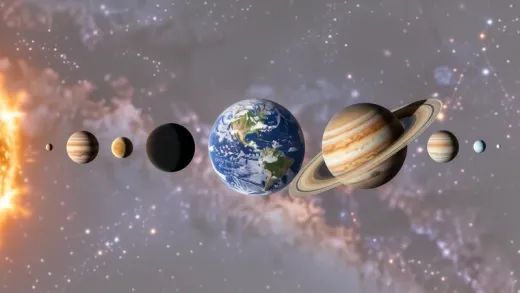
How many planets orbit the sun in second grade lessons
Learn how many planets orbit the sun and discover key facts about the eight official planets, from Mercury to Neptune, for students and educators.