When is the full moon in June 2021?
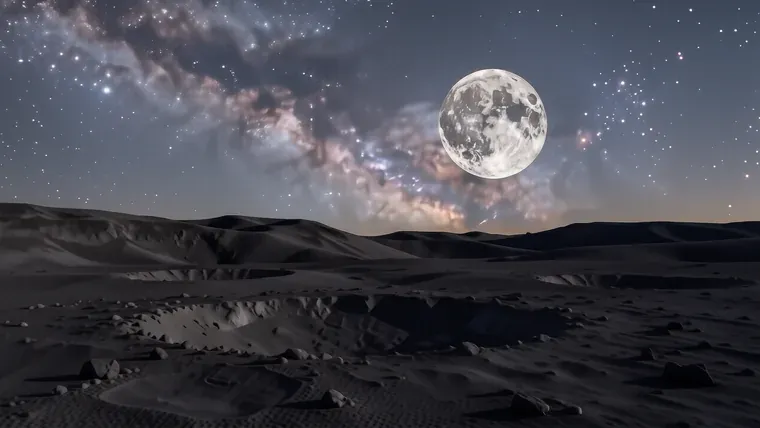
The Full Moon in June 2021 occurs on 24 June at 21:39 Moscow time (18:39 GMT). This lunar event reaches its peak when the Moon sits at 3 degrees 27 minutes Capricorn while the Sun occupies 3 degrees 27 minutes Cancer. Astronomically, the Moon achieves this phase because it reaches a position directly opposite the Sun, creating a 180-degree difference in ecliptic longitudes between the two bodies.
The Strawberry Moon and Seasonal Names
The June full moon carries the name “Strawberry Moon.” This title originated from North American indigenous traditions. It refers to the period when strawberries ripen in the wild. Many people mistake the name for a description of color. It is not pink.
Each full moon possesses a specific designation based on environmental patterns. Ancestors assigned these names so that they could track seasonal shifts through animal behavior or plant growth. The June moon also receives the name “Pink Moon” in Europe because it aligns with the rose harvest season. Another name used is the “Hot Moon.” This term describes the onset of rising temperatures in the Northern Hemisphere.
The 2021 event occurs very close to the June solstice. This proximity alters how observers see the Moon depending on their latitude. In the Northern Hemisphere, the Moon appears low on the horizon. It mimics the path of the Sun during the December solstice.
Observers in the Arctic Circle may face different conditions. The Moon might not ascend above the horizon at all. Conversely, in the Southern Hemisphere, the Moon sits high in the atmosphere. In certain Arctic regions, the Moon remains visible for 24 hours because the seasonal tilt keeps it above the horizon continuously.
The moon’s appearance depends on light. It reflects sunlight.
Astronomical Mechanics and Supermoons
A full moon happens when Earth sits between the Sun and the Moon. This alignment creates 100% illumination of the side facing us. The synodic month, or the time between consecutive full moons, averages 29.53 days. In June 2021, the Moon reaches a distance of 366,178 km from the center of the Earth.
The Moon moves in an elliptical orbit. It changes distance constantly. Sometimes a full moon coincides with perigee, which is the closest point to Earth. Astronomer Richard Noll coined the term “Super Moon” in 1979 to describe this phenomenon. A Super Moon appears larger and brighter than a standard full moon because the increased proximity enhances its visual scale.
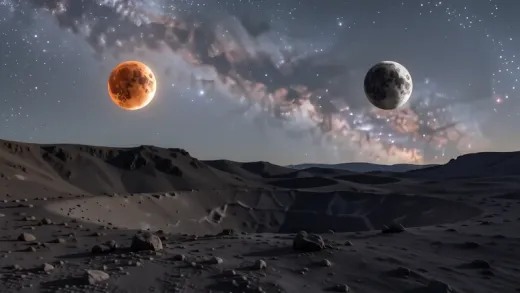
During a Super Moon, the Moon can take on a reddish hue. This is often called a Blood Moon. While many people associate this with mysticism, it results from light scattering through Earth’s atmosphere. The Moon does not emit its own light. It only reflects what the Sun provides.
The 2021 lunar cycle includes several specific phases. On 10 June 2021, a New Moon occurred in Gemini. This event coincided with a solar eclipse. The following full moon on 24 June follows this sequence.
The Moon’s gravity affects Earth. It moves the tides.
The 2021 Lunar Calendar and Seasonal Transitions
The summer of 2021 follows a specific lunar schedule. The solstice occurred on 21 June. This date preceded the Strawberry Moon by only three days. Astronomers track these transitions to understand seasonal shifts in the sky.
The sequence for the 2021 season is as follows:
- 24 June: Full Strawberry Moon
- 24 July: Full Stag Moon
- 22 August: Full Sturgeon Moon (this is a Blue Moon)
- 20 September: Full Harvest Moon
A Blue Moon occurs when there are four full moons in a single astronomical season. Most seasons contain only three. The August 2021 moon qualifies as a Blue Moon because it is the third of four full moons between the June solstice and the September equinox. This phenomenon happens approximately every 2.5 years.
The transition from Sagittarius to Capricorn occurs during this phase. The Moon moves through the zodiacal signs. It changes position rapidly.
Astrological Perspectives on the Cancer-Capricorn Axis
Astrology views the June 24 full moon through the lens of the Cancer-Capricorn axis. This axis balances domestic life with professional responsibility. Cancer governs the home and emotional roots. Capricorn governs career, reputation, and social structure.
The Moon sits in Capricorn for this event. It stimulates a desire for societal contribution. Some individuals may feel uncertain about their abilities while they navigate these themes. The Moon forms a harmonious sextile with Jupiter. This aspect suggests themes of positivity and magnanimity.
Specific body parts receive attention during this phase. Capricorn rules the skeletal system and joints. This includes the knees, spine, bones, and tendons. People often focus on physical health when the Moon enters this sign.
The planetary alignment is complex. Venus opposes Pluto. Mars opposes Saturn. Saturn forms a square with Uranus. These interactions create tension in the sky.
Astrologers observe these patterns. They look for balance.
Human and Biological Interactions
The Moon influences many biological rhythms. It controls the ocean tides. Humans also experience shifts in behavior and physiology. Many obstetricians note that full moons coincide with peaks in birth rates, although data on this remains debated in medical literature.
Emotional volatility often increases during a full moon. Some people feel a surge of energy. Others suffer from insomnia or irritability. Children may struggle to sleep because the increased light and perceived energy disrupt their rest.
The impact varies by individual. It is not universal.
| Aspect | Potential Effect |
|---|---|
| Creativity | Increased inspiration for artists |
| Emotions | Heightened sensitivity or conflict |
| Sleep | Possible insomnia or restlessness |
| Physicality | Increased energy or fatigue |
Some people use the full moon for rituals. They perform ceremonies to attract wealth or affection. These practices rely on visualization and intent. The Moon’s presence provides a focal point for these activities.
Practical Guidance for June 2021
The energy of the full moon can be intense. It can create or destroy. People should approach this period with caution.
Certain tasks benefit from the lunar phase.
- Cleaning and organizing the home.
- Performing skin-cleansing cosmetic procedures.
- Cutting or coloring hair for a fresh look.
- Engaging in creative hobbies like reading or embroidery.
- Reviewing unfinished long-standing projects.
Other activities should be avoided. Many traditions suggest delaying major financial transactions. It is often wise to avoid starting large-scale business projects or undergoing surgery during the peak of the full moon. High blood pressure may require more attention because physical exertion can feel more taxing during this time.
Communication requires care. Arguments can spark easily. A single thoughtless word might cause a conflict that drains energy from everyone involved. It is often better to wait a few days before having serious discussions about relationships.
The eclipse corridor ended on 10 June 2021. This period included the solar eclipse in Gemini. The full moon on 24 June allows for a release of these previous influences. You can move past old mistakes after the cycle settles.
The Moon remains a constant presence. It changes every night.
Frequently asked questions
What time was the full moon in June 2021?
The full moon occurred on 24 June 2021 at 21:39 Moscow time, which is 18:39 GMT.
Why is the June full moon called the Strawberry Moon?
It is named the Strawberry Moon after North American indigenous traditions that linked the lunar cycle to the ripening of wild strawberries.
What is a Blue Moon according to the 2021 lunar calendar?
A Blue Moon occurs when there are four full moons in one season; in 2021, the Full Sturgeon Moon on 22 August qualified as a Blue Moon.
What zodiac sign was the moon in during the June 2021 full moon?
The Moon was positioned at 3 degrees 27 minutes Capricorn during this lunar event.
More in Moon
The Moon's perigee: What does it mean for Earth?
Learn how the Moon's perigee affects tidal forces, lunar brightness, and the phenomenon known as a supermoon during its closest approach to Earth.
The path of the Moon's orbit around Earth
Explore the mechanics of lunar motion, including elliptical orbits, tidal locking, and how the Moon's distance fluctuates between perigee and apogee.
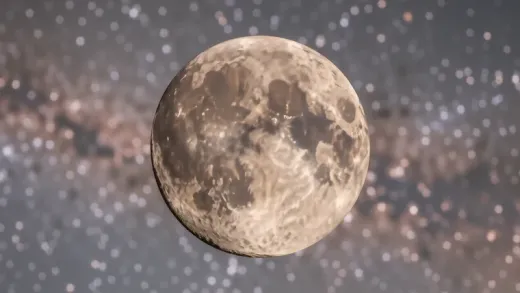
What is the color of the moon and why does it look gray?
Discover why the Moon appears gray due to regolith while its underlying geological composition contains hidden shades of brown, red, and blue.
Which occurs more frequently, a lunar or solar eclipse?
Learn why solar eclipses occur more often than lunar eclipses and explore the mechanics, types, and safety requirements for observing these celestial events.