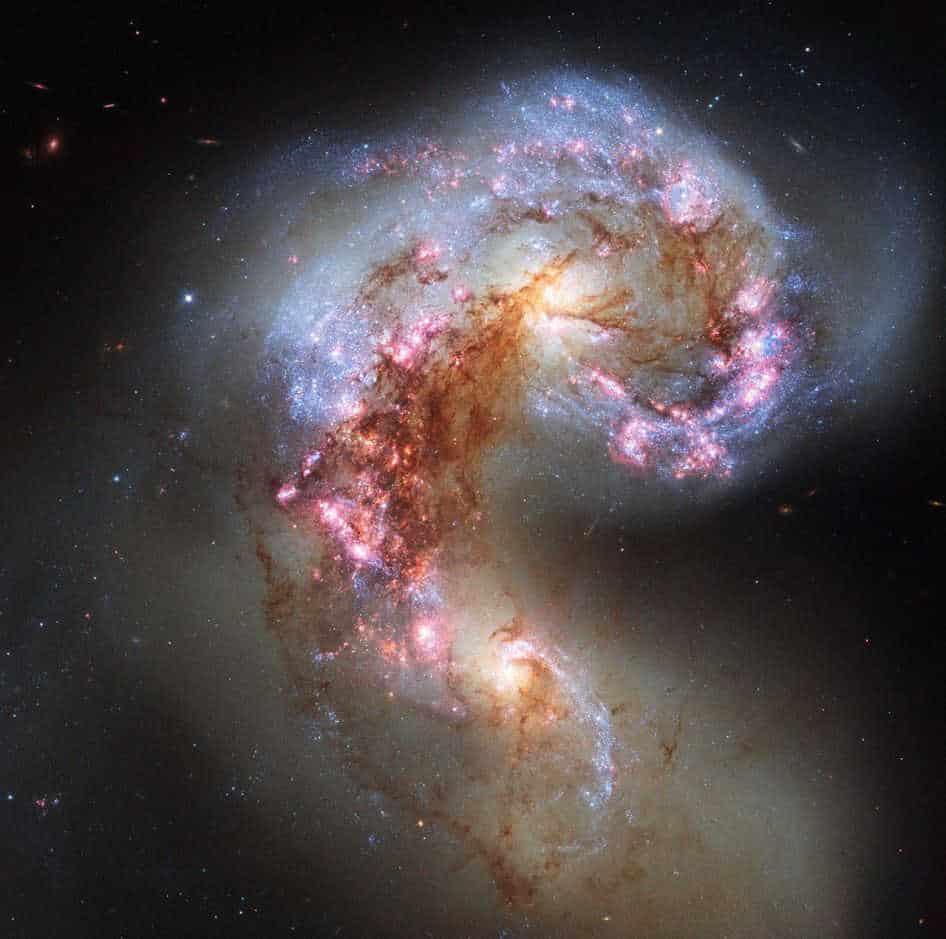
Nevertheless, the term “merge” is a more accurate description, considering the highly dispersed arrangement of matter within galaxies, which makes the likelihood of stars or planets colliding highly improbable.
Based on one hypothesis, the Milky Way and its nearest galactic companion Andromeda have already merged. Alternatively, another theory suggests that our Galaxy is heading towards a collision with Andromeda. In the next several billion years, these two galaxies will combine, resulting in catastrophic outcomes.
There will be some stars that are expelled beyond the boundaries of the emerging galaxy, while others will perish in the event of collisions with merging supermassive black holes. The distinctive spiral formations of both the Milky Way and Andromeda will be dismantled and reconfigured into one colossal elliptical galaxy. However, despite sounding alarming, this phenomenon is actually an inherent and progressive phase in the life cycle of galaxies.
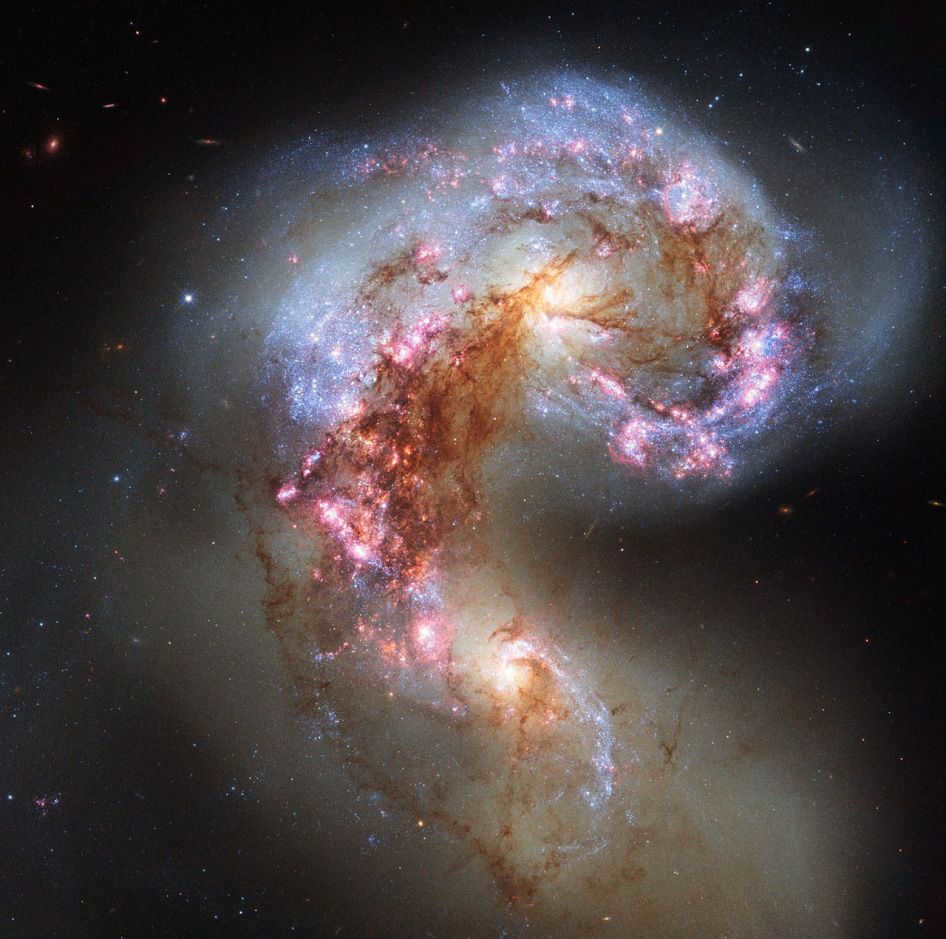
Gravity Collision
Mutual attraction holds galaxies together and causes them to orbit around a shared center. Interactions between galaxies are common, especially between a large galaxy and a smaller satellite galaxy. At a certain point, the satellite gets too close to the large galaxy and reaches a point where gravity takes hold and pulls it into one of the “killer” spiral arms.
In some cases, the satellite’s path may cross with that of the large galaxy. In such a situation, the collision could result in a merger, as long as neither galaxy has enough momentum to continue moving after the collision.
If one of the galaxies is considerably larger than the others, it will largely maintain its shape and structure after the encounter, while the smaller galaxies will separate from each other and become incorporated into the larger entity. Scientists hypothesize that Andromeda has assimilated at least one galaxy in its history, and the Milky Way is currently undergoing a merger with several dwarf galaxies (such as the Sagittarius Dwarf Elliptical Galaxy).
However, the term “collision” is not entirely accurate, as the extremely low density of matter in galaxies indicates that the likelihood of star or planet collisions is exceedingly low.
Collision of Andromeda and the Milky Way
In 1929, Edwin Hubble presented observational data indicating that distant galaxies were moving away from the Milky Way. This discovery led to the formulation of Hubble’s law, which states that the distance and velocity of galaxies can be determined by measuring their redshift, a phenomenon where light from an object shifts towards the red part of the spectrum as it moves away.
However, spectrographic analysis of Andromeda has revealed that its light is actually shifted towards the blue part of the spectrum (known as violet shift). This suggests that, unlike most galaxies observed since the early 20th century, Andromeda is actually moving towards us.
According to this information, it is probable that the collision between the galaxies will occur in approximately 4 billion years. Additionally, the research revealed that M33, which is the third most massive and brilliant galaxy in the Local Group, will be involved in this event. Most likely, M33 will revolve around the structure that forms as a result of the merger between the Milky Way and Andromeda, eventually becoming a part of it.
Consequences
When galaxies collide, the smaller ones are absorbed by the larger ones, resulting in their destruction and the assimilation of their stars. However, when galaxies are similar in size, such as the Milky Way and Andromeda, the merger disrupts their spiral structures entirely. Eventually, the combined collection of stars will form a massive elliptical galaxy.
This interaction has the potential to initiate a minor burst of star formation. The collision of galaxies generates immense hydrogen clouds that can lead to a sequence of gravitational collapses. Moreover, these mergers cause galaxies to age at an accelerated rate as a significant portion of the gas converts into stars.
Following a period of intense star formation, galaxies exhaust their fuel. The most youthful and hottest celestial bodies detonate as supernovae, leaving behind only ancient, frigid red stars that endure for an extensive duration. This is the reason why massive elliptical galaxies, which are the outcome of collisions, possess a substantial amount of red stars and a limited number of active regions where stars are currently being formed.
While Andromeda boasts approximately 1 trillion stars and the Milky Way has around 300 billion, the likelihood of even a single pair of stars colliding is extremely low due to the immense distance between them. Nevertheless, both galaxies house supermassive black holes that will eventually converge at the center of the newly merged galaxy.
The merger of these black holes will result in the transfer of orbital energy to the stars, causing them to gradually move to higher orbits over millions of years. Once the two black holes are separated by light-years, they will begin emitting gravitational waves.
The gas absorbed by the merged black hole has the potential to generate a brilliant quasar or a dynamic core at the heart of the recently created galaxy. Lastly, the outcome of black hole fusion can “propel” certain stars, transforming them into hypersonic exiles and carrying their planets along for the ride.
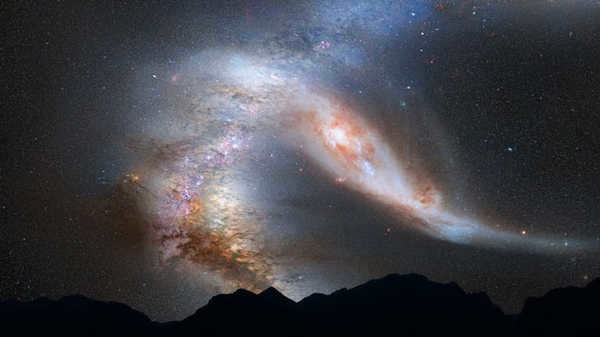
Astronomers have recently obtained the most precise confirmation to date regarding the impending collision of the Andromeda Galaxy and the Milky Way.
The Andromeda Galaxy, also referred to as the Andromeda Nebula, is situated 2.5 million light-years from Earth. It holds the distinction of being the nearest spiral galaxy to the Milky Way.
For a while now, scientists have been operating under the assumption that our galaxy will eventually collide with this galaxy in the future. However, it remains uncertain whether this collision will actually happen, as scientists have yet to confirm this speculation. Nonetheless, this hypothesis has gained significant popularity, even appearing in various works of science fiction literature.
Currently, the radial velocity of the Andromeda Galaxy with respect to the Milky Way can be determined by analyzing the Doppler shift of spectral lines emitted by the stars in the galaxy. However, directly measuring the transverse velocity, or “proper motion,” is not possible at the moment. Therefore, we know that the Andromeda galaxy is approaching the Milky Way at a speed of approximately 120 km/s, but we cannot determine whether there will be a collision or if the galaxies will simply drift apart. Indirect measurements of the transverse velocity, while not as precise, suggest that it is less than 100 km/s. This indicates that at least the dark matter halo, which is the invisible component of the galaxies, will collide even if the visible disks do not. The Gaia space telescope, which was launched by the European Space Agency in 2013, will accurately measure the positions of stars in the Andromeda galaxy and enable the determination of the transverse velocity.
It is worth mentioning that there are numerous dwarf galaxies near the Milky Way, and one of them, M33, has a 9 percent probability of colliding with our galaxy before Andromeda does, as indicated by modeling.
There is actually an abundance of collision modeling available.
Scientists suggest that there was a previous collision between galaxies, which occurred approximately 10 billion years ago. However, this subject is deserving of its own dedicated discussion (I will share a post on this topic soon).
Potential outcomes of the collision on the solar system.
14.9K posts 45.3K subscribers
Rules of the Community
What regulations could exist here, other than those established by the peekaboo itself 🙂
Extremely fascinating, thank you. I assume a more specific date has not been determined? 4-6 billion is a very rough estimate.
Not the closest. The Milky Way possesses numerous satellite galaxies.
What is the distance to the nearest star, Andromeda? 2.5 million light years? Consequently, the scientists’ calculations are based on observations of events that occurred 2.5 million years ago.
It must be thrilling to observe this merger from the M33 galaxy.)
The fact that galaxies are moving toward each other DESPITE the expanding universe is often disregarded. In this model, how is galaxy convergence feasible? Please clarify.
The Milky Way Galaxy
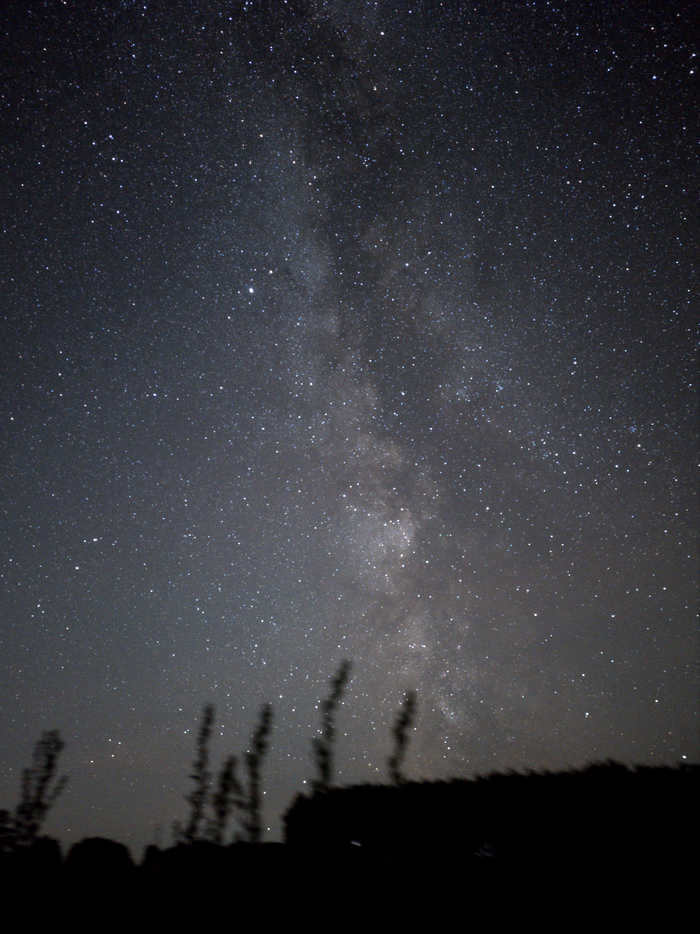
There are 10 stunning photos taken with a shutter speed of 15 seconds and ISO 3200, using a Samsung s20fe smartphone. The photos were captured in the Southern Urals, specifically in a green zone.
Orion Constellation
My first attempt at capturing the Orion constellation through a telescope was not successful. Despite using a 30-second shutter speed, I encountered a dark cloud that ruined the photo. However, I managed to capture a better image using a tripod and a 50 mm lens. I would appreciate any advice from experienced astrophotographers on how to properly capture images through a telescope. I am using a budget-friendly Celestron 70lt az telescope.
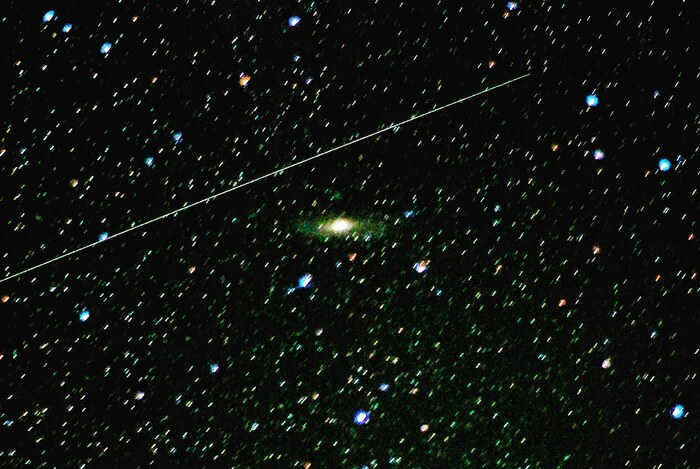
The bay in Cape Cod, Massachusetts is graced by the majestic sight of the Milky Way ascending.
Astrophotography: Capturing the Perseids Meteor Shower and Satellites in Motion
The constellation Orion is located in which galaxy?
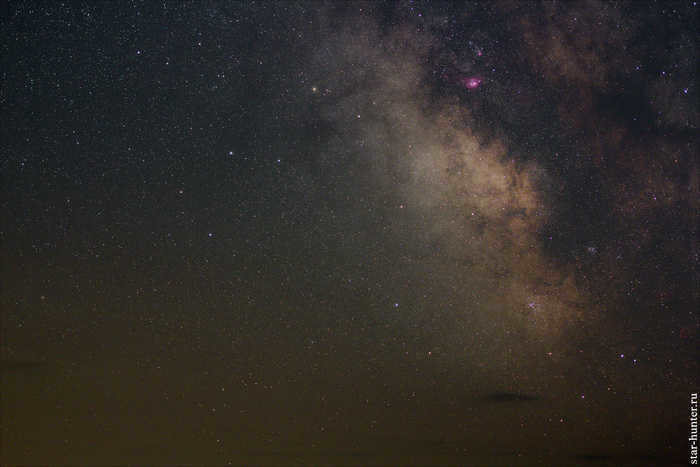
Equipment:
-Canon 40mm f/2.8 STM lens
-Canon 550Da camera
– Sky-Watcher AZ-GTi mount with equatorial wedge.
Single frame exposure of 120 seconds, ISO 800.
Location: Karachay-Cherkess Republic, Caucasus Mountain Observatory of the Moscow State University.
Constellation Orion: Location in Which Galaxy?
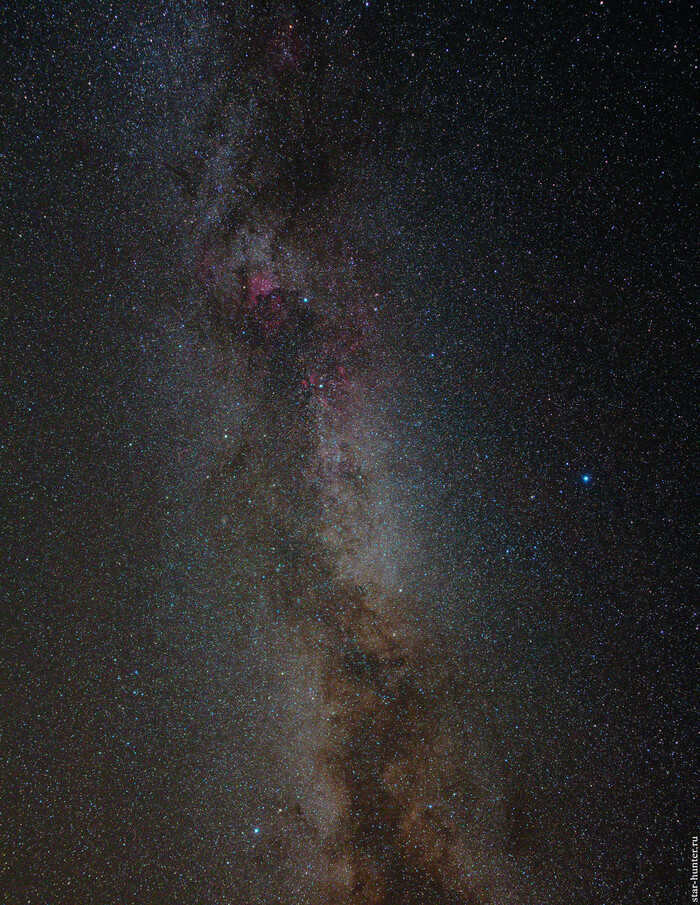
The following equipment was used for this photo:
-Samyang 16\2.0 ED lens
-Canon 550Da camera
-Sky-Watcher AZ-GTi mount with equatorial wedge.
This image was captured using a single frame with a duration of 120 seconds and an ISO setting of 800.
The photo was taken at the Karachay-Cherkess Republic in the Caucasus Mountain Observatory of the Moscow State University.
The specialists of S.P. Korolev Rocket and Space Corporation Energia (a part of Roscosmos) have recently been granted a patent for an innovative design of the helicon electric rocket plasma engine. This groundbreaking configuration holds great potential for future space missions both in the vicinity of Earth and in the vast reaches of deep space.

The functioning of ion propulsion systems. Image source: scmp.com
What are electric rocket engines and what makes domestic development unique?
Electric rocket engines have a unique characteristic that sets them apart from traditional chemical-fueled rockets – they can operate for decades without interruption, powered solely by electricity.
If we examine current launch vehicles and spacecraft, we will discover that up to 90% of their total weight is fuel. Electric rocket engines, on the other hand, can create significantly more free space on the rocket, resulting in a substantial increase in payload mass.
The development by domestic engineers at RSC Energia aims to reduce the overall weight of a specific type of electric rocket engine – the magnetoplasma electrodeless engine with cyclotron plasma acceleration in an axial magnetic field.
This type of propulsion system is commonly referred to as the helicon plasma rocket motor (HPRM).
The term helicon is used to describe low-frequency electromagnetic waves that occur in plasma when an external permanent magnetic field is present.
In this particular propulsion system, a unique arrangement of magnets generates an extremely strong magnetic field. This magnetic field is then used to propel the “working substance”, which can consist of various materials such as gases (including nitrogen, which is abundant in outer space).

A spaceship soaring through the vast expanse of outer space.
After passing through a series of magnetic fields, the gas (or working body) is transformed into plasma using helicon waves. This plasma is then expelled, creating the necessary thrust for propulsion.
Unlike ionic engines, this design does not require electrodes immersed in the plasma, resulting in an extremely high Mean Time Between Failures (MTBF). Additionally, the risk of damage to the working chamber walls and the need for moving parts is greatly minimized.
Russian experts have successfully developed a magnetic system that combines the efficient transportation of the working body, significantly reducing the overall mass of the helicon rocket engine.
By lightening the load, additional kilograms can be reallocated to accommodate other scientific equipment on board the spacecraft.
We will closely monitor the progress in this field and eagerly anticipate the testing of such an engine in outer space.
Enjoyed the article? Then I recommend subscribing to my Telegram channel dedicated to space Space is just around the corner(all the action is happening there). Plus, there will be a space poster giveaway soon!

The Useless Website: Milky Way

Our next listed project is sure to delight those who had a serious interest in astronomy during their childhood. The wonders of the universe, celestial bodies, scientific breakthroughs, and discoveries – what could be more captivating? Well, perhaps the opportunity to observe the Milky Way without the need for a telescope.
Specially designed for enthusiasts, we have discovered a stunning interactive installation of the Milky Way. Are you intrigued? Then click on the link below! Trust me, the website is truly impressive.

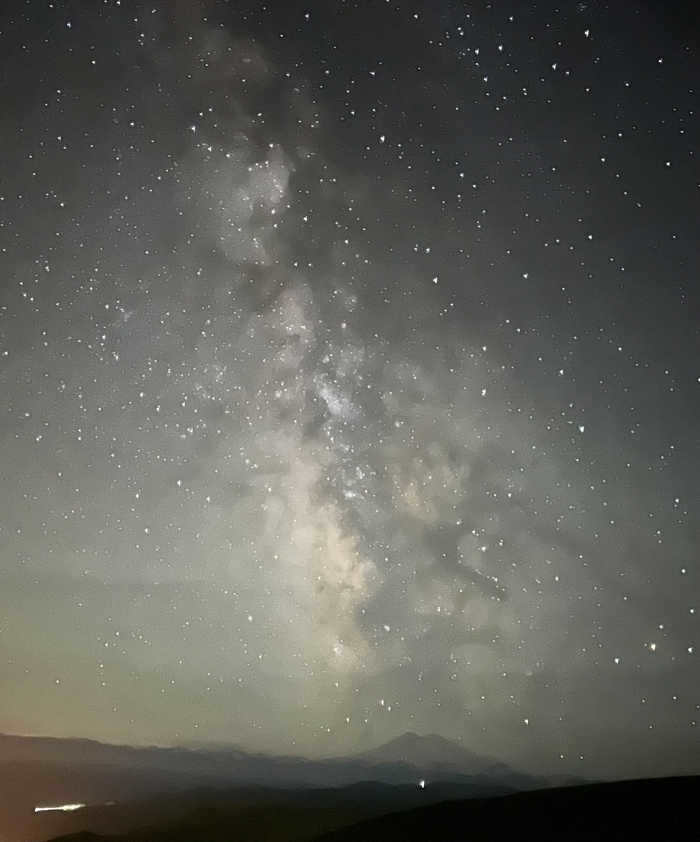
Elbrus illuminated by the Milky Way.
Scientists have made an interesting discovery – a planet with a similar atmosphere to Earth has been found.
A group of international researchers, led by NASA’s Jet Propulsion Laboratory, has recently come across a previously unidentified exoplanet. Remarkably, this newly discovered planet boasts an atmosphere that bears a striking resemblance to our own planet, Earth. What’s more, it also boasts a relatively mild and pleasant climate.
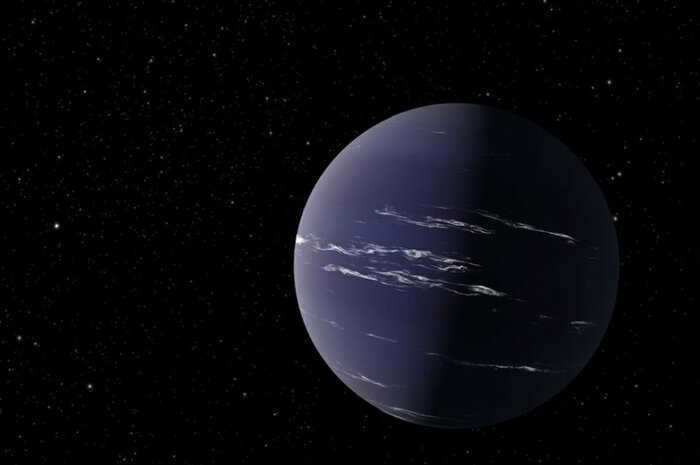
Details about the newly discovered planet
The exoplanet recently found by scientists is named TOI-1231 b. This planet, despite its somewhat unappealing name, was identified through the analysis of data collected from the Transiting Exoplanet Survey Satellite (TESS).
Furthermore, its existence has been independently confirmed through observations made using the Planet Finder Spectrograph (PFS), which is installed on the Magellan Clay telescope located in Chile.
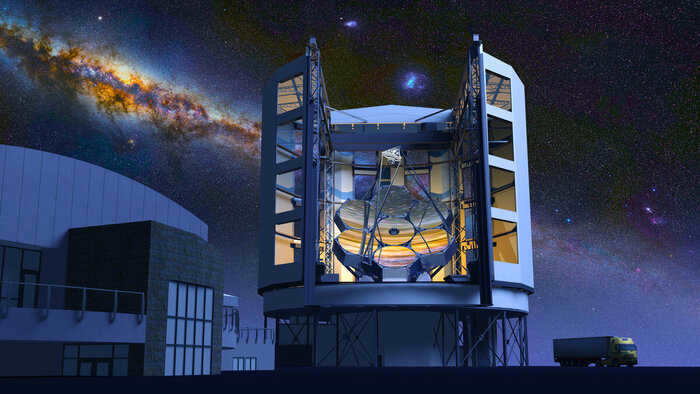
According to the lead author of the study, D. Burt, collaborating with top experts from around the world has enabled a comprehensive investigation and accurate determination of the host star’s characteristics and the exoplanet’s radius and size.
It appears that TOI-1231 b is comparable in size and density to Neptune, leading astronomers to speculate that it shares a similar gaseous atmosphere.
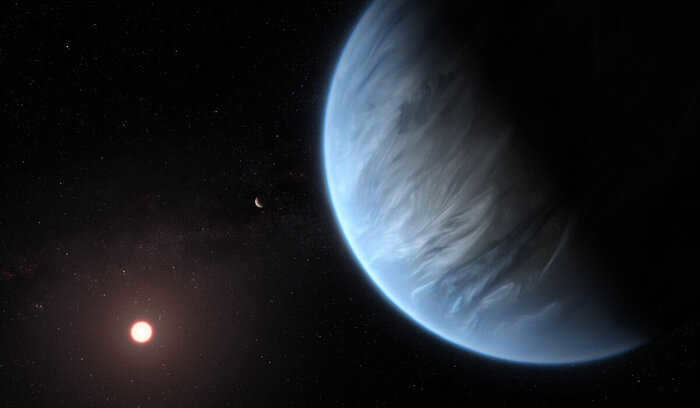
A group of scientists have recently discovered that TOI-1231 b revolves around a dwarf gas planet classified as a class M planet. Despite being eight times closer to its star compared to Earth’s distance from the Sun, the surface temperature of this exoplanet is surprisingly similar to our own.
Astronomers have attributed this temperature phenomenon to the fact that the parent star is much colder and dimmer than our Sun. Additionally, this newly discovered planet is larger than Earth, but smaller than Neptune, earning it the classification of a sub-Neptune.
There is still a great deal of research that scientists must conduct in order to analyze the atmosphere of the open planet. However, it has already been observed that this planet is among the most easily accessible for studying exoplanet atmospheres.
By examining previous objects, it is highly probable that clouds can form in the upper layers of the atmosphere on these relatively cold planets, making their atmospheres similar to that of Earth.
Clusters of stars that are globular: M4 or NGC6121 and M13 or NGC6205.
The majority of globular star clusters consist of extremely old stars with a low amount of metals. They are often humorously called “retirement homes.”

M4 is a globular cluster that is in close proximity to our planet Earth. It can be found in the constellation Scorpius, situated in the backdrop of the central region of the Milky Way galaxy. This cluster is home to over 100,000 stars, making it quite a remarkable sight.
Thanks to the utilization of the Doppler effect, scientists have discovered one of the oldest exoplanets within this cluster. This planet managed to survive the shedding of its parent star’s outer layer, which eventually transformed into a white dwarf. Additionally, this exoplanet has the unfortunate company of a millisecond pulsar, further adding to its unique characteristics.
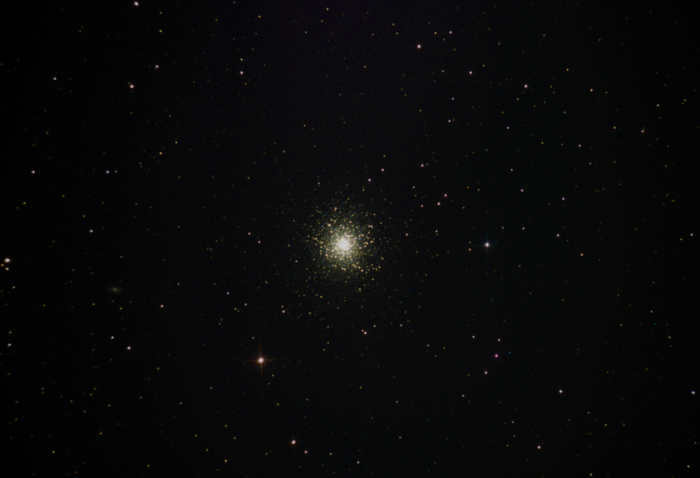
M13, located in the constellation Hercules, is one of the extensively studied and luminous “globulars” housing hundreds of thousands of stars.
In 1974, a message was transmitted towards the cluster using the Arecibo radio telescope, aimed at potential advanced civilizations. However, considering that the signal needs to traverse a distance of 25,000 light years in one direction, it is unlikely that we will receive a response. The purpose of this message was mainly to showcase the capabilities of our civilization rather than expecting a reply.
The amazing void
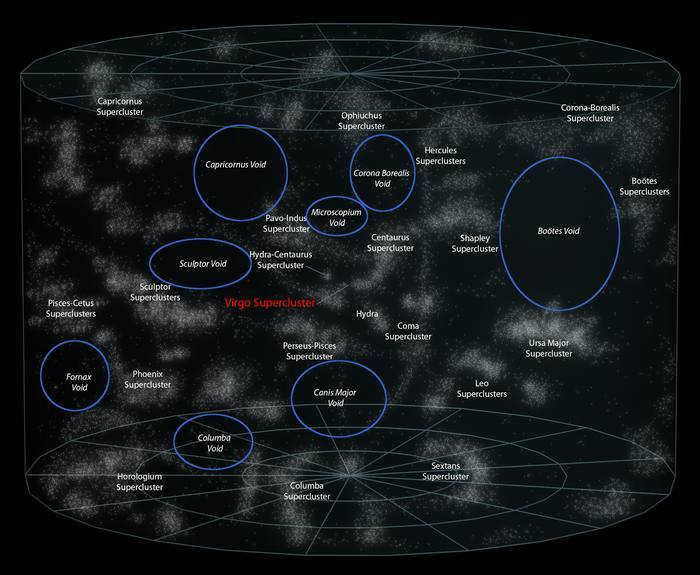
The Universe is home to billions of galaxies, but they are not evenly distributed. Some regions are densely packed with galaxies, while others are incredibly empty. In these vast expanses, one could travel at the speed of light for thousands of years without encountering a single star or even a speck of matter. The matter density in these regions is as low as one atom per cubic meter. These desolate areas are known as howdahs.
According to American astronomer Gregory Aldering, the discovery of other galaxies would have been delayed until the 1960s if the Milky Way had been positioned in the center of the howdah of Volopassus.
Just imagine the experience of living on a desolate planet situated in this vast emptiness, where instead of stars, all you see is an endless expanse of darkness in the night sky.
The image provided is a depiction of the galactic voids in the observable Universe. The largest void, known as the Botes Void, can be seen on the right side of the map, with the Volopas Void adjacent to it.
Unveiling the Mystery of the Great Attractor: The Central Point of our Galaxy’s Revolution
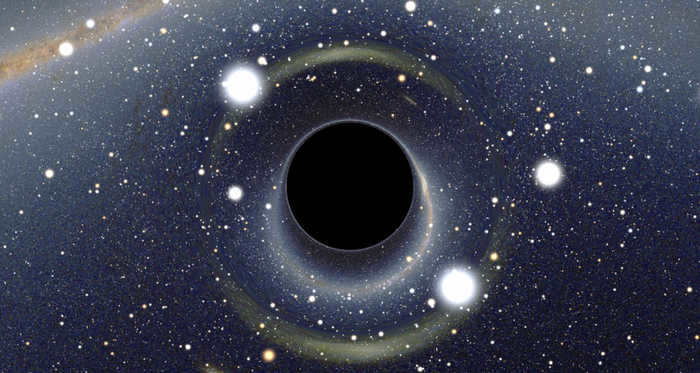
The Sun is orbited by the Earth, and the Milky Way galaxy is orbited by the Sun. So, what is the center of rotation for the Milky Way and other galaxies?
There exists an entity known as the Great Attractor, derived from the word “attract”. It is a gravitational anomaly. Now, let us examine what is currently understood about the Great Attractor.
However, before we delve into that, let us first refresh our knowledge on the principles of gravity.
Gravity is the fundamental force that acts between objects with mass. The closer and more massive the objects, the stronger the gravitational pull.
However, in our day-to-day lives and even in physical calculations, this particular model is frequently simplified. Hence, we commonly state that the Earth exerts an attractive force on us, even though our own mass also has an impact on the Earth.
Technically speaking, the Earth and other planets do not actually orbit the Sun. Rather, within the Solar System, there exists a center of mass around which both the Sun and all the planets revolve.
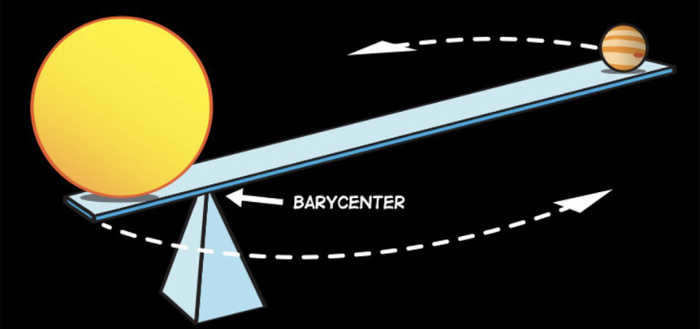
However, calculations usually neglect this convention since the mass of the Sun accounts for 99.86% of the mass of the Solar System. Additionally, the center of mass of the solar system is actually situated within the Sun, albeit not at its exact center.
This phenomenon is not unique to our solar system, but rather extends to the entire Universe. In fact, all the stars in the Milky Way galaxy orbit around a common center of mass. However, this center of mass is located within the core of the galaxy due to the highest concentration of mass in that region.
The phenomenon known as the great attractor. What is it and where can it be found?
The great attractor refers to a gravitational anomaly where the density of matter in the visible portion of the Universe is higher compared to its overall distribution. It is situated approximately 250 million light years away.
The Great Attractor possesses a mass that surpasses that of our galaxy by thousands of times, serving as the central focal point of gravity for the Milky Way and the surrounding galaxies.
Astrophysicists hold the belief that this entity constitutes a super cluster consisting of numerous galaxies.
The magnitude of the Great Attractor is not as colossal as one might imagine.
During my youth, I embodied a formidable persona, particularly by superheavyweight criteria. In my boxing endeavors, I frequently relied on my physical stature, often overlooking the importance of technique. My trainer consistently admonished me:
-“For every strength, there exists a greater strength!
And indeed, my coach’s words rang true. As I endeavored to conquer new and formidable heights, I encountered numerous adversaries who possessed considerable strength and height. In order to succeed, I had to remain adaptable, altering my tactics and relying on technique.
Contrary to initial belief, the Great Attractor is not as massive as previously thought. Outside of its limits, there exists an even more potent magnetic anomaly known as the Shepley supercollapse, which could have a mass four times greater. However, it is situated 650 million light years away.
Currently, the Shepley supergroup is the most significant point of attraction within the observable section of the Universe. Interestingly, the Great Attractor is also drawn towards the Shepley supergroup.
Astronomers at the University of Hawaii have calculated that the Great Attractor contributes 44% to the movement of our galaxy. Nonetheless, it is the Shepley supergroup that makes the most substantial impact.
There are other gravitational anomalies present in the Universe, such as the Volopassus Void. This enormous void exhibits a significantly lower density of matter compared to the average density in the Universe. While it should contain around 2,000 galaxies, only 60 have been observed, indicating a matter density 33 times lower.
What are the implications of these supercollisions for our galaxy?
As a result of the Great Attractor and the Shepley supergroup, our Milky Way and the neighboring galaxies are moving at incredible speeds.
For instance, our Milky Way is hurtling directly towards the Andromeda galaxy, which is three times larger than our own.
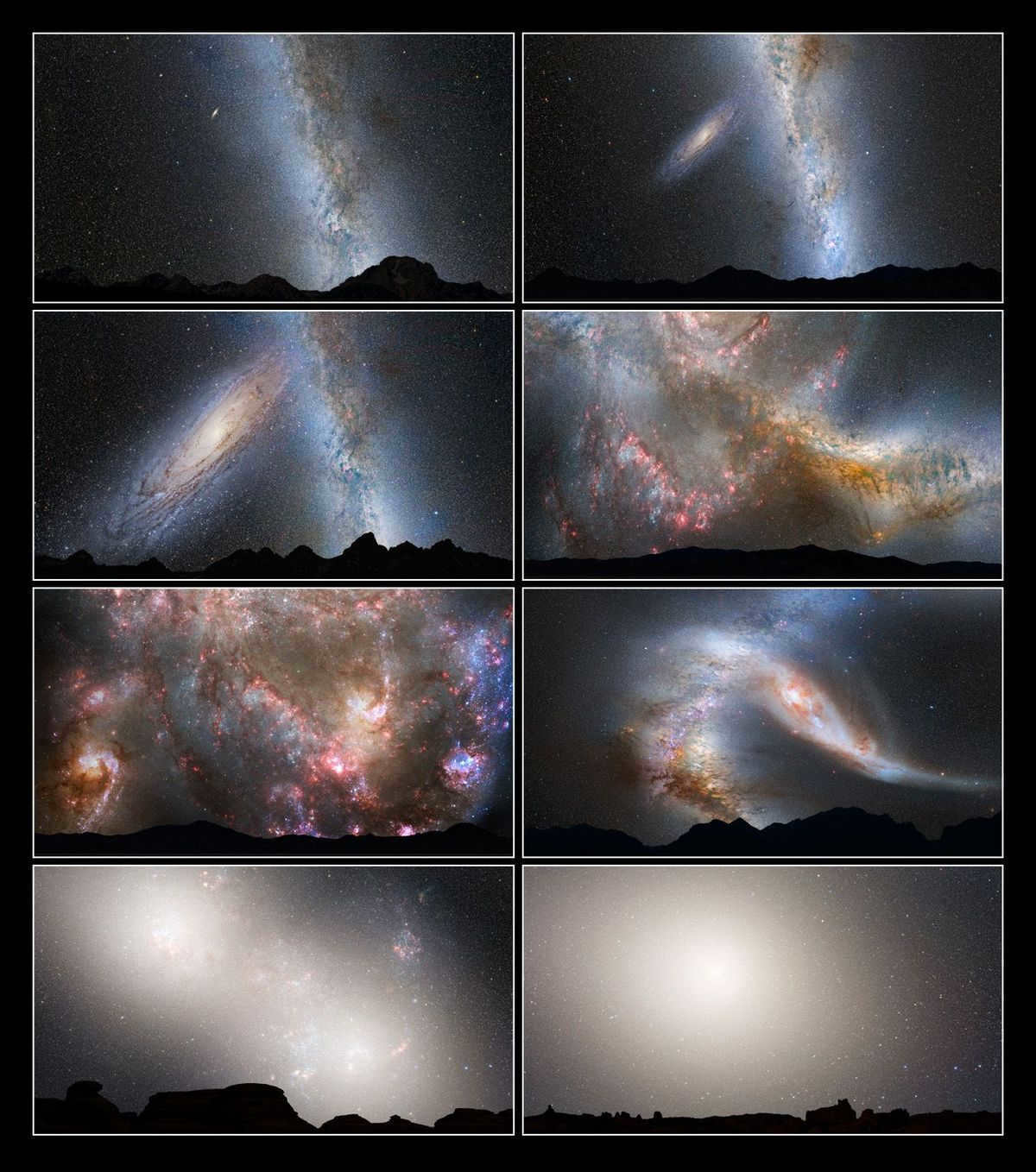
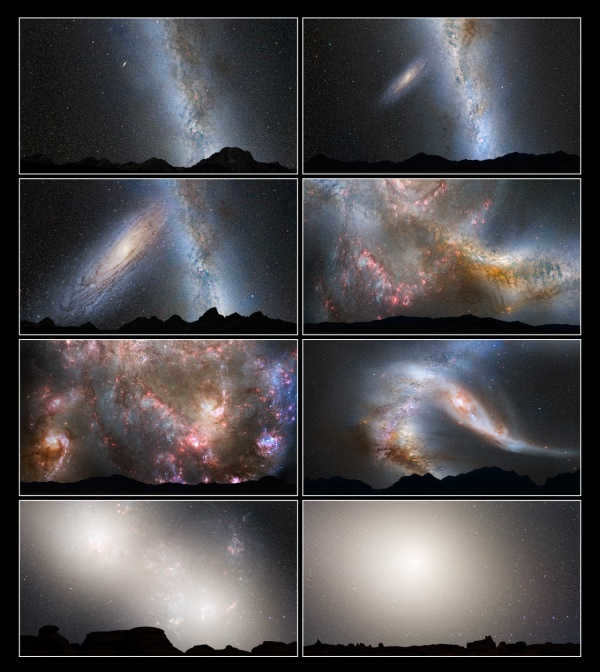
This is an approximation of what the night sky on Earth could potentially appear like in 2 billion years, with the luminous Andromeda galaxy becoming visible.
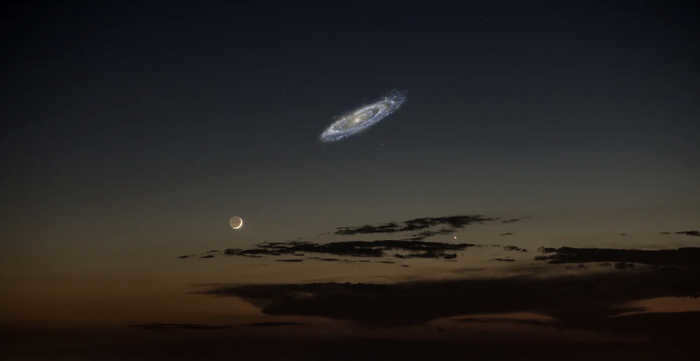
In approximately 4 billion years, our galaxies will come into contact with each other. It is anticipated that a new, larger galaxy will result from the merging of these two galaxies.
However, humanity will face significant challenges long before this event. Prior to that time, the Sun’s activity will have rendered life on Earth unsustainable. Therefore, we have approximately one billion years to engage in space exploration and ultimately conquer other stellar systems. This is not just a concept found in movies, but a genuine possibility.
If you would like to read more articles about space and science, please give this post a like!
Also, if you desire additional content, feel free to check out my Telegram channel about space, where all the action takes place. CosmoVision

A team of international scientists has created a unique map of the gaseous halo surrounding our neighboring galaxy Andromeda. Their findings indicate that the Milky Way is currently in the early stages of colliding with Andromeda, although the impact is not expected to cause any significant problems.
The Collision Theory
Our home is the Milky Way galaxy, which is visually represented as a spiral with interconnected arms. Unlike other galaxies, the Milky Way contains multiple centers or whirlpools, a recent discovery. Scientists believe that these whirlpools serve as hubs for the creation of new stars.
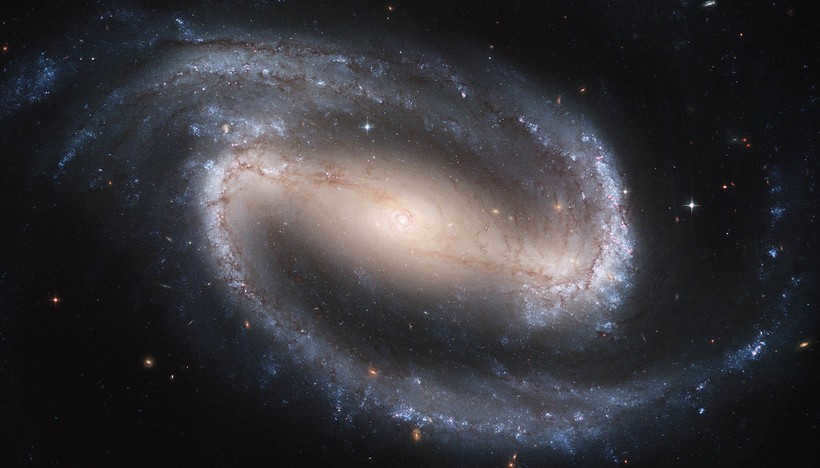
Upon analyzing data gathered from space equipment, scientists have made an intriguing observation – the Milky Way and the Andromeda Nebula are on a collision course and are highly likely to collide in the future. This collision will take place on a grand scale, spanning vast distances and occurring over a significant period of time. However, scientists are unable to predict any specific outcomes or collisions at this point. The vast distances between these celestial bodies may even render the stars oblivious to the impending convergence.

For the Earth, this prediction is also uncertain. It is still too early to discuss the dire consequences. The solar system has the ability to endure, and our planet will remain unharmed, calmly enduring this period. Especially considering that the collision will be prolonged. However, there is also the possibility of being cast adrift from the Milky Way and wandering in the vastness of interstellar space. It is difficult to determine the level of radiation present there, or whether the Sun’s magnetic field will provide sufficient protection. A recent study further expands our understanding of this collision.
Astronomers have determined that the Andromeda Nebula contains two gas shells by studying the radiation emitted by quasars, which are similar to radio sources. While the presence of the inner shell was already known, scientists have now discovered the existence of an outer halo, which is relatively tranquil and extends over a vast scale. To put it in perspective, we can think of a radiator. The radiator itself takes up a small space, but the heat it generates spreads far beyond its immediate vicinity.
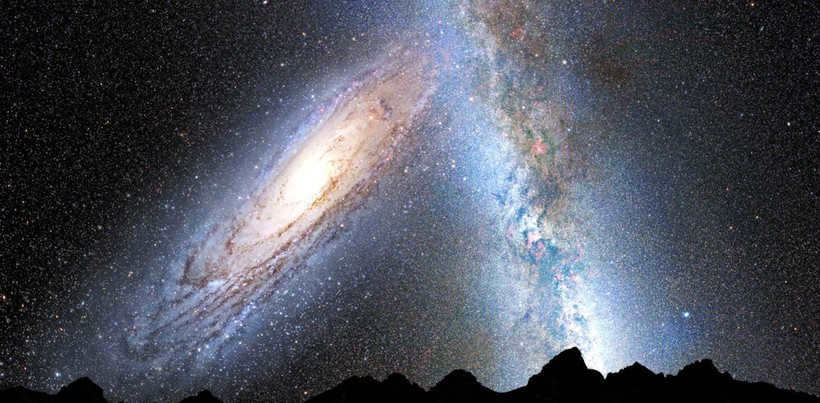
This shell was in close proximity to the Milky Way’s halo. So, even though the galaxies themselves are far apart, their gas halos are starting to collide and merge slowly. Considering that smaller galaxies have already engulfed larger ones, it might seem like the solar system doesn’t have a fighting chance.
Implications for Us
Nevertheless, there is no guarantee that the collision of galaxies and our integration into the Andromeda Nebula will actually occur, as this study demonstrates. Firstly, scientists possess rather imprecise knowledge regarding the transverse velocity of both galaxies. Moreover, it is exceedingly challenging to trace such a phenomenon on our small planet. Secondly, diverse collision scenarios exist, some of which involve tangential interactions. While the gas halos will collide, the galaxies themselves may merely pass by. Lastly, our current data is insufficient for the construction of comprehensive and thorough theories. In reality, even if we do eventually merge with the Andromeda galaxy, it will not transpire for an extended period of time, approximately 4.5 billion years from now.
Feel free to join our community on Telegram, where we have already amassed over one million members! 😍
- House
- Galaxies
About the fusion of the Milky Way and Andromeda
The Milky Way and Andromeda Nebula are the biggest galaxies out of the 40 or so galaxies that compose our local group.
The local group of galaxies is held together by gravitational forces, therefore they are not expected to drift apart, but rather gradually combine.
The Milky Way and Andromeda galaxies collide (metaphorically).
According to astronomers, approximately 4.7 billion years ago, when our Sun was formed, Andromeda and the Milky Way were separated by a distance of 4.2 million light years. Currently, this distance has decreased to 2.5-2.6 million light years, and the rate at which they are coming closer together is continuously increasing.
In 1912, American astronomer Vesto Slifer used the analysis of the Doppler shift of spectral lines of stars to determine that Andromeda is moving towards the Sun at a speed of approximately 300 km/s.
Refined estimates suggest that the velocity of convergence of the Milky Way and Andromeda galaxies is approximately 110-120 km/s. Additionally, measurements conducted between 2002 and 2010 using the Hubble Space Telescope indicate that Andromeda is approaching us in a nearly linear trajectory, making a “collision” between the galaxies nearly inevitable.
It is important to note that when we refer to a “collision,” we are not implying a physical collision between stars and other objects, as the low matter concentration in galaxies and the vast distances between objects make such collisions highly unlikely.
For instance, Proxima Centauri, the star closest to the Sun, is located approximately 4.22 light-years away from Earth, a distance that is equivalent to 270,000 times the distance between Earth and the Sun. To put it in perspective: if the Sun were the size of a coin with a diameter of 2.5 centimeters, the nearest coin/star would be situated 718 kilometers away.
In approximately 4 billion years, scientists predict that the first cross the halo galaxies will occur, resulting in a stronger gravitational attraction between them. Then, after another 2-3 billion years, these two star systems will merge and form a single conglomerate. This conglomerate has already been given the name “Milkomeda” (Milkomeda), combining the familiar name of our Galaxy – Milky Way – with “Andromeda”.
According to calculations, it is estimated that the Andromeda galaxy’s stars and gas will become visible to the naked eye on Earth in approximately three billion years.
"Currently, when observed from Earth, the Andromeda galaxy appears as a small, hazy object. Astronomers have been studying it for over a millennium," explains Roland van der Marel from the Space Telescope Science Institute in Baltimore. "There are few topics that captivate people as much as space-related inquiries. It is even possible to speculate that this diminutive, foggy object may one day engulf our Sun and the entire solar system," adds the astronomer.
After the merger of galaxies, a massive star cluster will be created, with stars swirling in a chaotic manner around a central point. This central point will house a duo of supermassive black holes, which will eventually become the new centers of the merged galaxies. These black holes will increasingly consume matter, causing the emission of intense gamma rays as the matter accelerates near them. Additionally, powerful jets of matter, known as relativistic jets, will form near the black holes’ poles. These jets will collide with gas-dust clouds, resulting in the formation of vibrant clusters of young and massive stars.
What is the future of the solar system when galaxies merge?
Scientists predict that there is a 12 percent chance that our Sun will be expelled into interstellar space as a result of this merger. Alternatively, there is a three percent probability that the Solar System will be fully captured by the Andromeda Nebula.
However, the most likely outcome is that the Solar System will be flung to the outskirts of the new galaxy, near a surrounding halo of diffuse gas. This would place it at a relatively safe distance of at least 100 thousand light years away from the galactic center.
It is important to consider that this scenario is based on the assumption that the galaxy merger will be complete by the time mentioned.
Based on observations, scientists suggest that the merger of Andromeda and the Milky Way will also involve the Triangle Galaxy (M33). Approximately 3-4 billion years after the merger, M33 will collide with a new formation called “Mlecomeda” and likely merge with it following a similar scenario.
It is challenging to accurately predict if everything will unfold exactly as described or if there will be variations. Looking billions of years into the future poses significant uncertainties.

Andromeda, also known as the Andromeda Galaxy, is the largest celestial object closest to our Milky Way galaxy. It is situated approximately 2.5 million light years away from our planet. Moreover, it holds the intriguing distinction of being the farthest object in outer space that can be observed without the aid of a telescope.
What is our knowledge about the Andromeda galaxy?
The Andromeda galaxy is classified as a spiral galaxy, similar in shape to the Milky Way. It has a diameter of approximately 220,000 light years, making it larger than our own galaxy, which has a diameter of about 100,000 light years. The Andromeda Galaxy is estimated to contain up to 1 trillion stars, which is more than 5 times the number of stars in our own star system. In terms of mass, Andromeda is significantly larger than the Milky Way, with an estimated mass of about 1.5 billion solar masses, compared to the Milky Way’s 850,000 million solar masses.
As previously mentioned, it is possible to see Andromeda with the naked eye. Historically, astronomers believed that it was simply a type of nebula. Even the renowned William Herschel held the belief that Andromeda was an interstellar cloud in close proximity to Earth. However, it was later discovered that Andromeda is actually a distant galaxy, with a distance approximately 2,000 times greater than Sirius, or roughly 16,000 light years. In 1885, a supernova named S Andromedae was observed in Andromeda, marking the first recorded instance of a supernova in a different galaxy.
It was not until 1920 that it was definitively established that the observed celestial object was not a nebula, but rather a remote galaxy. By 1953, it was estimated to be approximately 1.5 million light years away. It is currently believed that Andromeda formed around 10 billion years ago, following the merging of several smaller protogalaxies.
The Andromeda Galaxy and the area it occupies

Approximately 2 to 4 billion years ago, there occurred a remarkably close encounter between the Triangle Galaxy and Andromeda, resulting in a remarkable surge in star formation and disruption of the outer region of the Triangle Galaxy. However, in the following 2 billion years, star formation in the Andromeda disk gradually declined and has now reached a nearly non-existent level.
Based on the average rate of star formation in the past and present of these celestial bodies, scientists have determined that the Milky Way and the Andromeda galaxy are currently halfway through their evolutionary process. This assessment allows for an estimation of what will transpire in the future.
What lies ahead for these galaxies, you may wonder? Essentially, the free gas will gradually deplete, resulting in a significant reduction in the rate at which new stars form. Eventually, in the distant future, the formation of new stars will cease altogether.
The future of Andromeda
Let me not alarm you, but in approximately 4 billion years, the Andromeda galaxy and the Milky Way will have a rendezvous. At first glance, it may appear to be a catastrophic event of immense proportions. However, fear not. The vast distances between the stars in comparison to their sizes will likely prevent direct collisions. Nevertheless, the gravitational forces will exert their influence. Consequently, a novel elliptical galaxy will emerge from the collision, known to astronomers as Milcomeda. This process is expected to instigate yet another period of heightened star creation at the heart of the amalgamated galaxy.
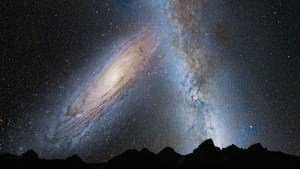
Undoubtedly, the fate of the solar system remains uncertain. However, as previously stated, it is highly unlikely that anything significant will occur. The likelihood of star collisions occurring is incredibly low. Nevertheless, there exists a slim possibility that the solar system could be expelled from the Milky Way even before any potential collision takes place.
The universe is in a constant state of change
When you gaze up at the beautiful night sky, remember that the universe is always evolving. Nothing in this enchanting world remains the same. Even galaxies undergo transformations over billions and billions of years. It is a privilege to witness a momentous event in the life of the cosmos. However, this period of time is fleeting, and only a few civilizations in our Galaxy (if there are any) will be able to boast that they witnessed the Milky Way and the Andromeda galaxy as distinct entities…