When does the Sun reach its highest point?
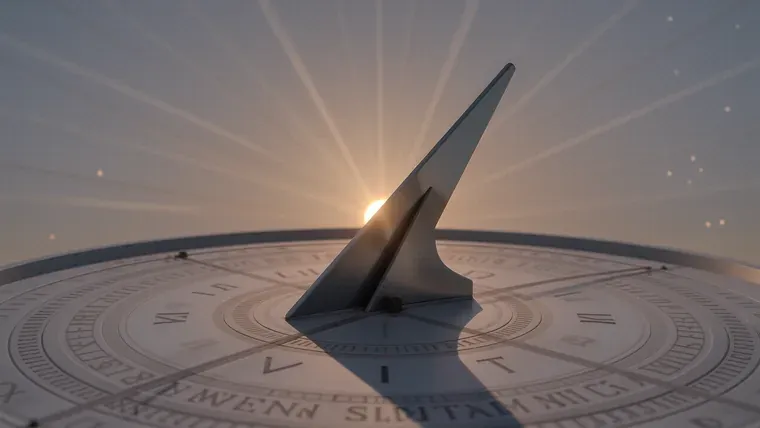
The Sun reaches its zenith at a specific latitude only when its declination matches that latitude. For an observer on the equator, this occurs twice every year during the equinoxes, specifically around March 20 and September 22, because the Sun crosses the celestial equator at those moments. At the Tropic of Cancer (approximately 23.5° N), the zenith occurs only once per year on the summer solstice, while the Tropic of Capricorn (approximately 23.5° S) sees a zenith once per year on the winter solstice.
The Geometry of Solar Altitude
The Sun moves. It travels. Because the Earth’s rotational axis tilts at 23.5 degrees relative to its orbital plane, the angle of solar incidence changes constantly throughout the year. This tilt dictates the seasons. We experience them. While the Earth orbits the Sun, the specific hemisphere leaning toward the light receives more concentrated energy because the rays strike the surface at a more perpendicular angle.
The zenith is 90 degrees. It is vertical. If you stand at 45° N latitude, the Sun will never reach the zenith because your position remains outside the tropical zone. The tropics define the limits. They are boundaries. Although people often use the term “zenith” to describe the highest point of the Sun on any given day, the astronomical definition requires the body to be directly overhead at a 90-degree altitude.
The solar flux varies. It changes. On June 21 in Moscow, the Sun reaches a maximum altitude of only 57.5 degrees above the horizon, so the light hits the ground at a slant rather than falling straight down. This angle matters immensely. It determines heat. Because the energy is spread over a larger surface area when it hits at an angle, the thermal intensity decreases significantly compared to equatorial regions.
The distance changes slightly. It is minimal. Earth’s orbit is elliptical, but the variation in distance between perihelion and aphelion only accounts for a 3% difference in solar proximity. This does not cause seasons. The tilt does. While some believe we are colder in winter because we are further from the Sun, we are actually closer to the Sun in January than in July, although the Northern Hemisphere experiences winter during that time.
Latitudinal Variations and the Tropics
The equator is central. It is long. Spanning approximately 40,075 kilometers, the equator divides the planet into two hemispheres while providing a baseline for solar measurements. The Sun reaches the zenith here twice annually. It happens often. Because the equatorial region stays relatively consistent in its solar exposure, it lacks the dramatic seasonal shifts seen in temperate or polar zones.
Tropics exist. They are narrow. The Tropic of Cancer and the Tropic of Capricorn act as the northern and southern limits where a 90-degree solar altitude is possible. These lines shift. They move. Although they appear fixed on most maps, their exact position depends on the Earth’s axial tilt at any given moment in time.
The polar circles define limits. They are far. Located at approximately 66.5° N and 66.5° S, these latitudes experience the phenomena of the polar day and polar night. Light stays. It lingers. At the North Pole, the Sun remains above the horizon for six months after the spring equinox because the tilt keeps the pole facing the light.
The zenith is rare. It is specific. In the regions between the tropics and the polar circles, such as central Russia or much of the United States, the Sun reaches a high altitude but never hits 90 degrees. The sky changes. It shifts. While an observer in the tropics sees the Sun pass directly overhead, a person in Moscow sees a much lower arc throughout the year.
The solar path varies. It is curved.
- At the equator: The Sun rises due east and sets due west daily.
- At the tropics: The Sun reaches the zenith once per year on the solstice.
- At the poles: The Sun moves in a circular pattern along the horizon.
Comparative Planetary Dynamics
Jupiter rotates fast. It spins. With a rotation period of approximately 9.925 hours, Jupiter experiences rapid day-night cycles that differ vastly from Earth’s 24-hour rhythm. There are no seasons. They do not exist. Because Jupiter’s axial tilt is very small, the solar incidence angle remains relatively constant across its latitudes throughout its 11.86-year orbit.
Uranus is different. It rolls. This planet possesses an extreme axial tilt of approximately 97.7 degrees, so it essentially rotates on its side as it orbits the Sun. Seasons are extreme. They are harsh. While an inhabitant at the Uranian equator might experience long periods of twilight, a resident at the pole would see the Sun remain at the zenith for months during the summer solstice.
The spiral path occurs. It is visible. On Uranus, the Sun’s apparent movement in the sky follows a complex spiral pattern because the planet’s orientation changes so drastically relative to its orbital position. The light fades. It returns. Although the weather on Uranus remains somewhat monotonous due to its distance from the Sun, the seasonal shifts in solar angle are the most extreme in the solar system.
Planet Zeta is hypothetical. It is tilted. Imagine a world with a 45-degree tilt, where the tropical and polar boundaries coincide at the same latitude. The Sun moves. It spirals. Because the tilt is so high, the transition between the intense summer zenith and the dark polar night would be much more violent than on Earth.
The solar altitude depends on tilt. It is math.
Navigating by Solar Position
The Sun guides us. It works. Even without a mechanical clock, an observer can determine cardinal directions by watching the movement of shadows cast by a gnomon. The shadow moves. It shifts. Because the Sun travels from east to west, a shadow will move from west to east throughout the day as the light source changes position.
The two-shadow method works. It is precise. You can mark the tip of a shadow, wait 20 minutes, and then mark the new position to create a west-east line. This requires patience. It takes time. Although this method provides a reliable orientation, its accuracy decreases during the winter months when the Sun’s path is lower and the shadows become elongated.
The azimuth matters. It is an angle. To find a specific direction, you must measure the angle between your target and the Sun’s current position in the sky. The compass helps. It is useful. While a magnetic compass is more efficient, using the Sun allows for navigation in environments where magnetic interference or equipment failure might occur.
The shadow tells secrets. It shows light. In the Northern Hemisphere, the Sun is generally to your south at noon, so your shadow will point toward the north. The direction changes. It evolves. After the sun passes its highest point, the shadow begins its trek toward the east, which allows a traveler to maintain a consistent heading.
The technique is simple. It is effective.
- Plant a straight stick firmly in the ground.
- Mark the position of the shadow’s tip.
- Wait for the shadow to move significantly.
- Mark the new position of the shadow’s tip.
- Draw a line between the two marks to find the east-west axis.
Atmospheric and Biological Influences
The weather is complex. It varies. While solar angle is the primary driver of seasons, atmospheric conditions like cloud cover and wind patterns heavily influence local temperatures. The air moves. It carries heat. Because moisture-laden air masses move from the tropics toward the poles, they redistribute energy across the planet’s surface.
Plants respond to light. They grow. Lichens and mosses often populate the northern side of tree trunks in the Northern Hemisphere because that side remains shaded and damp. The sun hits. It dries. Although this is a general rule, local topography and wind direction can create microclimates that reverse this biological pattern.
The seasons affect life. They change everything. In Russia, the difference between a summer day with 17 hours of light and a winter day with only 6 hours is massive. The temperature drops. It falls. While the solar radiation flux in Moscow might reach 80% of its maximum during the summer solstice, it can plummet to 20% during the darkest winter months.
The Earth stays balanced. It is stable. We rely on this delicate interplay of tilt, orbit, and atmosphere to maintain the conditions necessary for life. The Sun provides. It warms. Although the climate is currently undergoing shifts due to various factors, the fundamental mechanics of our solar position remain constant and predictable.
The sky remains vast. It is deep. Even as we observe these patterns from our small corner of the world, the same laws of physics govern the movement of distant stars and the rotation of giant planets like Jupiter.
Frequently asked questions
Where can the sun reach its zenith?
The sun reaches a 90-degree zenith only within the tropical zone, specifically between the Tropic of Cancer (23.5° N) and the Tropic of Capricorn (23.5° S).
How many times does the sun reach the zenith at the equator?
At the equator, the sun reaches its zenith twice every year during the equinoxes, around March 20 and September 22.
Does the Earth's distance from the sun cause the seasons?
No, the seasons are caused by the Earth's 23.5-degree axial tilt. In fact, Earth is actually closer to the sun in January than in July.
What determines the solar altitude in different locations?
Solar altitude is determined by the Earth's axial tilt and the observer's latitude, which dictates the angle at which solar rays strike the surface.
More in Solar System

Calculating the Earth's mass: A complex task
Learn how scientists use the gravitational constant and orbital mechanics to determine Earth's mass of approximately 5.9722 x 10^24 kg.
Discovering the current location of Voyager in interstellar space
Learn about the current location of Voyager 1 and 2, their distances from Earth, and how they navigate the harsh environment of interstellar space.
How many natural satellites does the earth possess?
Explore Earth's celestial companions, from the permanent Moon to transient quasi-satellites and cosmic dust clouds located at Lagrange points.
How many planets orbit the sun in second grade lessons
Learn how many planets orbit the sun and discover key facts about the eight official planets, from Mercury to Neptune, for students and educators.