Which planet has the highest number of satellites?
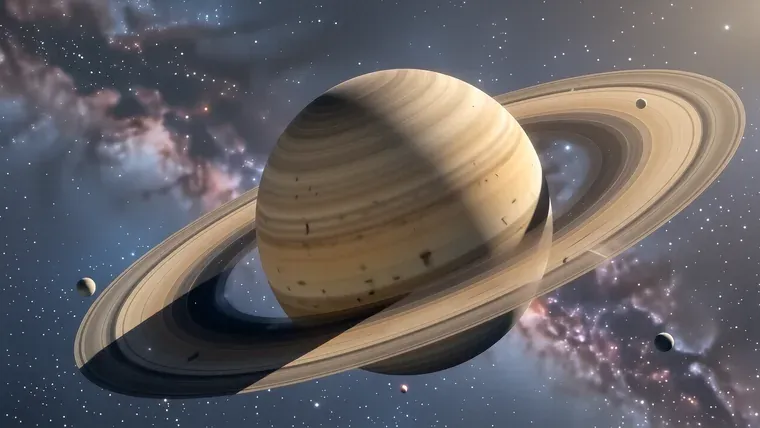
Saturn currently holds the record for the highest number of confirmed satellites in our solar system with 82 moons, though Jupiter frequently competes for this title with 79 known satellites. While Jupiter remains a massive gravitational powerhouse, recent astronomical surveys have identified more small, irregular moons orbiting Saturn. These counts fluctuate as telescope technology improves and new, smaller objects are detected in distant orbits.
The Competition for Satellite Dominance
The tally of moons changes often. Astronomers continue to find small, rocky bodies because the sensitivity of modern imaging systems increases every year. Saturn leads with 82 satellites. Jupiter follows closely with 79.
Mercury and Venus have zero moons. These planets lack the mass required to capture and hold significant numbers of orbiting bodies. Earth has only one moon. Mars possesses two small satellites, Phobos and Deimos, which some researchers believe originated as captured asteroids from the nearby belt.
The distribution is uneven. Most planets in our solar system possess a moderate number of satellites, although the gas giants dwarf the terrestrial worlds in their gravitational reach. Saturn’s count includes 62 officially recognized moons with specific orbits. Jupiter’s total also includes many small, irregularly shaped objects that move in retrograde orbits.
Saturn is the winner. It holds 82 moons.
The Giants: Jupiter and Saturn
Jupiter is massive. It possesses a gravitational field so intense that it frequently captures passing asteroids and turns them into permanent satellites. This process explains why the planet has at least 79 known moons, although some estimates suggest there may be over 100 objects currently under investigation. Many of these smaller bodies move in retrograde orbits because they were captured rather than forming within the original planetary disk.
Saturn’s moon count is high. It has 82 satellites. Titan is the largest among them. This moon has a diameter exceeding 5,000 km and accounts for 95% of the total mass of all Saturnian moons. Titan possesses a dense atmosphere composed mostly of nitrogen, which allows it to maintain liquid methane and ethane lakes on its surface.
The Galilean moons are famous. Galileo Galilei first observed them in 1610 using his early telescope. These four satellites—Io, Europa, Ganymede, and Callisto—are the largest in Jupiter’s system. They follow synchronous orbits so that they always present the same face to the gas giant.
Jupiter’s moons are diverse.
- Io: Volcanic activity with over 400 active volcanoes.
- Europa: An icy shell likely concealing a liquid ocean.
- Ganymede: The largest moon in the solar system at 5,268 km.
- Callisto: An ancient surface covered in impact craters.
Characteristics of Major Satellites
Ganymede is huge. It measures 5,268 km in diameter, which makes it larger than the planet Mercury. This moon is the only satellite in our solar system that possesses its own magnetic field. Because of this field, auroras frequently illuminate the polar regions of the moon.
Io is violent. It experiences intense tidal heating because Jupiter’s massive gravity constantly stretches and compresses the moon’s interior. This friction generates enough heat to sustain over 400 active volcanoes. These volcanoes eject sulfur and sulfur dioxide into a thin atmosphere, creating a colorful but toxic environment.
Europa looks cold. Its surface consists of a thick layer of smooth ice. Scientists believe a liquid ocean exists beneath this crust because the tidal forces from Jupiter provide sufficient warmth to prevent total freezing. This ocean might contain two to three times more water than all of Earth’s oceans combined.
Callisto is old. It has one of the most heavily cratered surfaces in the solar system. The Valhalla crater formation spans approximately 2,000 km in diameter. Many scientists consider Callisto a candidate for future human bases because its surface is relatively stable compared to Io.
Titan is unique. It is slightly smaller than Ganymede but remains a primary target for exploration. The moon has mountains and cryovolcanoes that erupt water, ammonia, and methane. Its atmosphere is 1.5 times denser than Earth’s, although it lacks oxygen.
Small Satellites and Irregular Orbits
Many moons are small. Most of the satellites orbiting the gas giants are irregularly shaped, stony objects. These bodies often move in retrograde orbits, which means they revolve in the opposite direction of the planet’s rotation. This motion suggests they were captured from the surrounding space rather than forming alongside the planet.
Amalthea is interesting. It is one of Jupiter’s smaller moons and shows signs of a fragmented history. Some researchers believe it was once a larger body that shattered due to meteorite impacts before gravity pulled the pieces back together.
The number of satellites varies by distance.
- Inner moons: Usually larger and follow prograde orbits.
- Outer moons: Often smaller, irregular, and follow retrograde paths.
- Shepherd moons: Small satellites that help maintain the structure of planetary rings.
Saturn uses shepherd moons. These small objects like Pan and Daphnis orbit near the edges of the rings. They use their gravity to prevent ring particles from drifting away so that the ring structures remain stable over millions of years.
Temperature Extremes and Habitability
Triton is freezing. As Neptune’s largest moon, it reaches temperatures as low as -235 °C. It is the coldest known satellite in our solar system. Triton orbits Neptune in a retrograde direction, which likely indicates it was a Kuiper Belt object captured by Neptune’s gravity.
The Moon is variable. Earth’s satellite experiences extreme shifts between -173 °C in the shade and +127 °C in direct sunlight. It has no significant atmosphere to regulate these changes. Lunar tremors of up to 5.5 magnitude occur several times a year because of tidal stresses.
Habitability remains a theory. While most moons are frozen rocks, Europa and Ganymede offer potential for life. These moons may have liquid water oceans that stay warm due to tidal heating. If oxygen or other chemical energy is present, simple organisms could theoretically exist in those deep waters.
Titan offers another path. It has liquid hydrocarbons on its surface. Although these lakes are not made of water, they provide a medium for complex chemistry. Scientists study Titan to understand how prebiotic molecules might form in a cold, nitrogen-rich environment.
The Future of Satellite Discovery
Technology improves constantly. As we deploy more advanced telescopes and spacecraft, the number of known moons will continue to rise. In 2018, new satellites were identified around Jupiter, proving that our catalogs are never truly finished.
The Juno spacecraft provides data. Launched in 2011, this mission has sent extensive information back to Earth regarding Jupiter’s environment. Scientists are still analyzing the data from its flybys because the sheer volume of information is massive.
Spacecraft continue to travel. The New Horizons mission reached Pluto in 2015 and provided the first detailed look at its five moons. Charon is so large relative to Pluto that the two bodies function almost like a binary system.
We track movement. Astronomers use laser beams to measure how the Moon moves away from Earth at approximately two inches per year. This slow drift means the Moon’s appearance in our sky changes over geological timescales.
The count will grow. We expect more discoveries in the outer solar system. Small objects like S/2003 J9 and S/2003 J12 show how much remains hidden in the darkness.
Frequently asked questions
Which planet has the most moons in our solar system?
Saturn currently holds the record with 82 confirmed satellites, followed closely by Jupiter which has 79 known moons.
How many moons do Earth and Mars have?
Earth has only one moon, while Mars possesses two small satellites named Phobos and Deimos.
Which is the largest moon in the solar system?
Ganymede is the largest moon in our solar system, measuring 5,268 km in diameter, which makes it larger than the planet Mercury.
Do any planets have zero moons?
Yes, Mercury and Venus have zero moons because they lack the mass required to capture and hold significant orbiting bodies.
More in Solar System
Calculating the Earth's mass: A complex task
Learn how scientists use the gravitational constant and orbital mechanics to determine Earth's mass of approximately 5.9722 x 10^24 kg.
Discovering the current location of Voyager in interstellar space
Learn about the current location of Voyager 1 and 2, their distances from Earth, and how they navigate the harsh environment of interstellar space.
How many natural satellites does the earth possess?
Explore Earth's celestial companions, from the permanent Moon to transient quasi-satellites and cosmic dust clouds located at Lagrange points.
How many planets orbit the sun in second grade lessons
Learn how many planets orbit the sun and discover key facts about the eight official planets, from Mercury to Neptune, for students and educators.