Differentiating between refractor and reflector telescopes
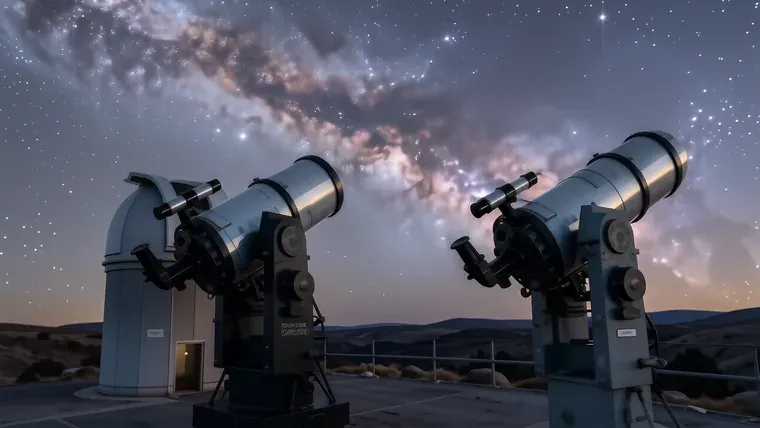
Refractor telescopes use lenses to bend light, while reflector telescopes use curved mirrors to bounce it toward an eyepiece. Choosing between them depends on whether you prioritize high-contrast planetary views or large-aperture deep-sky observations. Refractors provide sharp, color-accurate images because their sealed tubes prevent air currents from distorting the light path. Reflectors offer much larger apertures for a lower price so that observers can see fainter galaxies and nebulae.
The Mechanics of Refraction
Refractors rely on glass lenses. They are simple. An objective lens at the front of the tube gathers incoming light rays and bends them toward a specific focal point because the curvature of the glass dictates the path of every photon. This process is called refraction. It is precise.
The design remains very stable. Because the optical tube is usually sealed, dust and air currents cannot easily interfere with the internal components during an observation session. Most amateur refractors use achromatic lenses. These lenses combine two different glass types to reduce color fringing. However, chromatic aberration still occurs in cheaper models. This manifests as purple or blue halos around bright objects like Venus or the Moon.
Apochromatic refractors solve this problem. They are expensive. These high-end instruments use three or more lens elements so that they can bring different wavelengths of light to the exact same focus. While these telescopes provide nearly perfect color correction, the cost of manufacturing large, high-quality glass elements increases disproportionately as the diameter grows. You will rarely find a professional research refractor with an aperture exceeding 150 mm.
The Yerkes Observatory in Wisconsin houses the world’s largest refractor. It is massive. This instrument features a 1.02-meter lens that was installed in 1897 to study the solar system and distant stars. It remains a functional part of astronomical history.
- Achromatic refractors: Affordable but prone to color fringing.
- Apochromatic refractors: Expensive but provide superior color correction.
- Galilean design: Uses a plano-convex objective and concave eyepiece.
- Keplerian design: Uses two convex lenses for upright or inverted images.
Mirror Optics and Reflection
Reflectors use mirrors instead. They are efficient. A primary concave mirror sits at the bottom of the tube to collect light and reflect it upward toward a secondary mirror because this configuration allows for much larger apertures without the weight of massive glass lenses. Isaac Newton developed the first functional version in 1668. He wanted to bypass the color errors found in early refractive designs.
Newtonian reflectors are common. They are practical. The light travels to a flat secondary mirror near the top of the tube, which then directs the image to an eyepiece located on the side of the instrument. This design is often used in Dobsonian mounts. These mounts are simple, sturdy, and very affordable for beginners.
Reflectors face different challenges. They are open. Because the optical tube is often open to the atmosphere, air currents can circulate inside the tube and degrade the image quality during warm nights. Dust also settles on the mirrors. You must periodically clean or recoating the reflective surfaces to maintain performance.
Cassegrain reflectors offer a compact alternative. They are clever. These systems use a convex secondary mirror to fold the light path back through a hole in the primary mirror so that the telescope achieves a long focal length within a short physical tube. This makes them easier to transport than long Newtonian models.
The Great Canary Telescope in the Canary Islands demonstrates the power of mirrors. It is huge. Its 10.4-meter primary mirror was completed in 2007 and allows for observations that no lens-based system could ever achieve.
Hybrid Catadioptric Systems
Catadioptrics combine both methods. They are hybrids. These telescopes use both lenses and mirrors to correct optical errors while maintaining a very compact physical profile. A corrector plate at the front of the tube helps to minimize aberrations because it pre-shapes the incoming light before it hits the primary mirror.
Maksutov-Cassegrain models are popular. They are sharp. The thick meniscus lens at the front provides excellent correction for spherical aberration, which makes these instruments ideal for high-magnification planetary viewing. They are quite heavy for their size. Although they offer great performance, the specialized glass required makes them more expensive than a standard Newtonian reflector.
Schmidt-Cassegrain telescopes are versatile. They are widely used. These instruments provide a wide field of view and a long focal length, which allows amateur astronomers to switch easily between observing the Moon and photographing deep-sky objects. Many modern computerized mounts work perfectly with these models.
The portability of these systems is a major advantage. They are small. You can take a Maksutov telescope on a camping trip or use it on a small balcony where a large Newtonian would be too cumbersome to operate.
- Maksutov-Cassegrain: High correction, compact, and great for planets.
- Schmidt-Cassegrain: Versatile, widely available, and good for photography.
- Correction mechanism: Uses a lens/plate and mirrors together.
Understanding Aperture and Magnification
Aperture is the most important metric. It is diameter. The diameter of your objective lens or mirror determines how much light the telescope can collect from distant, dim objects. A larger aperture increases the resolving power because more light allows you to distinguish between two closely spaced stars.
Magnification is often misunderstood. It is secondary. Many beginners mistakenly believe that a telescope with 500x magnification is superior to one with 100x, although the image at 500x will likely be dim and blurry if the aperture is too small. Practical magnification is generally calculated by multiplying the aperture in millimeters by two. If you have a 50 mm lens, your useful limit is roughly 100x.
Light-gathering power grows quickly. It is exponential. Because the light-gathering area is proportional to the square of the aperture, a 200 mm reflector collects four times as much light as a 100 mm refractor. This makes large reflectors the preferred choice for observing faint nebulae and distant galaxies.
Thermal stabilization matters too. It takes time. If you move a large telescope from a warm house to a cool night, the glass will deform slightly until it reaches ambient temperature. This process can take up to two hours for large mirrors so that the image remains sharp and stable.
Choosing the Right Mount
The mount supports the tube. It is vital. An azimuthal mount moves in two directions: up-down (altitude) and left-right (azimuth). These are easy to use for beginners but require constant manual adjustment because the Earth’s rotation causes celestial objects to drift out of view.
Equatorial mounts are more advanced. They are precise. By aligning one axis with the North or South Celestial Pole, you can track a star using only one single movement so that it stays centered in your eyepiece for long periods. This is essential for astrophotography.
Dobsonian mounts are highly efficient. They are simple. These are essentially heavy-duty azimuthal mounts designed specifically for large Newtonian reflectors, providing a stable base that can support massive tubes without breaking the bank.
GOTO mounts use computers. They are automated. These systems include a database of celestial coordinates and can automatically find and track objects after you enter their names into a handheld controller. While they are very convenient, they require a steady power source like a battery or an AC adapter.
| Mount Type | Best Use Case | Complexity |
|---|---|---|
| Azimuthal | Terrestrial viewing / Beginners | Low |
| Equatorial | Astrophotography / Tracking | Medium |
| Dobsonian | Large aperture deep-sky | Low |
| GOTO | Automated object searching | High |
Selecting your first instrument requires honesty about your goals. If you want to see the rings of Saturn with high contrast, a small refractor is a great starting point. If you want to find the Andromeda Galaxy in a dark sky, you should prioritize a large-aperture reflector. Most hobbyists eventually find that they need more than one type of optical system to satisfy their curiosity about the cosmos.
Frequently asked questions
What is the main difference between a refractor and a reflector telescope?
Refractor telescopes use glass lenses to bend light, while reflector telescopes use curved mirrors to bounce light toward an eyepiece.
Which telescope is better for seeing faint galaxies and nebulae?
Reflector telescopes are generally better for deep-sky observations because they offer much larger apertures for a lower price, allowing more light to be collected.
What is chromatic aberration in a telescope?
Chromatic aberration is a color error found in cheaper achromatic refractors that manifests as purple or blue halos around bright objects like the Moon or Venus.
How do I calculate the useful magnification of my telescope?
Practical magnification is generally calculated by multiplying the aperture in millimeters by two; for example, a 50 mm lens has a useful limit of roughly 100x.
More in Stargazing
The benefits of an apochromatic refractor
Learn how an apochromatic refractor uses ED glass and multiple lens elements to eliminate chromatic aberration for high-resolution astrophotography.
How to start choosing the perfect telescope for beginners
Learn how to select the right telescope by comparing refractors and reflectors, understanding aperture, and matching equipment to your observation goals.
A beginner's guide on how to use Stellarium
Learn how to use Stellarium to simulate the night sky, configure geographical coordinates, and optimize visual settings for celestial observation.
How a refractor telescope works
Learn how a refractor telescope uses lenses to gather light, its advantages in contrast and maintenance, and how APO designs correct chromatic aberration.