How to start choosing the perfect telescope for beginners
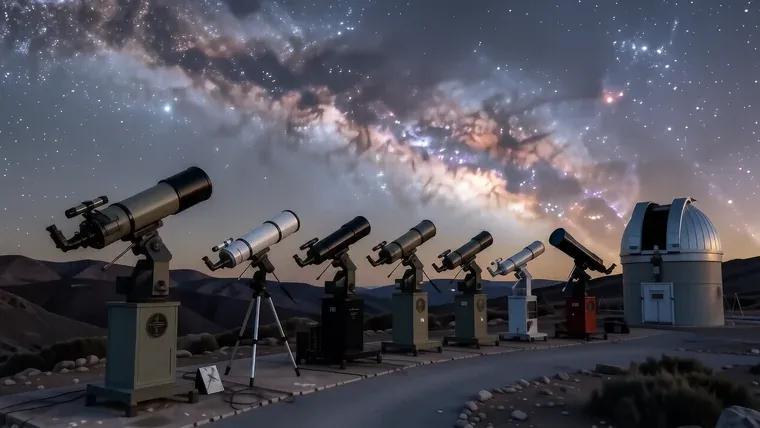
Selecting a telescope for a child requires balancing optical performance with mechanical simplicity to prevent frustration. A high-quality instrument should feature an aperture of at least 70 mm for planetary viewing and utilize an azimuthal mount for easy movement. Avoid toy-grade optics that offer blurry images, because these often discourage long-term interest in astronomy.
Optical Architectures and Basic Components
Telescopes function by gathering light through a primary optical element. This element is either a lens or a mirror. The objective lens, found in refractors, bends light rays toward a focal point to create a sharp image. Most entry-level refractors use achromatic double-convex lenses to minimize color fringing, although higher-end models use more complex glass configurations to achieve better clarity.
Reflectors use mirrors instead of lenses. The primary mirror sits at the bottom of the tube and reflects light back up toward an eyepiece. These systems are often more affordable for larger apertures because mirrors are easier to manufacture than large, high-quality glass lenses.
The following components appear in almost every functional telescope:
- Eyepieces: These lenses magnify the image formed at the focal point.
- Barlow lenses: This accessory increases magnification by spreading the light path further.
- Finderscopes: Small auxiliary telescopes or red-dot sights help locate targets.
- Focuser: A mechanical knob that moves the eyepiece to achieve sharpness.
The mount is equally vital. Most children’s models utilize an azimuthal mount, which allows for simple rotation on horizontal and vertical axes. This setup is intuitive because it mimics how a person moves their head when looking around a room.
Stability matters. A shaky tripod ruins the view of Saturn’s rings or Jupiter’s moons. While a lightweight aluminum tripod provides portability, it must be sturdy enough to remain still during fine adjustments.
Refractor vs. Reflector Designs
Refractors are often called Galileo telescopes. They use a lens to refract light into a compact image. These instruments are very durable. Because the optical tube is sealed, dust and moisture rarely interfere with the internal lenses. This makes them ideal for children aged 6 or 7 who might handle equipment roughly.
Reflectors follow the Newtonian design. They use a curved mirror to collect light. These telescopes excel at deep-sky observation. While they are more sensitive to dust, their ability to provide large apertures at low costs makes them excellent for seeing faint nebulae.
The Refractor Experience
A refractor is a versatile tool. It can be used for terrestrial viewing, such as watching birds in a park, because the image orientation can be corrected with a diagonal prism. This feature makes them practical for more than just night sky observation.
The Sturman HQ2 60090 AZ is an example of a traditional refractor kit. It features a 90 mm lens diameter and a 600 mm focal length. It can reach a maximum magnification of 180x. This level of power allows for clear views of lunar craters and planetary details.
The Reflector Experience
Reflectors are generally larger in physical footprint. They require more storage space than a compact refractor. However, the light-gathering power is often superior for the price. A 76 mm reflector can reveal star clusters that a small refractor might miss.
The editor’s pick for beginners is a Newton reflector with a 76 mm primary mirror. It uses an azimuthal mount on an aluminum tripod. This specific model includes a smartphone holder with suction cups, which allows a child to take photos of the Moon through the eyepiece.
Selecting Based on Observation Goals
What does the user want to see? This question dictates the necessary aperture and focal length. If a child wants to study the Moon, almost any decent telescope will work. The lunar surface is bright and easy to resolve.
Planetary observation requires higher magnification and stability. To see the Cassini Division in Saturn’s rings, the optics must be precise. A 70 mm refractor like the Levenhuk Skyline Travel 70 can achieve 140x magnification. This is sufficient for seeing Jupiter’s Galilean moons.
Deep-sky objects require more light. Faint galaxies and nebulae are difficult to see with small apertures. For these targets, a reflector with a larger diameter is better. On clear nights away from city lights, a 70 mm lens can reach a magnitude of 11.5. This allows for the observation of the Andromeda Galaxy or the Crab Nebula.
- Moon and Planets: Choose a refractor with 70 mm to 90 mm aperture.
- Deep Sky: Choose a reflector with at least 76 mm to 100 mm aperture.
- Terrestrial Viewing: Use a refractor with a diagonal prism.
Practical Constraints of Ownership
Space is a major factor. A telescope needs room to move along its axes. If you place a telescope in a cramped corner, the tube will hit walls when you try to track a star. Always test the range of motion before committing to a storage location.
Maintenance varies by type. Refractors are low-maintenance. They are closed systems that stay clean for years. Reflectors require more care. The mirrors may need cleaning, and the alignment, known as collimation, must be checked periodically.
Never leave a telescope outside. Moisture can damage coatings and promote fungal growth on glass. I once saw a telescope left in a garden in London during a wet spring, and the optics were ruined by permanent haze within weeks.
Technical Specifications to Watch
Aperture is the most important number. It is the diameter of the main lens or mirror. A larger aperture gathers more light. More light means brighter images and better resolution.
Magnification is often misleading. Many cheap telescopes claim “600x magnification” on the box. This is usually a marketing tactic. Real magnification is limited by the aperture. If you push magnification too high, the image becomes a blurry, dark mess.
The following table compares common entry-level specifications:
| Feature | Small Refractor | Mid-Range Refractor | Entry Reflector |
|---|---|---|---|
| Aperture | 50 mm | 70-90 mm | 76-114 mm |
| Best Use | General/Moon | Planets/Birds | Deep Sky/Planets |
| Complexity | Very Low | Low | Moderate |
The weight of the instrument also matters for children. A 2.7 kg telescope like the Levenhuk Skyline Travel 70 is easy to carry in a backpack. A heavy reflector might be too cumbersome for a younger child to move from the house to a dark viewing spot.
Avoiding Common Pitfalls
Cheap telescopes are often toys. They use plastic lenses that do not focus light correctly. This leads to frustration when a child looks through the eyepiece and sees nothing but gray blur. It is better to buy a slightly larger, reputable brand than a “huge” telescope from a discount toy store.
Avoid mounts that are too complex. A computerized GoTo mount is impressive, but it can be difficult for a child to operate without help. An azimuthal mount is much more rewarding because the child learns how to manually find objects using a finder.
The red dot finder is a helpful tool. It projects a small dot into the field of view. This makes it easier to align the telescope with the target. Traditional finderscopes can be difficult for children to use because they require precise alignment between two different optical paths.
A child’s interest in the sky grows when they see real results. Seeing the rings of Saturn for the first time is a significant moment. Providing a stable, clear view ensures that this curiosity turns into a lasting hobby.
The choice ultimately depends on the specific environment and the age of the observer. A portable refractor works well for families who travel frequently to dark sites. A larger reflector is better for a stationary backyard setup where deep-sky objects are the primary interest.
Frequently asked questions
What is the best aperture for a beginner telescope?
For planetary viewing, an aperture of at least 70 mm is recommended. For deep-sky objects like nebulae, a reflector with a diameter of 76 mm to 100 mm is more effective.
What is the difference between a refractor and a reflector?
Refractors use lenses to bend light and are durable, sealed systems ideal for children. Reflectors use mirrors to gather light and are often more affordable for providing larger apertures.
Which telescope mount is easiest for a child to use?
An azimuthal mount is the most intuitive choice because it allows simple rotation on horizontal and vertical axes, mimicking how a person moves their head.
Can I use a telescope for things other than stars?
Yes, refractors can be used for terrestrial viewing, such as watching birds, if they are equipped with a diagonal prism to correct the image orientation.
More in Stargazing
The benefits of an apochromatic refractor
Learn how an apochromatic refractor uses ED glass and multiple lens elements to eliminate chromatic aberration for high-resolution astrophotography.
Differentiating between refractor and reflector telescopes
Learn the key differences between refractor and reflector telescopes to choose the right optical design for planetary viewing or deep-sky observation.
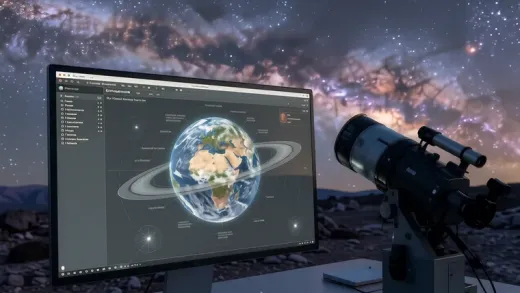
A beginner's guide on how to use Stellarium
Learn how to use Stellarium to simulate the night sky, configure geographical coordinates, and optimize visual settings for celestial observation.
How a refractor telescope works
Learn how a refractor telescope uses lenses to gather light, its advantages in contrast and maintenance, and how APO designs correct chromatic aberration.