Telescope discussion board: Which telescope is the best to purchase?
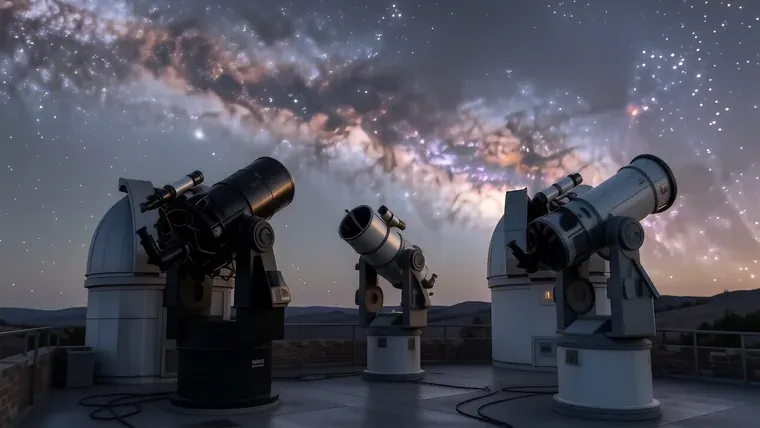
There is no single best telescope for every user because optical requirements change based on whether you intend to observe planets, deep-sky nebulae, or terrestrial landscapes. A beginner seeking lunar detail might prefer a compact Maksutov-Cassegrain like the Veber MAK 1000/90, while an enthusiast pursuing faint galaxies requires the light-gathering power of a large aperture Newtonian reflector such as the Sky-Watcher Dobsonian 10″. Selection depends on three technical pillars: aperture diameter, mount stability, and focal length.
Understanding Aperture and Optical Design
Aperture is the most important specification. It refers to the diameter of the primary lens or mirror. Larger apertures gather more photons. This allows you to see dimmer objects. A 254 mm aperture on a Sky-Watcher Dobsonian collects significantly more light than a 50 mm aperture on a Synta Protostar.
Light matters. You need it for deep-sky objects.
Refractors use lenses to bend light. They often provide high contrast for planetary viewing. The LEVENHUK Skyline 80 PLUS utilizes an aluminum-coated mirror system in its design, though true refractors rely on glass lenses. Many entry-level models like the Celestron PowerSeeker 50 AZ use small lenses that are sufficient for the Moon but struggle with faint nebulae.
Reflectors use mirrors. They are generally more cost-effective for large apertures. The Meade Polaris 127mm uses reflector technology to provide a clear image. Because mirrors can be manufactured in much larger diameters than lenses without becoming prohibitively heavy, reflectors dominate the large-aperture market.
Maksutov-Cassegrains are hybrid systems. They use both lenses and mirrors. The Veber MAK 1000/90 is a compact example of this design. These telescopes are often portable. They provide sharp views because their folded optical paths allow for long focal lengths in short tubes.
- Refractor: Best for high-contrast planetary viewing.
- Newtonian Reflector: Best for deep-sky light gathering.
- Maksutov-Cassegrain: Best for compact, high-resolution lunar observation.
The Role of Mounts and Tracking
A telescope is only as good as its mount. The mount holds the optical tube and allows it to move. If the mount shakes, the image disappears. Stability is vital.
An equatorial (EQ) mount aligns with the Earth’s axis. This design allows for precise tracking of celestial objects as they move across the sky. The Celestron AstroMaster 130 EQ uses an equatorial mount so that users can follow a star’s path by adjusting only one axis. This is much easier than manually correcting for Earth’s rotation.
Azimuthal (AZ) mounts move up-down and left-right. They are intuitive. Most beginners find AZ mounts easier to use because they function like a camera tripod. The LEVENHUK Skyline 80 PLUS uses an improved azimuthal mount to ensure user-friendly operation. However, tracking objects requires constant manual adjustment.
Dobsonian mounts are specialized azimuthal mounts. They sit on a heavy, rotating base. The Sky-Watcher Dob 10″ (250/1200) uses this style. These mounts are incredibly stable for large telescopes. They are also very easy to set up in the field.
Motorization adds automation. Some models, like the Celestron NexStar 8 SE, use software to control movement. This model accesses a database of 40,000 astronomical objects. It moves automatically to your target.
| Mount Type | Primary Movement | Best Use Case |
|---|---|---|
| Equatorial | RA and Dec axes | Long-exposure photography and tracking |
| Azimuthal | Alt-Azimuth axes | Quick, casual scanning of the sky |
| Dobsonian | Vertical and Horizontal | Large aperture deep-sky observation |
Comparing Specific Models for Different Budgets
Budget dictates your entry point. You can find basic tools for under 10,000 rubles or professional-grade gear for much more.
The Celestron AstroMaster 130 EQ is an all-purpose option. It features a 130 mm lens diameter. This size provides decent views of the Moon and Jupiter. It weighs almost 13 kg. This makes it somewhat difficult to transport during long trips.
For those on a tighter budget, the Synta Protostar 50 AZ offers portability. It is lightweight. It includes a Barlow lens and extra eyepieces for basic terrestrial and celestial viewing. It is not meant for deep-space research.
The Meade Polaris 127mm sits in a mid-range category. It weighs 5.7 kg. The kit includes three eyepieces and uses stainless steel for assembly. You can install motorized actuators on this model to assist with tracking. It provides a good balance of portability and optical performance.
If you require extreme light gathering, the Sky-Watcher Dob 10″ is the choice. It has a 254 mm lens size. The weight exceeds 30 kg. Although the tube is collapsible to reduce its length, it remains a large instrument. This telescope performs best in rural observatories because urban light pollution obscures the faint objects it is designed to see.
The Veber MAK 1000/90 is built for durability. It uses an anodized aluminum optical tube. This material resists moisture. The top is coated with thick rubber to prevent slipping during assembly. It is a sturdy choice for enthusiasts who may encounter less-than-ideal weather conditions.
Practical Considerations for Field Use
Portability affects how often you use your gear. A heavy telescope stays in the garage. A light telescope goes to the park.
The Sky-Watcher Dob 10″ weighs 34 kg in its full configuration. This is heavy. The retractable design helps, but it still requires significant effort to move. You should consider your vehicle and storage space before buying large reflectors.
The Veber MAK 1000/90 is lightweight. It comes with a dedicated case for long-distance transport. This makes it an excellent choice for students or those who travel frequently. Small telescopes are easier to manage in cramped spaces.
Weight and stability often conflict. A heavy telescope on a light tripod will wobble. The LEVENHUK Skyline 80 PLUS uses a stable tripod to prevent this issue. If you see a telescope shaking when you touch it, the mount is insufficient for that aperture.
- Check the weight: Ensure you can carry it.
- Assess the tripod: Look for stability.
- Verify accessories: Check for eyepieces and finders.
- Consider the environment: Urban vs. rural needs.
Technical Specifications and Optical Limits
Aperture diameter limits your resolution. A larger diameter allows you to see finer details. For example, a 150 mm lens provides much better clarity than a 50 mm lens.
Focal length determines magnification. It is the distance light travels from the lens to the sensor or eyepiece. Longer focal lengths generally produce clearer pictures for planetary work. Most users find that eyepieces with focal lengths between 500 and 800 mm work well for general observation.
Magnification is a product of focal length and eyepiece size. It is not a fixed number. You can change magnification by swapping eyepieces. However, too much magnification results in a dim, blurry image. This happens because the telescope cannot resolve more detail than its aperture allows.
The Celestron NexStar 8 SE is a high-tech outlier. It uses internet-connected software for updates. This allows the telescope to stay current with new astronomical data. It provides a bridge between manual observation and computerized astronomy.
On 08 December 2008, a user in a Moscow discussion board suggested the Meade ETX-80 AT as a solid choice for personal use because it includes a built-in Barlow lens and fits within a specific budget. This highlights how consumer preferences often shift toward integrated accessories to simplify the learning curve.
The choice remains personal. You might prefer the simplicity of a Synta Protostar 50 AZ for a child’s first look at the Moon. Or you might invest in a Sky-Watcher Dobsonian to hunt for the Andromeda Galaxy in a dark sky park. Most astronomers start with something small and eventually move toward larger, more complex systems as their interest grows.
Frequently asked questions
What is the most important specification when buying a telescope?
Aperture is the most critical specification because it refers to the diameter of the primary lens or mirror. A larger aperture, such as a 254 mm Sky-Watcher Dobsonian, gathers more photons to reveal dimmer objects compared to a 50 mm model.
What are the differences between equatorial and azimuthal mounts?
An equatorial (EQ) mount aligns with Earth's axis for precise tracking of celestial objects, while an azimuthal (AZ) mount moves up-down and left-right for intuitive, casual scanning. Dobsonian mounts are specialized azimuthal bases designed for high stability with large telescopes.
Which telescope type is best for viewing deep-sky objects?
Newtonian reflectors are generally best for deep-sky observation because they are cost-effective for large apertures. For example, a Sky-Watcher Dobsonian 10" provides the significant light-gathering power needed to see faint galaxies and nebulae.
How does focal length affect telescope performance?
Focal length determines magnification and is the distance light travels from the lens to the eyepiece. Longer focal lengths generally produce clearer images for planetary work, while magnification can be adjusted by swapping eyepieces.
More in Stargazing
The benefits of an apochromatic refractor
Learn how an apochromatic refractor uses ED glass and multiple lens elements to eliminate chromatic aberration for high-resolution astrophotography.
How to start choosing the perfect telescope for beginners
Learn how to select the right telescope by comparing refractors and reflectors, understanding aperture, and matching equipment to your observation goals.
Differentiating between refractor and reflector telescopes
Learn the key differences between refractor and reflector telescopes to choose the right optical design for planetary viewing or deep-sky observation.
A beginner's guide on how to use Stellarium
Learn how to use Stellarium to simulate the night sky, configure geographical coordinates, and optimize visual settings for celestial observation.