Our guides in exploring the night sky are the first magnitude stars, which are incredibly bright and relatively few in number, making them easy to remember. By following these stars, you can easily locate both constellations and smaller “caliber” stars.
“Summer” celestial bodies of the highest brightness
Vega in the Lyra constellation
When gazing upwards on a warm summer evening, it is highly likely that your attention will be captured by this particular celestial body. Vega.Vega is the principal star within the Lyra constellation.
The Lyra constellation is relatively small and can be observed in its entirety with the aid of binoculars. Apart from Vega, it is composed of smaller stars, which have a magnitude below the third. Together, they form the shape of a triangular lyre or harp, with the main star situated in the upper right corner.

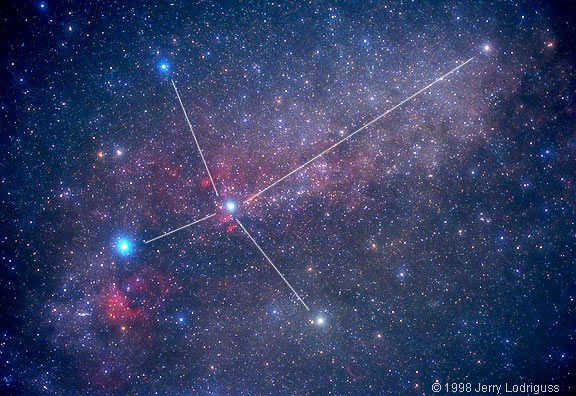
The star Deneb can be seen on the left side of the constellation of Swan. It is a fairly bright star of first magnitude, located at the same altitude as Vega. The constellation of Swan is larger than Lyra and has the shape of a cross tilted to the left. Deneb is the top of the cross, while the middle and ends of the crossbars are marked by stars of 2-3rd magnitude.
Deneb in the constellation of Swan
On the left side of the constellation of Swan, at the same altitude as Vega, there is another bright star of first magnitude called Deneb. It is the main star in the constellation of Swan, which is larger than Lyra. The constellation resembles a cross that is inclined to the left, with Deneb being the top of the cross. The middle and ends of the crossbars are marked by stars of 2-3rd magnitude.
Lyra is positioned at the right crossbar of the cross, while beneath the left crossbar, significantly lower down, you will observe another first magnitude star – Altair. Altair. the primary star in the constellation of the Eagle.
Altair within the Eagle constellation
If you have located Altair, but wish to confirm if it is indeed him, look above your star, very close by, for a 3rd magnitude star: it should be positioned above Altair, acting as his marker. There is also a star below Altair at the same distance, but even smaller.
The constellations of Swan, Lyra, and Eagle form a close-knit family, and if you recognize one of them, you will immediately be able to find the other two. The easiest way to locate the great cross of the Swan; then the stars Vega and Altair will be readily found: Vega to the right, above the cross, and Altair to the left, below.
During the summer season, as twilight sets in, the first three stars to illuminate the southern part of the sky are Vega, Altair, and Arcturus. Arcturus is positioned on the right side and belongs to the constellation of Volopassus.
You might find this interesting
Discovering Arcturus in the constellation of Volopassus
Locating the star Arcturus may not be a simple task, but confirming that you have indeed found the correct star is quite easy. Begin by tracing a line upwards from Arcturus using your finger, slightly veering towards the left. Eventually, you will come across a second magnitude star. From there, draw a line towards the left at the same distance and you will encounter yet another second magnitude star.
This is Gemma. She is the main star of the constellation known as the Northern Crown. The Northern Crown is a small group of stars that form a wreath or ring shape, with Gemma positioned as the central jewel.
Volopassus and the Northern Venus are a closely positioned pair of stars that are easy to locate and identify. In the Volopassus constellation, in addition to Arcturus, there are three stars with magnitudes of 3-4. These stars, along with Gemma, create an equilateral rhombus shape, with Arcturus situated at the bottom, opposite its lower obtuse corner.

The star Capella (located at the top left) can be found in the Ascendant constellation.
Capella in the Ascendant constellation
During summer evenings, another first magnitude star can be observed in the northern sky. This star is known as Capella, and it belongs to the Ascendant constellation. Positioned to the left of Capella is a second magnitude star that emits a rather bright light. To the right and below Capella, there are a third magnitude star and a close pair of small stars, respectively.
During the autumn season, the appearance of the night sky undergoes a transformation. The constellations Swan, Lyra, Eagle, and Capricorn gradually shift towards the west and descend lower in the sky. Meanwhile, the Ascendant constellation moves towards the east and rises higher and higher. As winter arrives, the stars Arcturus and Altair set below the visible horizon, disappearing from view. In their place, Vega and the top of the Swan constellation can be seen in the northern part of the sky, although slightly lower than in the summer. Capella, on the other hand, rises to the very top of the sky, taking the place where Vega used to be. Below Capella, on the southern side of the sky, numerous dazzling constellations become visible. In fact, during winter evenings, there are more first magnitude stars in the sky compared to summer, and most of them can be found on the southern side of the sky.
The first magnitude stars that are associated with the winter season are.
Located in the constellation Orion are Betelgeuse, Rigel, and Bellatrix.
When you gaze up on a winter evening, you will be greeted by the sight of the Orion constellation in the southern sky. This constellation takes the form of a long and symmetrical cross, slightly tilted to the left. At the ends of this cross, you will find two prominent first magnitude stars: Betelgeuse and Bellatrix. Betelgeuse is positioned on the upper end, while Rigel shines brightly at the lower end.
The shorter bar of the cross lies in the middle and is composed of three second magnitude stars, equidistant from one another. These stars are commonly known as Orion’s Belt or the Three Magi. To the right of Betelgeuse, the top star of Orion, you will find another star that exceeds second magnitude in brightness – Bellatrix.
Sirius in the constellation of the Great Canine.
When observing the constellation Orion, one cannot help but be captivated by the presence of a magnificent star positioned to its left and slightly below. This celestial body is none other than Sirius, the most luminous star in the entire firmament, radiating with a brilliance akin to that of a planet. Sirius is a distinguished member of the constellation known as the Great Canine. The remaining stars within this astral grouping can be discerned only at the periphery of the heavens.
Aldebaran can be found in the constellation Taurus.
If you look above and to the right of Orion, you will come across another bright star known as Aldebaran. It stands out due to its reddish hue and its proximity to a cluster of smaller stars called the Hyades, which are scattered on its right side. Additionally, if you continue to look higher and to the right, you will notice another group of stars known as the Pleiades.
Although the Pleiades consist of numerous stars, only about five to eight of them are visible due to their small size. However, their close proximity creates a noticeable cluster that is as eye-catching as a first magnitude star. It is worth noting that Aldebaran, the Hyades, and the Pleiades all belong to the constellation Taurus.
The brightest and most beautiful family in the entire sky is formed by the stars of Orion, including Sirius and Aldebaran, with Capella shining above them all. When you observe the arrangement of these stars, you will notice that during the summer months, Capella is positioned low in the northern sky, while Aldebaran, Orion, and Sirius are situated below it, beneath the visible horizon of the Earth. As a result, they are not visible.
As winter approaches, Aldebaran becomes visible first in the evening, followed by the stars of Orion, and finally, in December, Sirius joins the display. This breathtaking sight continues until March, when Sirius sets at 9 p.m., followed by Orion descending below the Earth’s surface. These stars reappear in the late summer, but only rise in the morning.
During winter, at the onset of evening, around four or five o’clock, you can still observe the familiar summer constellations in the sky: Lyra and Swan are positioned above; it’s only by 9 o’clock in the evening that the winter stars we just mentioned start to rise, causing Swan and Lyra to descend to their winter position in the north.
Whether you gaze at the sky in the midst of winter or the beginning of spring, you’ll spot a few other prominent constellations to the left of Orion and Capella.
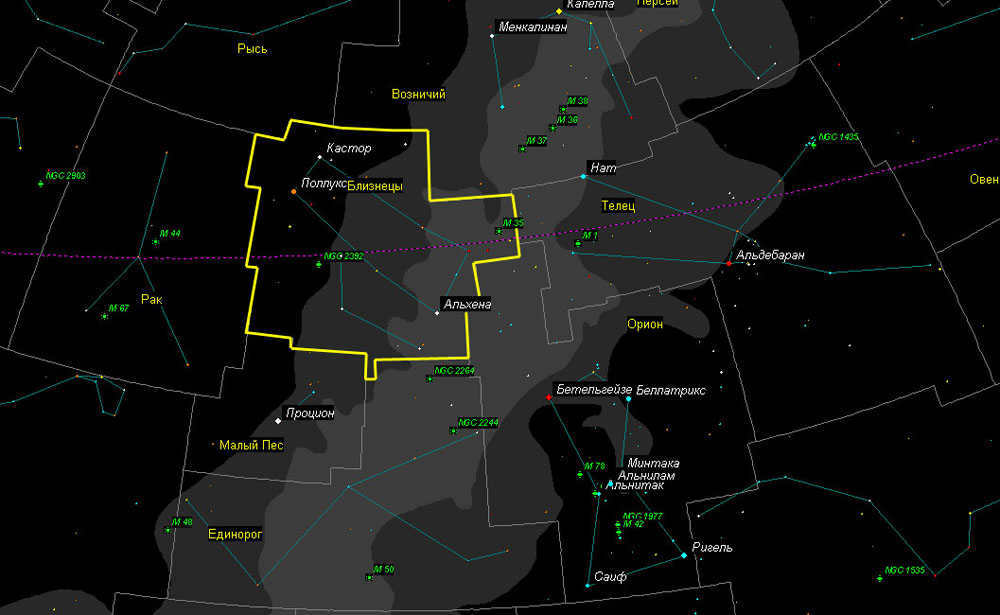
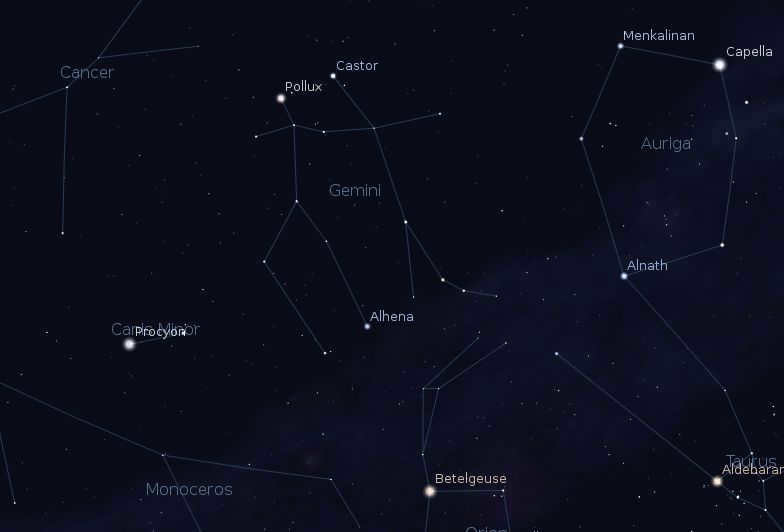
Castor and Pollux in the Gemini Constellation
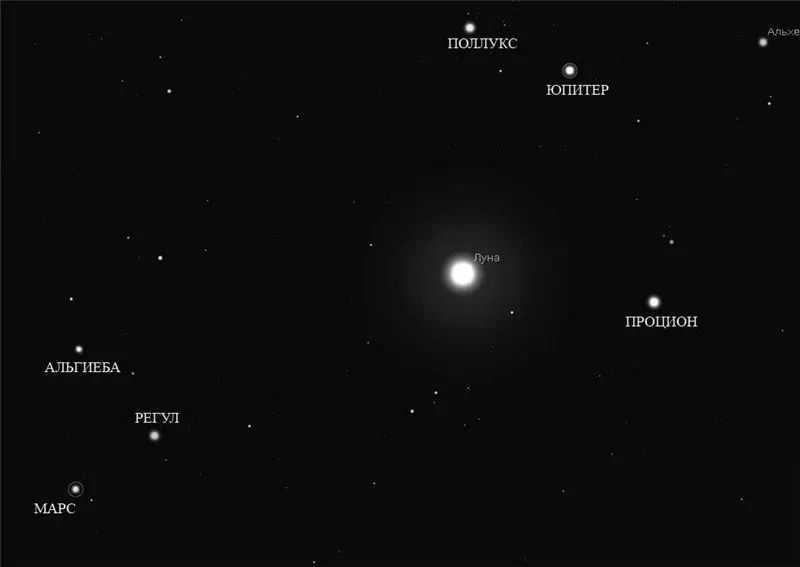
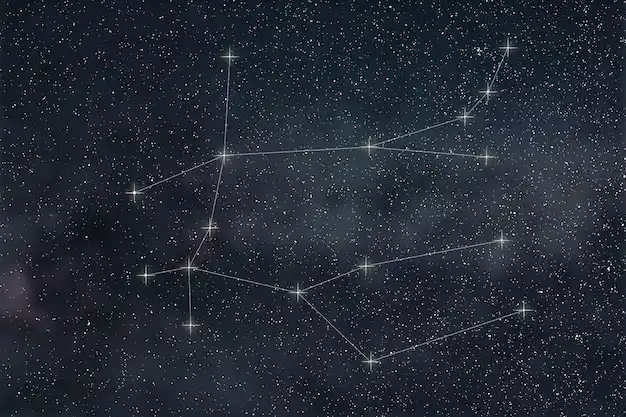
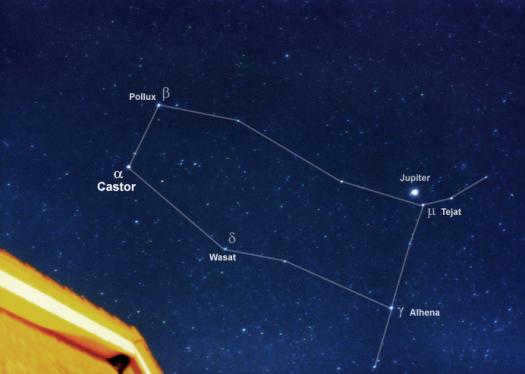
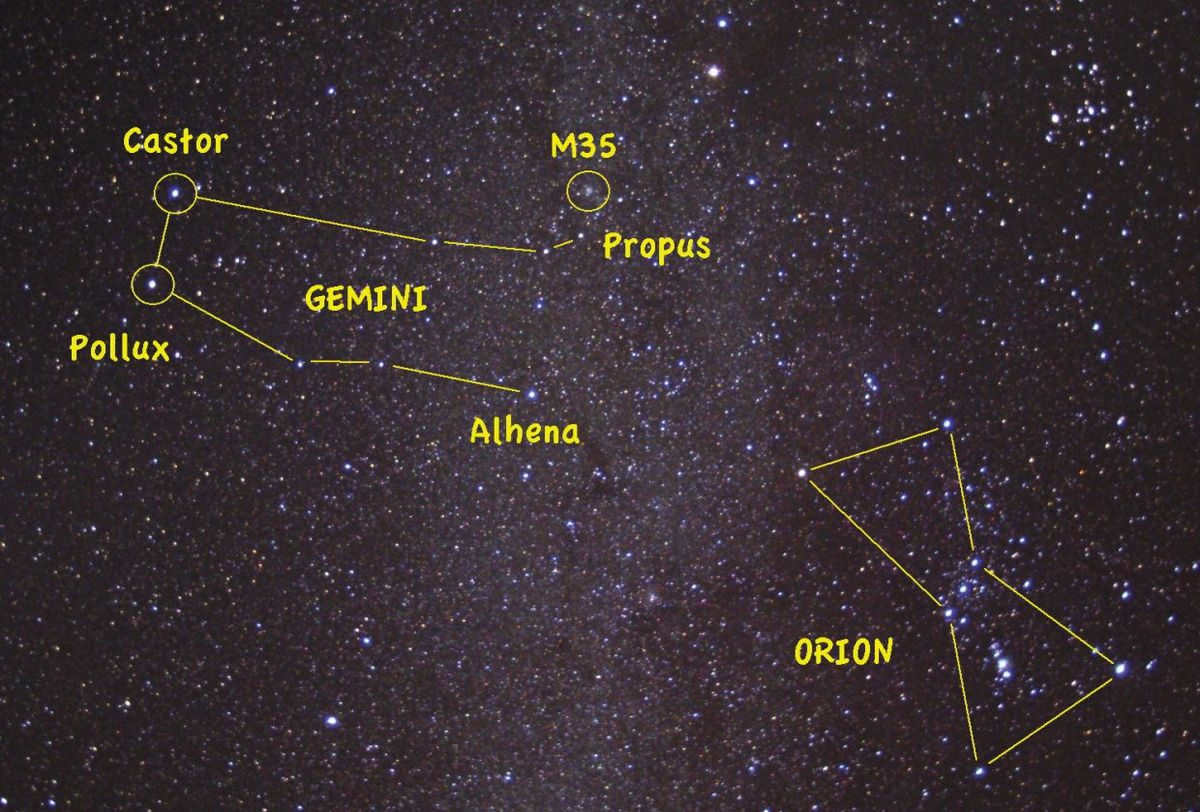
The Gemini constellation consists of two prominent stars, positioned one above the other: Castor and Pollux. Both stars are not as bright as Aldebaran, let alone Sirius and Vega. Castor, the upper star, is even classified as a 2nd magnitude star. During the winter season, Gemini appears higher in the sky than Orion and nearly at the same level as Aldebaran. By February, it rises even higher and reaches a similar altitude to Capella.
Below Gemini, you can see another bright star called Procyon. This star, along with a smaller one to its right, forms the constellation of the Lesser Dog and is located above Sirius.
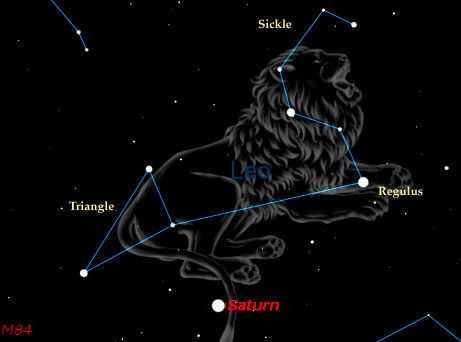
Regulus, located in the Leo constellation.
Regulus in Leo Constellation
Moving towards the left, towards the east, we find the star Regulus positioned in the lower right corner of the Leo constellation. This constellation is formed by a slanted quadrangle (trapezoid) consisting of four stars, with three of them having magnitudes of 2-3.
In the middle of spring, during the month of April, Leo can be observed high in the southern sky. To its left, in the east, the Arcturus star of the Volopassus constellation becomes visible once again. It starts appearing at 9 p.m. in January.
In July, Leo also sets, making way for the summer stars.
Spica in the constellation Virgo
Spica, also known as Colossus, is a prominent star in the constellation Virgo, located between Arcturus and Regulus. During the springtime, Spica shines brightly as a star of almost first magnitude. Unlike its previous classification as a winter star, Spica now represents the arrival of spring. In the month of May, Spica reaches its highest point in the sky and can be seen in the evenings towards the south, taking the place of Sirius. During June and July, however, Spica can only be observed briefly at dusk, right around sunset.
Concise details about the primary stars of the first magnitude
- The constellations of Lyra, Cygnus, and Aquila are observable throughout the entire year.
- During the initial three quarters of the year, from January to September, the constellation of Capricorn can be seen during the evenings.
- During the latter half of the year, specifically during summer and autumn, the constellation of Aquila becomes visible.
- From late autumn to spring, the constellations of Gemini and Taurus grace the winter skies.
- From December to March, the constellations of Orion, Canis Major, and Canis Minor can be observed during the winter months.
- During winter and spring, the constellation of Leo is visible in the first half of the year.
- In the spring, the constellation of Virgo becomes observable.
During the winter evenings, the Ascendant stands out among the bright constellations, while in the summer it is the Lyra, in early spring it is the Leo, and in May it is the Volopassus. However, the Lyra is on the same level as the Ascendant in the east, but soon surpasses the Volopassus as it descends towards the west.
At the time when each star is directly to the south, it reaches its highest point, similar to the sun’s noon. Astronomers refer to this position of the star as the climax.
Our article provides comprehensive information about the unique and fascinating star, Castor. After reading it, you will be able to present an unbiased report and examine it from various perspectives. Today, we will explore the legends and oracles associated with this luminary, its location in Gemini, and its role as the beta star of Castor. Plus, other intriguing details.

Castor in the Gemini constellation
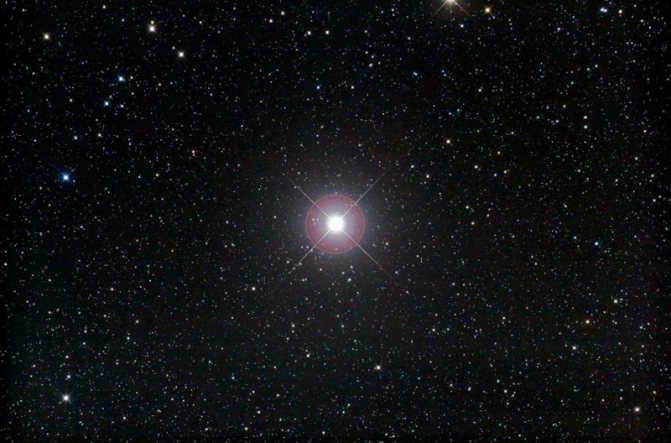
Castor, also known as Alpha Gemini, is the primary star in the Gemini constellation. Situated in the vast expanse of space, Castor is easily visible in the night sky, even without the aid of a telescope or any other equipment.
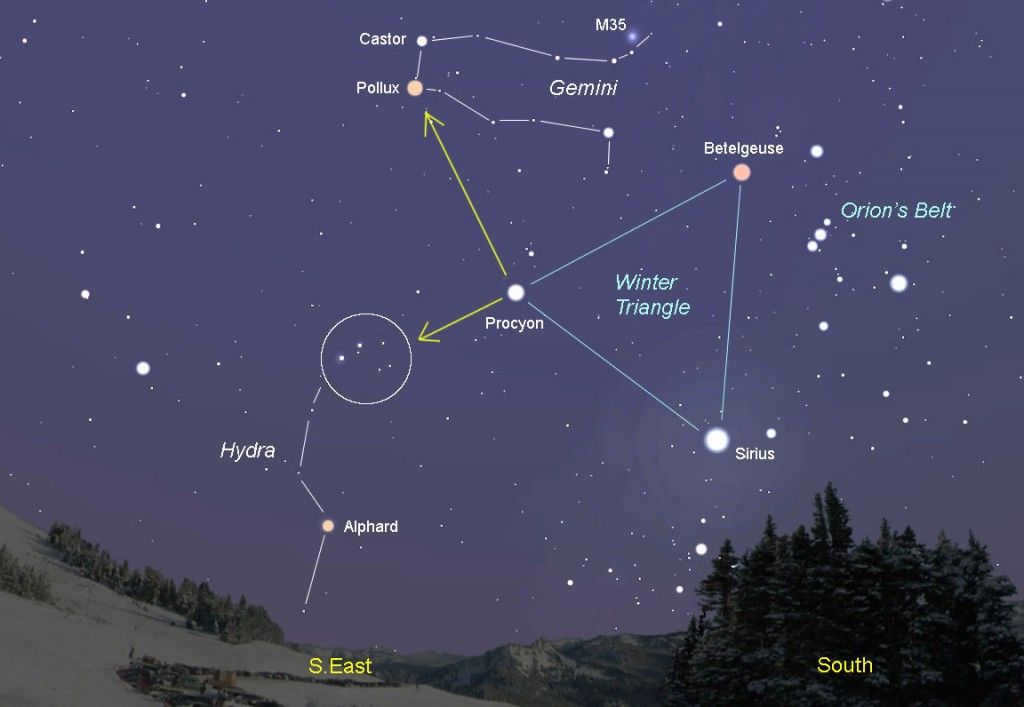
While it is stated that Castor star in the Gemini constellation is designated as the Alpha of the constellation – the primary and most shining, the most brilliant celestial body in the constellation is Pollux, which is marked as Beta.
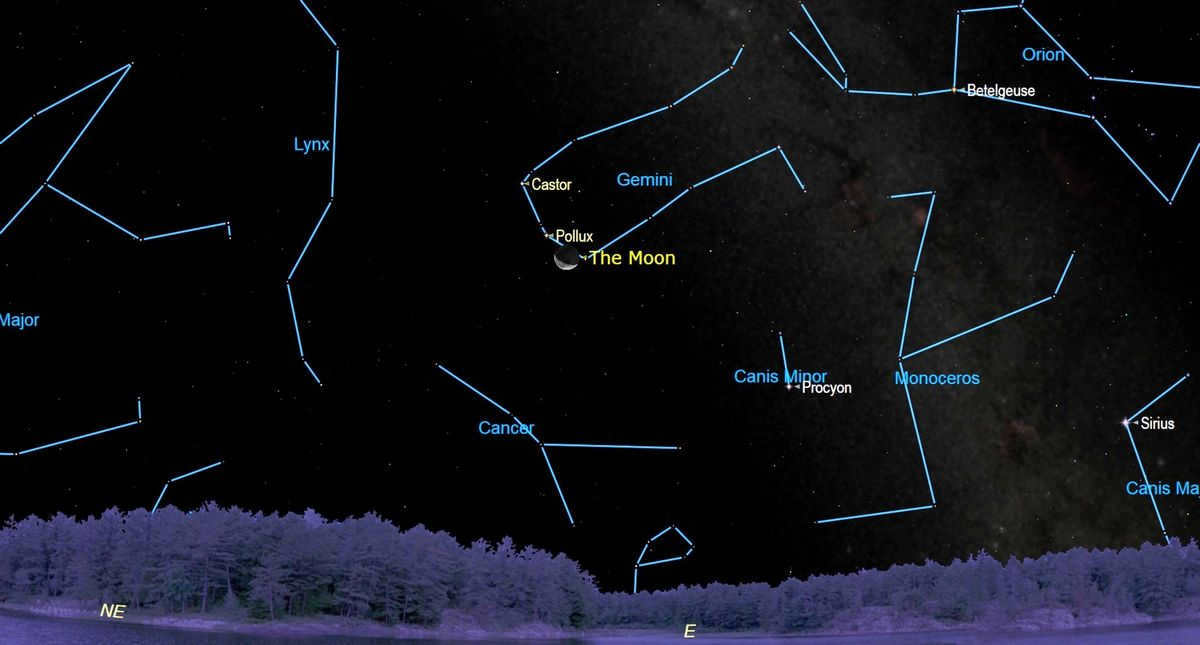
This unfairness is interpreted in the following ways:
- It is easy to make a mistake with the naked eye and not notice the distinction;
- In the past, the designations beta, alpha, gamma were not always assigned to determine brightness.
It is believed that one or both of the stars underwent changes in brightness during their evolution.
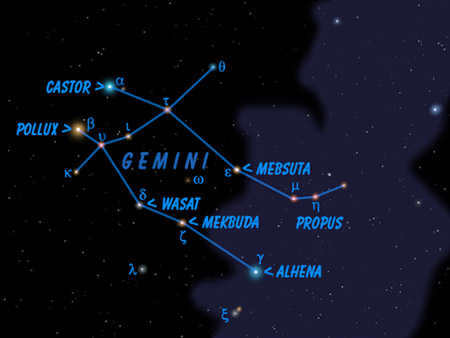
Castor is located approximately 51 light-years away from our solar system, while Pollux is about 34 light-years away.
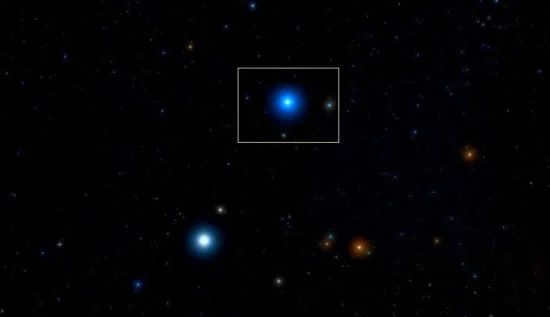
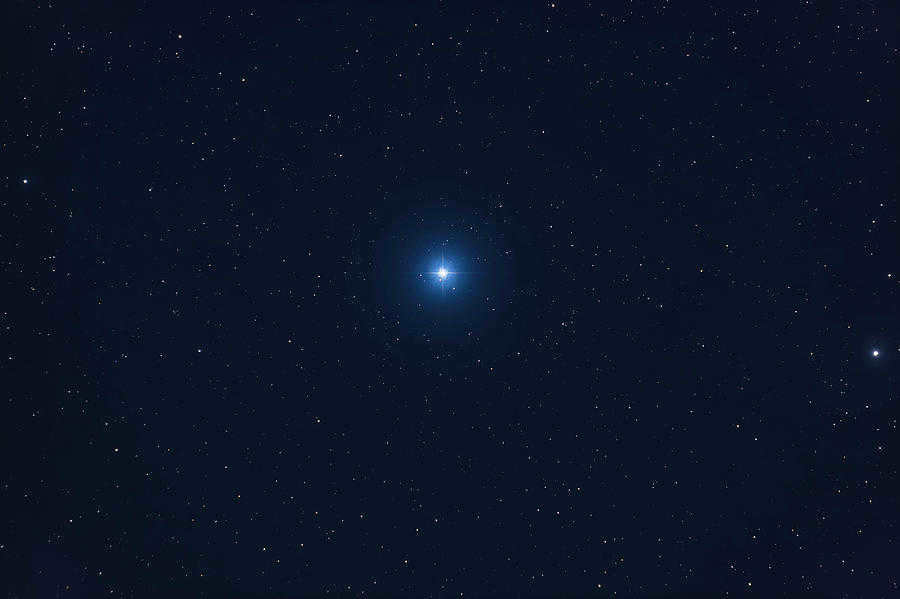
Identifying Castor in the night sky can be challenging. However, it can be distinguished by its white color with a hint of blue. In contrast, Pollux emits a “golden” hue.
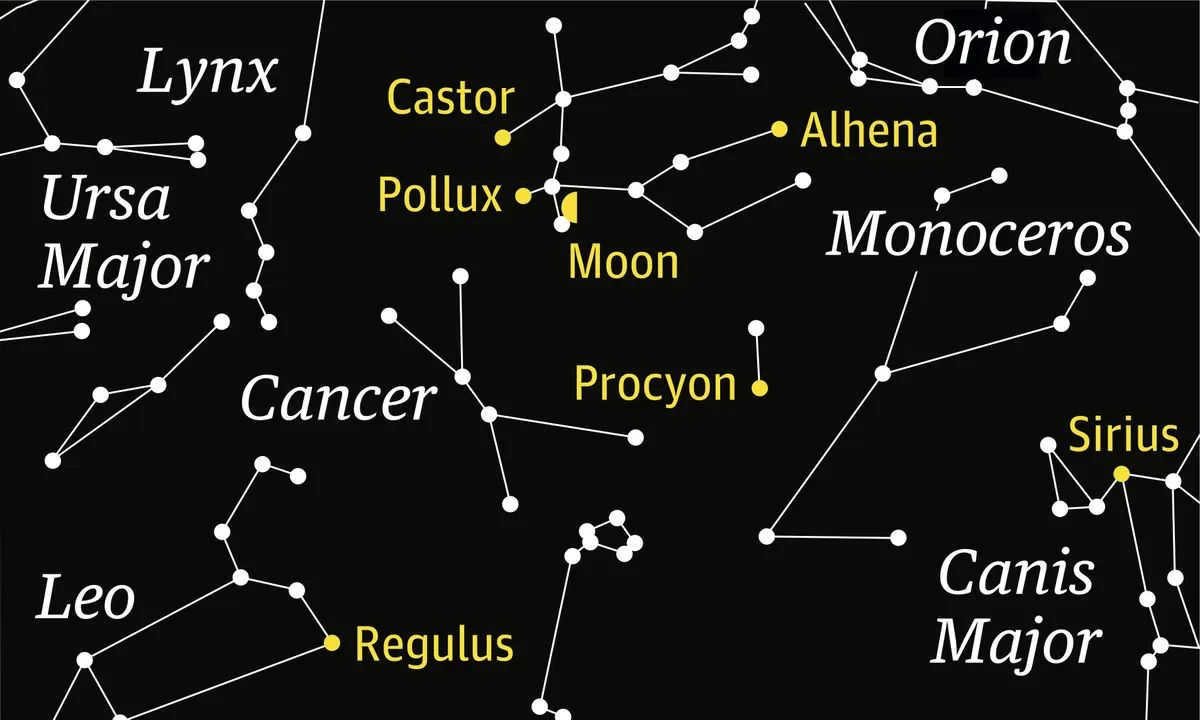
The etymology of the name in various cultures
The bright stars located in the Gemini constellation are named Castor and Pollux. These stars gave the constellation its name, Gemini. In ancient Greek mythology, the characters Castor and Pollux were known as the “Gemini,” which translates to “twins” in Greek.
The stars Castor and Pollux have long been a guiding light in the sky. For this reason, the Gemini constellation has always held special significance for sailors: it is said that the Greek heroes sailed with Jason on his quest for the golden fleece, and they were skilled navigators. The Gemini constellation served as a helpful guide for them on their journey.

According to another myth, Castor and Pollux were the offspring of Leda, the queen of Sparta. However, they had different fathers: Castor’s father was a mortal, just like Castor himself, while Pollux’s father was the immortal Zeus, making Pollux immortal. When Castor died, Pollux beseeched his father to grant him death so that he could reunite with his brother.
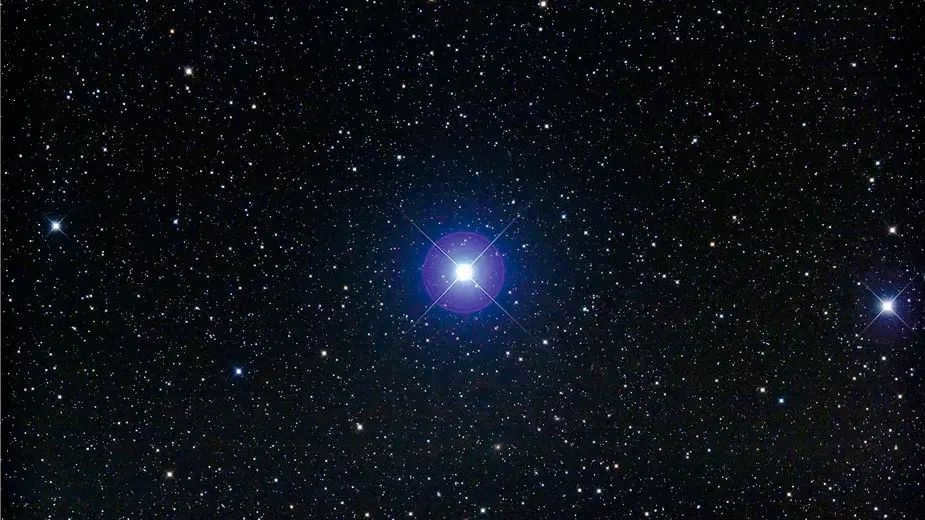
However, Zeus turned down his request, as it was not possible for a god’s son to simply perish. In response, the Thunderer presented an alternative – to grant Castor immortality as well. Nevertheless, there was one condition – for half a day, the brothers would reside on Mount Olympus, while the other half would be spent in the realm of the dead or on Earth. Without hesitation, Zeus’ son accepted the proposition. Filled with admiration for their selflessness, their father then immortalized them in the Gemini constellation.
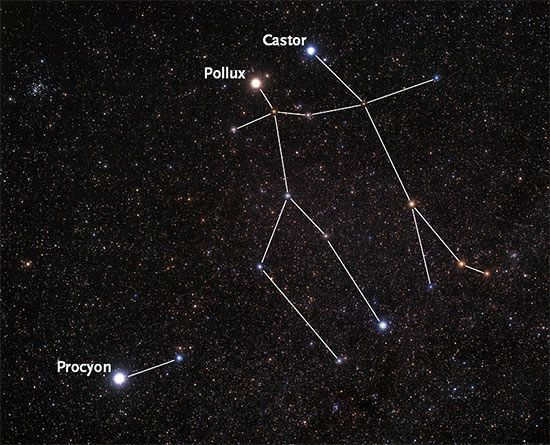
Each nation interprets the name of the celestial bodies in the Gemini constellation differently, but they are always associated with dualities.
This is not surprising considering the close proximity and similar brightness of the stars in the sky. For instance, in Chinese culture, they are linked to Yin and Yang, while in the Middle Ages, they were associated with gazelles. In Hindu mythology, they represented the horsemen of dawn, and in Arab folklore, they symbolized the lion’s paw in the sky. However, it is worth noting that not all constellations aligned across different cultures.
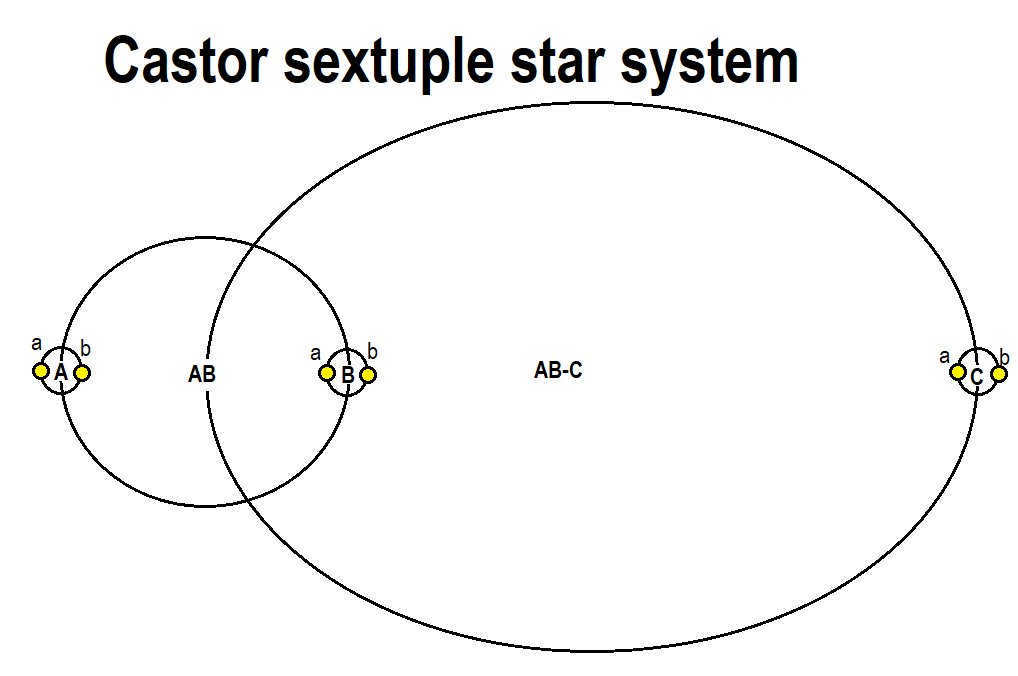
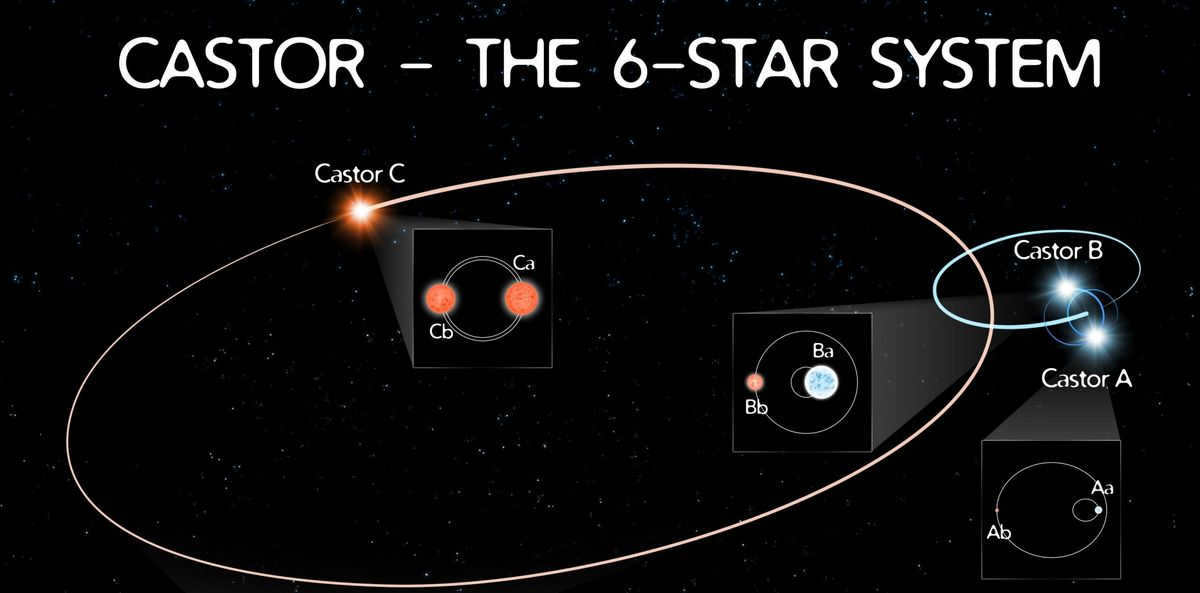
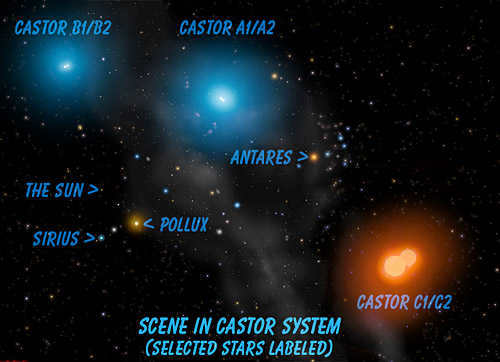
In Rome, they were linked to the founders of Rome: Romulus and Remus. However, it is important to note that despite their similarity from Earth, these stars are not actual twins. The Castor star is comprised of six celestial bodies, while Pollux is a single star. The distance between Pollux and Castor measures 18 light years.
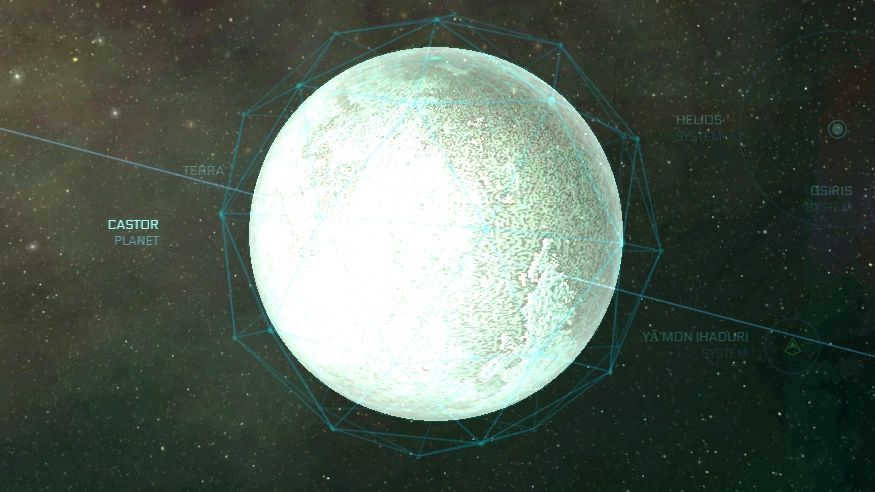
Locating the Star Castor
Locating the star Castor in the sky is a relatively simple task, provided that the sky is clear and devoid of clouds. The star can be found in close proximity to an asterism known as the Winter Hexagon or Circle, and it shines quite brightly.
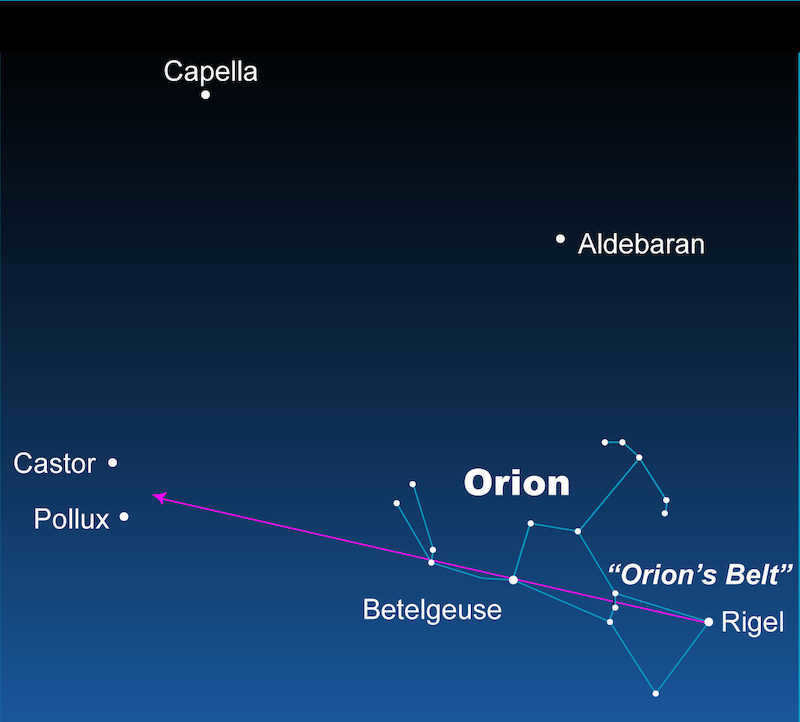
The Winter Circle is made up of the stars Sirius, Capella, Pollux, Procyon, Rigel, and Aldebaran. It can be challenging to locate Castor in the night sky in northern latitudes because of this. However, there are three methods to determine its position if you have a general idea of where it might be.
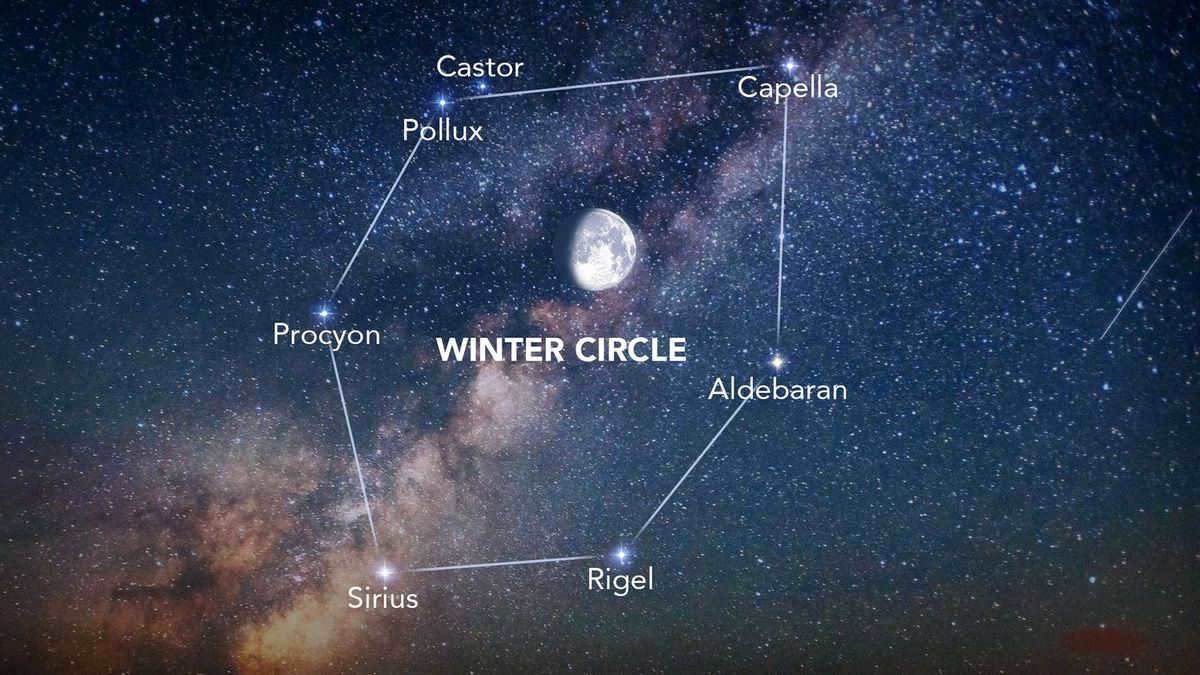
- The primary star in the “winter circle” is Capella, followed by Pollux. Located nearby is the desired star.
- An alternative method to locate this star is to envision a line extending from Rigel to Betelgeuse and beyond. You will then encounter a distinctively bright star, which is Castor. Positioned below is Pollux.
- The final approach to finding the star Castor is to observe the Big Dipper and its “handle”. Picture a line passing through Merak and Megrez (diagonally downward). This will lead you to the desired celestial bodies.
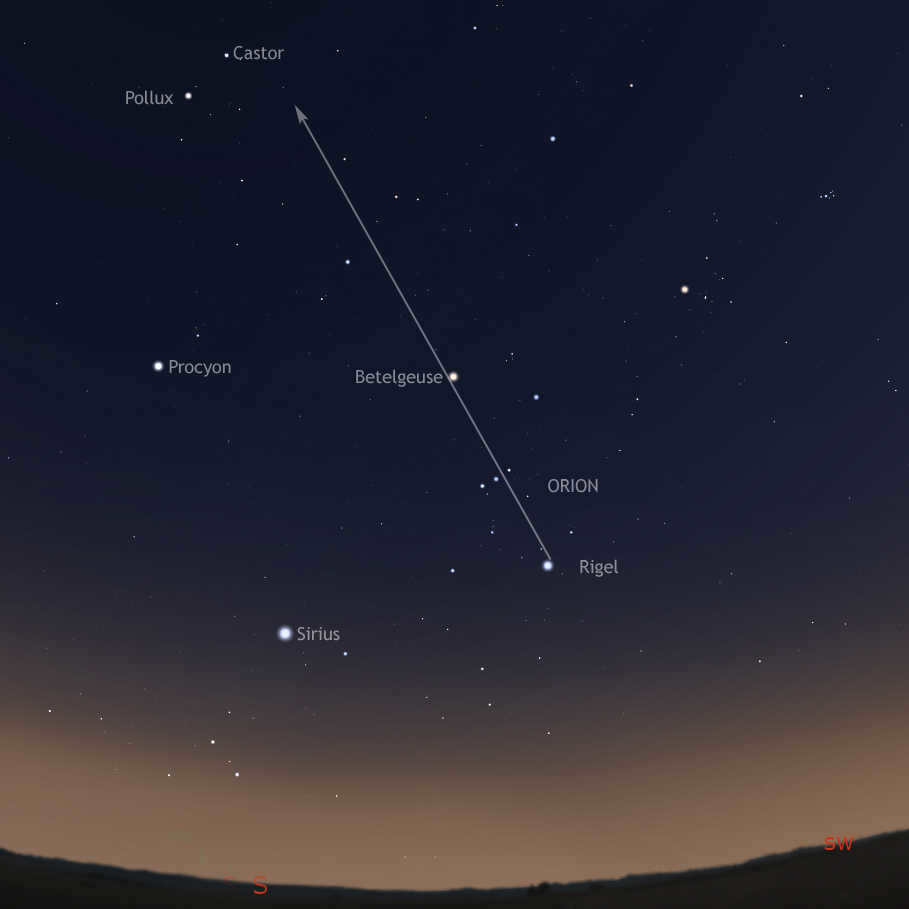
February is the optimal time to observe the Gemini constellation, which is most prominent during the winter-spring season. In the middle latitudes of Russia, it remains visible from January through April.

Overview
Castor is a star in the Gemini constellation. It is classified as an A2Vm main sequence star and is situated at a distance of 7414 parsecs from the galactic center.
The temperature of the celestial body is 9140 K, giving it a color index of B-V 0.0Z. It is 2.84 times larger than the radius of the sun. Satellites C and B are on its trajectory. The absolute magnitude of this celestial object is 0.61.
The star Castor, located in the constellation Gemini, is situated approximately 55.55 light-years away from Earth. Scientists employed the method of parallax to precisely determine its distance. Upon reevaluation, they discovered that it is actually positioned 50.87 light-years from our planet. At times, the celestial object appears to be in constant motion, with its trajectory alternately approaching and receding from our vantage point.
However, this is merely a recalculation of the information using contemporary technology. The distance between the galaxy and the star is approximately 24181.75 light years. In close proximity to the star, there is a meteor shower known as Geminida, which occurs at a speed of 35 km/h. This phenomenon takes place from December 6th to 19th, with the peak observed between December 1st and 14th.
Beta Gemini – Pollux
Following the remarkable Castor, which possesses a sextuple star system, the star Pollux comes as less of a shock. It is a luminous 1.15 m star situated 33.7 light-years away from our planet.
Scientists have conducted research and found that Pollux, a star, is currently in the red giant phase. However, it is expected that in the next 100 million years, it will exhaust its helium and transform into a white dwarf.
Approximately two decades ago, there were suspicions regarding the existence of a planet orbiting the star. In 2006, the presence of an exoplanet was confirmed. This exoplanet has a mass twice that of Jupiter. In a competition titled “What should the planet be named?”, the suggestion of naming it “Leda” was put forward, as a tribute to the mother of the twins Pollux and Castor.
However, due to Jupiter’s moon being named after it, the star Castor was renamed Thestias. In the event that other moons or planets are discovered in close proximity to Pollux, the forecasts are rather bleak: if they are capable of sustaining life, the future inhabitants will face great calamity.
Additional celestial bodies in the constellation
Within the constellation, there exists a star that fluctuates in brightness and is referred to as U Gemini. This star is comprised of white and red dwarfs.
The proximity of their positions allows for the transfer of red star matter to the white star, a process that takes approximately four hours and 15 minutes to complete its orbit. With the accumulation of extraterrestrial material on the white dwarf, a series of reactions are triggered, causing the star to ignite in a brilliant display of flames.
After observing the flares, John Russell Hynde, an astronomer from England, mistakenly concluded that it was a newly discovered star. However, it was later revealed that these flares were actually recurring phenomena.
With its strong glass, an ordinary telescope can detect the luminosity of the U Gemini flares.
The following celestial bodies are classified as variable stars:
- Delta (Vasat) is a double star with components that are gravitationally connected. The distance between the red dwarf and the yellow subgiant, which has a brightness of 8.2 m, is 6.8. It is believed to be a triple star due to the connection of the components.
- Mekbuda is classified as a Cepheid variable star. Positioned at a distance of 1200 light years from our planet, Mekbuda is a supergiant star that undergoes variations in its luminosity with a periodicity of 10 days.
Video: Castor – a peculiar celestial body
Astrology
Gemini is positioned as the third sign in the astrological zodiac. It follows Taurus and is situated in the celestial sphere between 60 ° to 90 ° (when measured from the vernal equinox). This same position is reflected in the individual’s natal chart.
From May 22 to June 21, the Sun occupies the zodiac sign of Gemini according to Western astrology. However, the constellation of Gemini is actually in the Sun from June 20 to July 20. It is important not to mix up the constellations and zodiac signs. Interestingly, the symbol of the zodiac sign Gemini resembles a butterfly due to its unique shape.
Video: The Gemini Constellation
Alpha Gemini, also known as the star Castor, plays a crucial role in guiding a group of at least 16 celestial bodies in a specific direction.
Key Details
Alpha Gemini, or the star Castor, is renowned for its brightness, ranking twenty-third among the brightest stars in the night sky. Despite being one of the last on the list of brightest celestial objects, it holds great significance in the field of astronomy. Not only does it serve as the primary object in the Gemini constellation, but it also boasts a fascinating history of its discovery.
The star Castor, also known as alpha Gemini, is the second most luminous star in the constellation Gemini. In Bayer’s system, which assigned Greek letters to the brightest stars in constellations, Castor was originally designated as “beta” because Pollux is the brightest star in Gemini. However, Bayer also took into account the northernmost stars, and since Castor is located north of Pollux, it was chosen as the alpha star and the primary focus of the Gemini constellation.
Characteristics of Matter
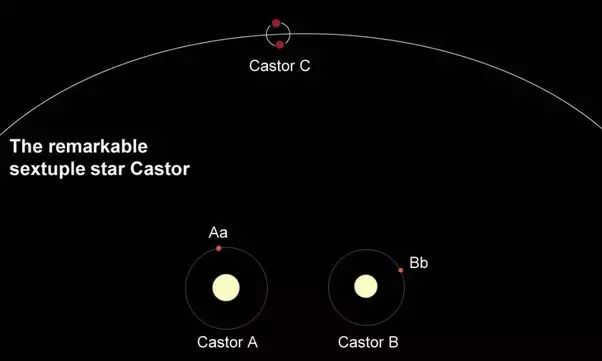
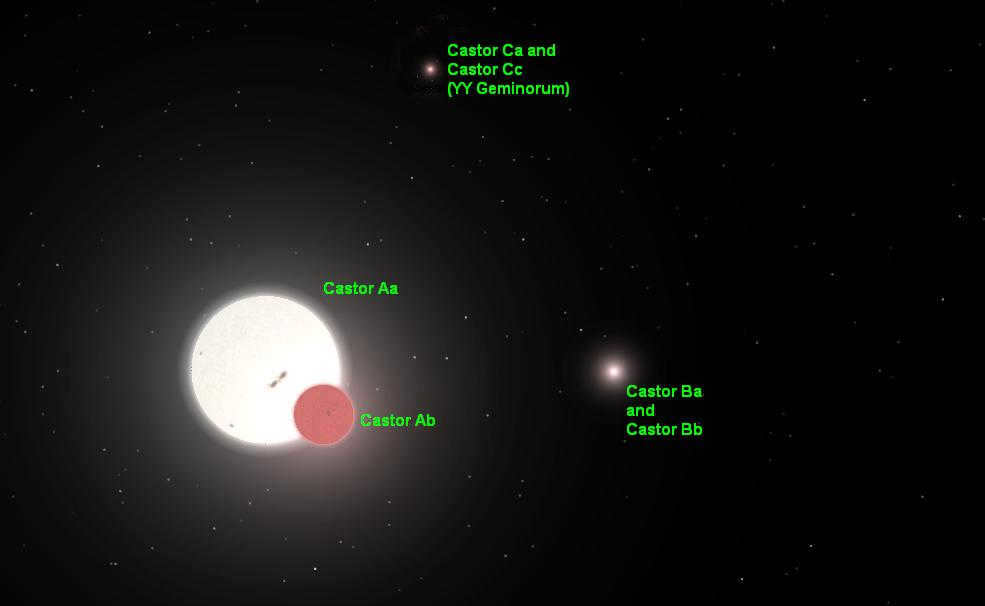
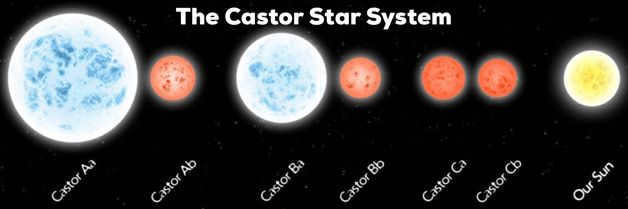
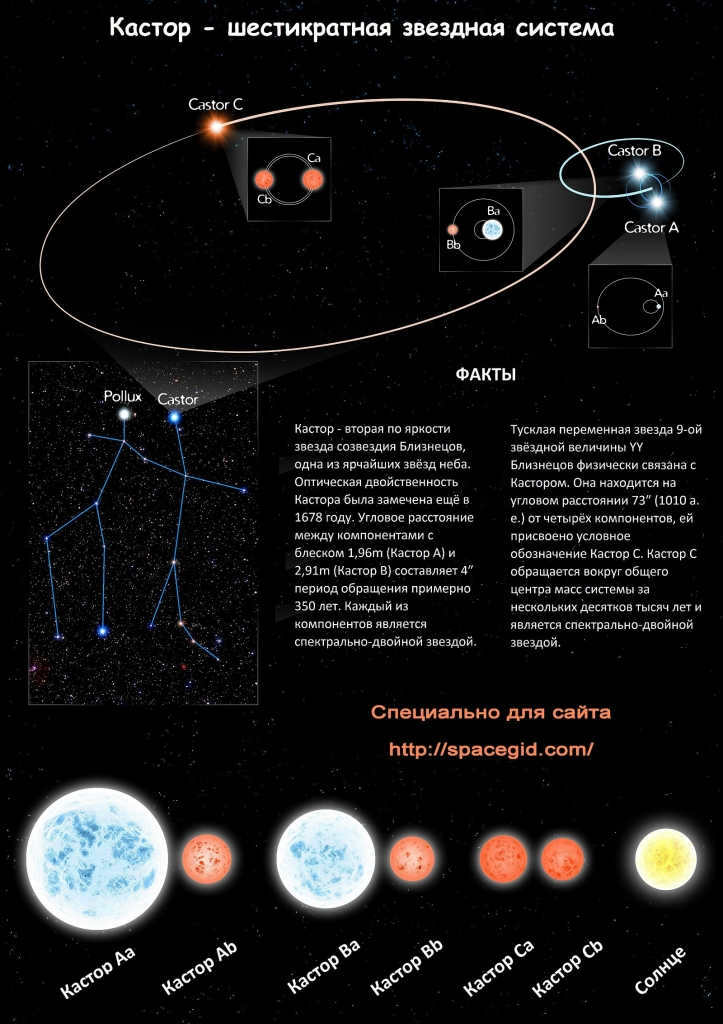
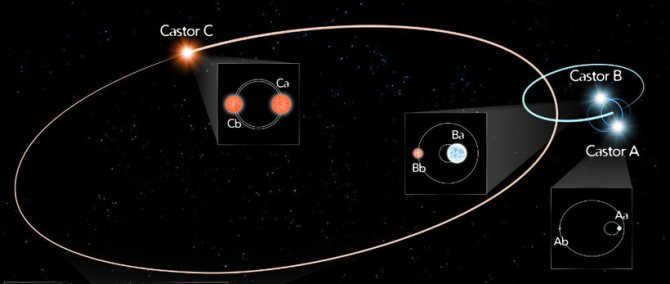
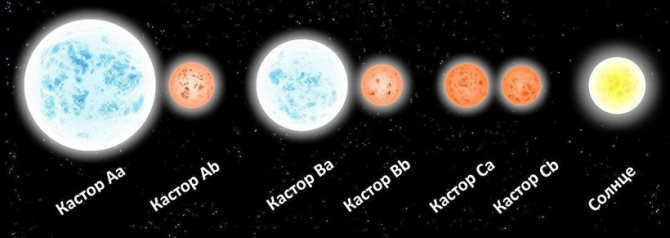
Castor, also known as Alpha Gemini, is a binary star system. This discovery was made as far back as 1678. Subsequent observations revealed that Castor is composed of multiple components, which were later designated as Aa, Ab, Ba, Bb, Ca, and Cb. As a result, it was determined that Castor has at least six companion stars, all of which are significantly smaller than the primary star, Castor-A. However, there is more to this fascinating star system.
Based on the findings, it has been revealed that the star Castor, also known as alpha Gemini, is gravitationally linked to a minimum of 15 other celestial bodies. These objects consist of stars of various sizes, forming a cohesive unit in terms of motion and age. Scientists have labeled this as the “Moving group of stars Castor”, which comprises notable astronomical entities such as Fomalgaut, Vega, Alderamin, Alpha Libra, and several others.
Resources on the subject
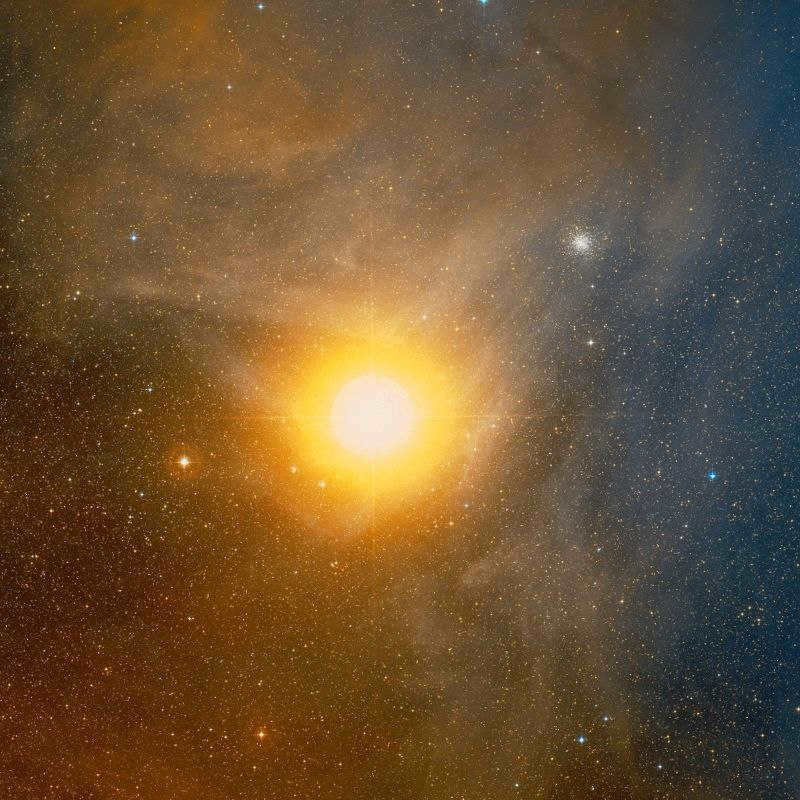
Speaking of the initial stage of Gemini – Castor-A, it has a mass and radius that are twice the size of our Sun. The star’s luminosity is only 30 times higher than that of the Sun. Its remarkable brightness in the night sky can be attributed to its relatively close proximity to Earth. This celestial body is situated at a distance of merely 49.8 light years from us. The average temperature of the star is approximately 10 thousand degrees Kelvin.
Historical Significance and Myths
The star Castor, also known as Alpha Gemini, represents the head of one of the legendary twin brothers, Castor and Polydeucus (also known as Pollux). These brothers were part of the Argonauts’ expedition and accomplished many remarkable feats. According to the myth, their mother was Leda, the wife of the king of Sparta, who was the father of Castor. Pollux, on the other hand, was believed to be the son of Zeus himself. The brothers’ courageous actions led to their elevation to the heavens, where they became the constellation Gemini, ensuring that their heroic deeds would be remembered by humanity for thousands of years.
Compilation of the most brilliant celestial bodies
Did you enjoy this post? Share it with your friends!
This post was published on 03.06.2015
Author: Maxim Zabolotsky
Castor (Alpha Gemini) is a blue main-sequence star found in the Gemini constellation. It is one of the brightest stars in the sky and can be seen without the need for instruments.
It is listed in catalogs as HR2891, HIP36850, HD60179, Gliese GL278A, Castor A, 66 Gemini, 66 Gem. It is a multiple star system with three components. While it is designated as “alpha,” it is actually inferior to Pollux, a yellow supergiant. If you want to find the coordinates, declination, color, and distance of the star Castor, we mentioned that it is located in the Gemini constellation. However, to make it easier to locate with a telescope, you can use our star map or access our 3D model online.
Facts
- Designations: HR2891, HIP36850, HD60179, Gliese GL278A, Castor A, 66 Gemini, 66 Gem.
- Absolute magnitude: 0.59/0.61.
- Apparent magnitude: 1.58.
- Coordinates: 07h 34m 36.00s (right ascension) and +31 o 53` 19.1 (declination).
- Galactic latitude: 22.48 degrees.
- Galactic longitude: 187.44 degrees.
- Distance from Earth: 51.55 light-years.
- Distance from the galactic center: 24181.75 light years.
- Color index: B-V 0.03.
- Radial velocity: 5.40 ± 0.50 km/s.
- Spectral type: A2Vm.
- Color: (A) blue.
- Satellites: A and B.
- Surface temperature: 9140 K.
The star known as Castor, which belongs to the constellation Gemini, has recently been discovered to be a complex multistellar system. This system consists of multiple components that are situated along its orbital path. These components may have similar mass or one may be significantly larger than the others.
Where is it located?
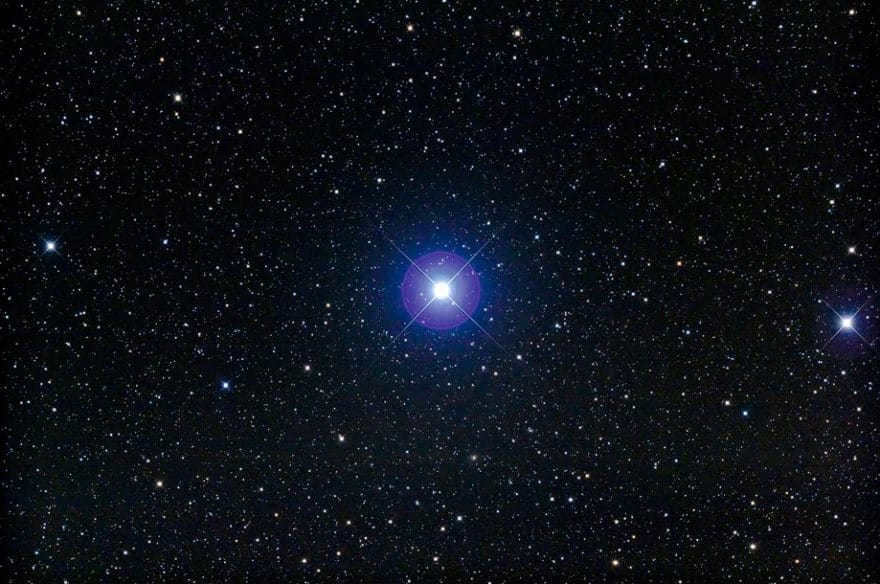
The location of the star Castor in the sky is determined by two factors. The first is its directness, which refers to how far away it is in time along the celestial equator. If the directness is positive, it means the star is moving eastward. The second factor is the declination, which indicates how far north or south the star is from the equator. The coordinates of Castor are 07h 34m 36.00s and +31 o 53′ 19.1.
As stars rotate around the galactic center, the constellations we observe today will be different in 50,000 years. Castor is currently shifting at a rate of -145.19 angular milliseconds per year northward and -191.45 angular milliseconds eastward.
The luminosity of Castor is a measure of the amount of energy it emits. Castor has a luminosity value of 17.0000000, which is determined based on its spectral type and comparison to the sun. This value can change if we observe changes in its distance and variability.
Physical Characteristics
Castor is classified as an A2Vm spectral type, which indicates that it is a blue main-sequence star. It is located approximately 7414 parsecs away from the galactic center. The star’s color index is B-V 0.03, indicating a temperature of 9140 K.
With a radius 2.84 times that of the sun, Castor has satellites B and C in close orbit.
The apparent magnitude of Castor is 1.58. In 1998, the parallax measurement yielded an absolute magnitude of 0.59, while in 2007 it was revised to 0.61. It is worth noting that a smaller absolute magnitude indicates a brighter luminosity. For comparison, the Sun’s absolute magnitude is -26.74.
Castor is located approximately 55.55 light-years away from Earth. However, a parallax measurement update in 2007 revised this distance to 50.87 light-years. It is important to clarify that this revision does not imply any movement of the star towards or away from Earth but rather represents an improved calculation using more advanced technology. Furthermore, Castor is situated approximately 24181.75 light-years away from the galactic center.
The Geminid meteor shower traverses the vicinity of the star Castor in the constellation Gemini. It occurs between December 6 and 19, reaching its peak on December 13-14. The velocity of the meteors is 34 kilometers per second, with approximately 34 celestial rocks streaking across the sky every hour.
Note: “Castor” may also refer to other concepts. For additional definitions, please consult the relevant sources.
| Star | |
| Castor Aa/Ba | |
| Observational data (J2000 era) | |
| Right Ascension | 07h 34m 36s |
| Declination | +31° 53′ 18″ |
| Distance | 49.8 light years (15.3 parsecs) |
| Visible stellar magnitude (V) | 1.96 / 2.91 |
| Constellation | Gemini |
| Astrometry | |
| Radial velocity (Rv) | 5.2 / -1.2 km/s |
| Proper motion | |
| – Right Ascension | -206.33 milliarcseconds per year |
| – Declination | -148.18 milliarcseconds per year |
| Parallax (π) | 65.50 ± 1.10 milliarcseconds |
| Absolute stellar magnitude (V) | 1.33 / 2.28 |
| Spectral characteristics | |
| Spectral class | A1 V / A2 Vm |
| Color index | |
| • B-V | 0.04 |
| • U-B | 0.02 |
| Variability | none |
| Physical characteristics | |
| Mass | 2.15 / 1.7 solar masses |
| Radius | 2.3 / 1.6 solar radii |
| Age | 200 million years |
| Temperature | 10,300 / 8,840 Kelvin |
| Luminosity | 30 / 14 solar luminosities |
| Metallicity | 950% / 280% solar |
| Stars in catalogs | |
[9] (α Gem / α Gemini) is the second most luminous star in the constellation Gemini and the 23rd most luminous star in the celestial sphere. Despite being designated as “α” by Bayer, the brightest star in the constellation is actually Pollux, which has a lower ecliptic latitude and is thus designated as β Gemini by Bayer.
Characteristics
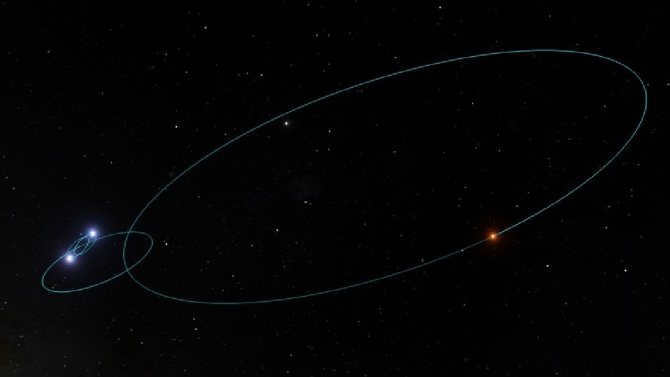
Castor was initially identified as a binary star system by Cassini in 1678 and later confirmed by James Pound in 1718. The angular separation between the two main components, Castor A (1.96m) and Castor B (2.91m), is 4″ (as of 2004). These components have an orbital period of approximately 350 years and each is a double star in terms of its spectral characteristics.
Further observations revealed that a dim variable star, YY Gemini, is physically associated with Castor. This star is located at an angular distance of 73″ (1010 a.e.) from the four main components and is designated as Castor C. Castor C orbits around the common center of mass of the system and is also a double star in terms of its spectral properties. The orbital period of Castor C is estimated to be at least a few tens of thousands of years.
Therefore, Castor is a multiple star system composed of six components.
| Parameter | Component | |||||
| Aa | Ab | Ba | Bb | Ca | Cb | |
| Spectral class | A1 V | Unknown (most likely M5 V) | A2 Vm | M2 V | M0.5 Ve | |
| Mass (M☉) | 2,15 | 0,4—0,6 | 1,7 | 0,4—0,6 | 0,62 | 0,57 |
| Radius (R☉) | 2,3 | ? | 1,6 | ? | 0,76 | 0,68 |
Castor was the first binary star to demonstrate an observable orbital motion as early as 1804.
The name Castor was derived from one of the mythical twins Dioscurus, whose mother was the beautiful Leda; Castor’s father was Tyndareus.
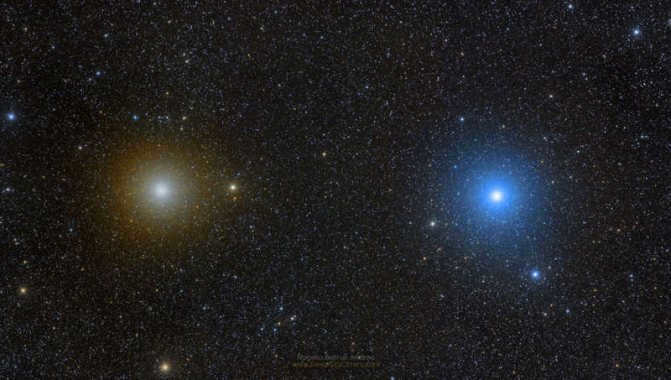
The Geminid meteor shower can be observed near the star Castor in the Gemini constellation. It occurs from December 6th to 19th, with its peak on December 13th and 14th. The meteors travel at a speed of 34 kilometers per second, and on average, about 34 meteors can be seen per hour.
The Gemini constellation is one of the oldest constellations known to humanity. It was first documented in Claudius Ptolemy’s monograph “Almagest” in the 2nd century AD. Originally, there were 48 constellations, with 12 of them being zodiacal and located on the ecliptic. The ecliptic is the path that the Sun follows as it orbits around the celestial sphere, according to the ancient Greek belief. Although the number of constellations has increased to 88 in modern times, astronomers still hold great respect for the ancient traditions.
The zodiacal constellation being discussed is Gemini. From June 20 to July 20, the Sun passes through this constellation. Gemini is situated in the northern hemisphere of the celestial sphere, positioned between Cancer in the east and Taurus in the west. Chariot and Lynx lie to the north, while Unicorn and Little Dog are found to the south. The constellation offers a pleasant and intellectual company, so there is no need for concern about the twins.
Gemini is surrounded by other constellations.
The brightest stars in this constellation are Castor and Pollux, which are known as the heads of the twins. They face northeast, while their feet rest directly on the Milky Way. It appears as though the brothers are holding hands and strolling through a faint celestial mist.
Pollux shines more brightly than Castor, despite being labeled as the beta star. This orange giant has already surpassed the main sequence and has a lifespan of no more than 100 million years. Eventually, it will transform into a white dwarf.
The orange giant has a mass twice that of the sun and a radius nine times larger. It is located at a distance of 33.78 light years from Earth. Magnetic activity is minimal. However, the most intriguing discovery is the detection of an exoplanet in close proximity to Pollux.
Castor, on the other hand, serves as the head of the twin pair. In terms of brightness, it ranks second within the constellation. It is situated 49.8 light-years away from Earth. Castor is a multiple star system consisting of six components, namely Castor A, Castor B, and Castor C. Castor A and Castor B are spectrally double stars, referring to two stars gravitationally bound and orbiting around a common center of mass.
YY Gemini is commonly known as Castor C, a variable star. It is also a spectral double and is gravitationally bound to the first two components. It completes a full orbit around them in a matter of several tens of thousands of years. However, Castor A and Castor B orbit each other every 350 years. This makes the system quite complex, but it is still representative of space.
There are other interesting stars in the Gemini constellation. The third brightest star is known as the Gemini gamut. It is called Alchena and is located 109 light-years away from Earth. Alchena is a subgiant star with a mass 2.8 times that of the Sun and a radius 3.3 times that of the Sun. It is a spectral binary system with a luminosity 123 times that of the Sun.
It is practically positioned on the ecliptic. It is known as Wasat, which translates to “middle” in Arabic. From our vantage point on Earth, it is visible to the naked eye, although it can be occasionally obstructed by the Moon and sometimes by other planets in our solar system. This star is a subgiant that resides approximately 60.5 light years away from Earth. It has been shining for about 1.6 billion years. Interestingly, this star is actually a triple system, where two of its components form a spectral double system, and the third component serves as their companion.
The U Gemini Moon double system is particularly intriguing.
This system is notable because it consists of two stars: a red dwarf and a white dwarf. These stars are located in very close proximity to each other. The red dwarf possesses a circumstellar disk, and its diffusive material flows over to the white dwarf. As a result, an explosion occurs approximately every 100 days, resulting in a two-day flare. U Gemini is situated approximately 270 light years away from Earth.
The Gemini constellation contains various nebulae and scattered star clusters
The nebulae in Gemini include the Eskimo and Medusa. The Medusa nebula is located on the border with the Little Dog constellation and resembles a human head with a hood. It is situated 2,870 light-years away from Earth.
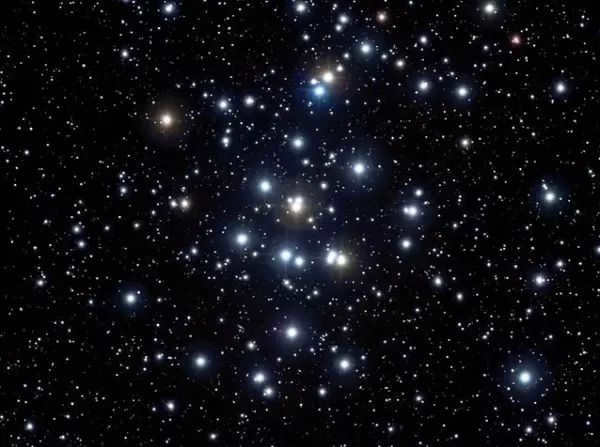
One of the scattered star clusters in Gemini is called M35. It is located 2,800 light years away from Earth in the western part of the constellation. In binoculars, it appears as a dark spot with a few faint stars, but in a telescope, dozens of white stars can be seen scattered across the vast expanse of space. Other scattered star clusters in Gemini include NGC 2129, NGC 2158, and NGC 2355, among others.
Regarding Greek mythology, Gemini is associated with the myth of Castor and Pollux, the twin sons of Zeus and Leda.
They took part in the Argonauts’ campaign, achieved success at the Olympic Games, and accomplished numerous other magnificent exploits. They were revered as the gods of dawn and dusk, and the martial bravery of the twins served as a role model. In mythology, they were known as the Dioscuri. Therefore, it comes as no surprise that the impressionable Greeks immortalized the Gemini constellation in the heavens. It was yet another homage to courage and valor.
As for the stars Castor and Pollux, everything is clear when it comes to the former. However, Pollux is the Latin equivalent of the name Polidevka. Since ancient times, these two celestial bodies have served as a constant reminder of the heroic deeds and unwavering sense of duty exhibited by mythological figures.
This article was authored by Maxim Shipunov
Gemini is a well-known constellation in the night sky, which has been recognized by people since ancient times. It can be easily seen in the Northern Hemisphere from December to May. When the weather is clear and without clouds, you can observe up to 70 stars, with Pollux and Castor being the brightest among them.
Stars in the Vicinity
The following star systems are located within a distance of 20 light-years from Castor:
| Star | Spectral class | Distance, sv. years |
| GJ 1096 | M V | 5.2 |
| V376 Gemini | K2-8 V | 5.8 |
| HD 65583 | G8 V | 6.5 |
| GJ 3491 | K V | 8.3 |
| Ross 987 | M0.5 V | 8.3 |
| ρ Gemini | F0 V / ? / ? | 8.9 |
| GJ 3478 | M0 V | 9.0 |
| 37 Gemini | G0 V | 11 |
| δ Gemini | F0-2 V-IV / K3-6 V / ? | 12 |
| HD 52711 | G4 V | 13 |
| χ of Cancer | F6 V | 13 |
| DX Lynx | G5 V | 14 |
| ψ5 Aurigae | G0 V | 14 |
| HD 55575 | G0 V | 15 |
| 55 Cancri | G8 V / M3.5-4 V | 17 |
| HIP 35389 | A0 V | 18 |
| 10 Ursa Majoris | F5 V / G5 V / ? | 18 |
| β Geminorum | K0 IIIb | 18 |
| HD 257498 | G0 V | 19 |
Notes[ ]
- ↑ 12Fabricius C., Høg E., Makarov V. V., Mason B. D., Wycoff G. L., Urban S. E.
The Tycho double star catalogue (English) //
Astron. Astrophys.
/ T. Forveille — EDP Sciences, 2002. — Vol. 384, Iss. 1. — P. 180–189. — ISSN 0004-6361; 0365-0138; 1432-0746; 1286-4846 — doi:10.1051/0004-6361:20011822 - Gray R. O., Corbally C. J., Garrison R. F., McFadden M. T., Robinson P. E.
Contributions to the Nearby Stars (NStars) Project: Spectroscopy of Stars Earlier than M0 within 40 Parsecs: The Northern Sample. I (English) //
Astron. J.
/ J. G. III — IOP Publishing, American Astronomical Society, 2003. — Vol. 126, Iss. 4. — P. 2048–2059. — ISSN 0004-6256; 1538-3881 — doi:10.1086/378365 — arXiv:astro-ph/0308182 - ↑ 12Zorec J., Royer F.
Evolution of rotational velocities in A-type stars (English) //
Astron. Astrophys.
/ T. Forveille — EDP Sciences, 2012. — Vol. 537. — P. 120–120. — 22 p. — ISSN 0004-6361; 0365-0138; 1432-0746; 1286-4846 — doi:10.1051/0004-6361/201117691 — arXiv:1201.2052 - Prugniel P., Vauglin I., Koleva M.
The MILES stars: atmospheric parameters and spectral interpolator (English) //
Astron. Astrophys.
/ T. Forveille — EDP Sciences, 2011. — Vol. 531. — P. 165–165. — ISSN 0004-6361; 0365-0138; 1432-0746; 1286-4846 — doi:10.1051/0004-6361/201116769 — arXiv:1104.4952 - ↑ 12Royer F., Grenier S., M.-O. Baylac, Gómez A. E., Zorec J.
Rotational speeds of A-type celestial bodies (English) //
Astronomy and Astrophysics
/ T. Forveille — EDP Sciences, 2002. — Vol. 393, Iss. 3. — P. 897—911. — ISSN 0004-6361; 0365-0138; 1432-0746; 1286-4846 — doi:10.1051/0004-6361:20020943 — arXiv:astro-ph/0205255 - ↑ 12Royer F., Zorec J., Gómez A. E.
Rotational speeds of A-type celestial bodies (English) //
Astronomy and Astrophysics
/ T. Forveille – EDP Sciences, 2007. – Vol. 463, Iss. 2. – P. 671-682. – ISSN 0004-6361; 0365-0138; 1432-0746; 1286-4846 – doi:10.1051/0004-6361:20065224 – arXiv:astro-ph/0610785 - Abt H. A., Morrell N. I.
The correlation between rotational velocities and spectral peculiarities among stars of type A //.
The Astrophysical Journal
:
Supplement Series
– 1995. – Vol. 99. – P. 135-172. – ISSN 0067-0049; 1538-4365 – doi:10.1086/192182 - Smith M. A.
Metallicity in the border regions of the AM domain. III. Analysis of the hot stars alpha Geminorum A and B and theta Leonis // Astrophys.
Astrophys. J.
/ E. Vishniac – IOP Publishing, 1974. – Vol. 189. – P. 101. – ISSN 0004-637X; 1538-4357 – doi:10.1086/152776 - Astronomical calendar. Permanent part. 7th ed. revised. Edited by V. V. K. Abalakin. – Moscow: Nauka, 1981
Dark Configurations
The configurations of the fear-inducing (dark) aspects are specifically designed to reinforce irrational phobias and cravings that they are responsible for.
There is a complete black triangle comprised of two Half-Nonagons (20˚ aspect) and a Nonagon (40˚ aspect) at the base. This formation creates a prison-like atmosphere around a person, where they are cruelly controlled. The castle represents an unspoken, unauthorized increase in influence over the planet. It exists implicitly, subtly underlying everything, as if it is there and yet not there. But nevertheless, it exists.
Another configuration is a triangle with Nonagon sides (40˚ aspect) and a Binonagon (80˚ aspect) at the base.
This configuration gives even greater and more intense attention to the individual. Its purpose is to break the cycle of karmic debt by periodically bringing the person back to unresolved issues until they are able to completely escape from the complicated situation.
It consists of nine Nonagons, each with a 40˚ angle. This is represented by a black nine-sided figure.
The person was born during a time when the planets were aligned unfavorably. As a result, they possess a significant amount of irrationality. The individual is obsessed with setting boundaries for both themselves and others. It is common to find this configuration in the horoscopes of monks and ascetics.
Container
This unique shape resembles a black trapezoid. It features a Sentagon (with a 100˚ angle) at the base, a Semi-Nonagon (with a 20˚ angle) at the top, Nonagons (with a 40˚ angle) on the sides, and two Sextiles (with a 60˚ angle) inside.
Within this container, a perpetual internal conflict takes place. The presence of the sextile aspect allows for the indulgence of personal weaknesses, while simultaneously creating a constant battle within oneself. The individual is aware of their wrongdoings and is engaged in an ongoing struggle to overcome them.