Which telescope should you purchase for your needs?
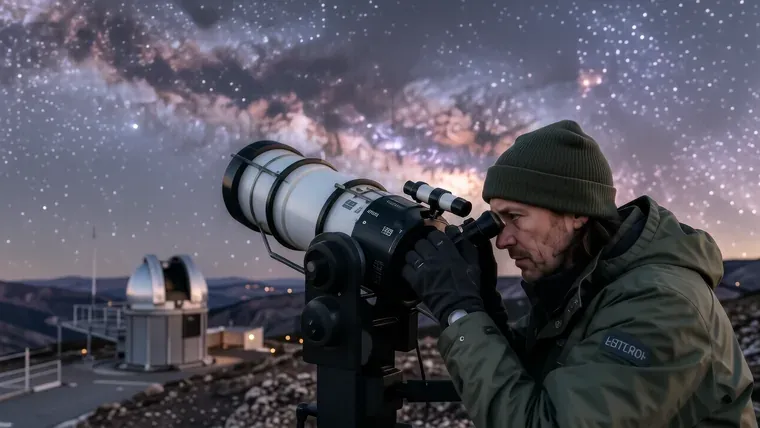
Selecting a telescope depends on your specific observational goals, such as planetary detail or deep-sky photography. You must choose between refractors, reflectors, and catadioptric systems based on aperture, focal length, and mount stability.
Optical Systems and Mechanics
The primary decision involves the optical design. Refractors use lenses to bend light. They provide high contrast. Because they lack a central obstruction, they excel at viewing the Moon and planets. However, large achromatic refractors become prohibitively heavy and expensive.
Reflectors use mirrors instead of lenses. These systems are often more affordable for a given aperture. Most amateur astronomers prefer Newtonians because the light path is straightforward and easy to maintain. You will find that larger reflectors provide better views of faint nebulae.
Catadioptric telescopes combine both mirrors and lenses. They use a Schmidt-Cassegrain design to fold the light path. This makes the tube much shorter than a refractor of the same focal length. These instruments are portable.
Mounts determine how you track objects. An alt-azimuth mount moves up-down and left-right. It is simple to use. Equatorial mounts align with the Earth’s axis so that they can track stars across the sky with a single motion.
- Refractors: Best for high-contrast planetary viewing.
- Newtonian Reflectors: Best aperture-per-dollar for deep-sky objects.
- Schmidt-Cassegrain: Best for portability and versatile imaging.
- Dobsonians: Best for large-aperture visual observing.
Evaluating Manufacturers
Different companies prioritize different aspects of telescope construction. Veber focuses on the entry-level market by including many accessories in their kits. Their “Umka” reflector is a popular choice for children because it features white housing and cartoon characters. It sits on a tabletop tripod.
TAL Novosibirsk Refinery produces optics that many enthusiasts value highly. Their systems are known for superior image quality. Many experienced observers buy only the TAL optical tube and pair it with a custom mount. The mechanics can be heavy.
Orion has operated in the American market since 1975. They specialize exclusively in telescopes. According to Sky & Telescope, their entry-level models offer an optimal balance of optics and mechanics. Their Intelliscope system uses a database of 14,000 objects for automated tracking.
Bresser has a history spanning over 50 years. They produce instruments using German engineering standards. National Geographic collaborated with Bresser to develop a specific range of telescopes for educational use. These models are common in schools.
Levenhuk is a Russian startup that has grown rapidly. They focus heavily on the consumer market for teenagers and children. Their designs emphasize ease of use.
Eight Sturman offers various price points. Their lower-cost models provide acceptable optics for beginners. This makes them useful for testing interest before purchasing more expensive gear.
Deep Sky Imaging Requirements
Astrophotography requires stability and light throughput. You need a telescope that can capture photons efficiently. The Celestron StarBright XLT is designed for this purpose. It uses a 280 mm aperture and a 2800 mm focal length.
The optical coatings are specific. They use aluminum, SiO2, TiO2, and SiO2 for the mirrors. This helps with light transmission. High-quality glass is also necessary. The corrector lens uses white water-white glass rather than standard lime-sodium glass to reduce reflections.
Weight is a factor in imaging. This unit weighs 29.5 kg. You will need a very heavy-duty mount to prevent vibration. If the mount shakes, the stars will appear as streaks in your long-exposure images.
The Celestron NexStar 5 SE is an alternative for those seeking automation. It is a Schmidt-Cassegrain with a 125 mm aperture. It weighs only 8 kg. The SkyAlign technology simplifies the process of finding objects in the sky.
- Aperture: Larger is better for faint objects.
- Focal Ratio: Lower f-numbers (like f/5) are faster for photography.
- Mount: Must be rigid enough to prevent star trailing.
- Software: Helps locate targets via a database.
Beginner Selection and Portability
Beginners often struggle with complex setups. The Orion 9005 AstroView is designed to mitigate this. It is a refractor with a 120 mm aperture. It includes an equatorial mount for manual tracking.
The focal length is 600 mm. This makes it a “fast” telescope at f/5. Fast telescopes provide a wider field of view. You can see more of the Milky Way at once.
Portability matters for urban observers. Many people live in light-polluted cities. They must travel to dark sites to see deep-sky objects. A heavy telescope makes this difficult.
The “Umka” reflector is a tabletop model. It is easy to move. Small telescopes are also easier to learn on. You will not feel overwhelmed by the mechanics.
A good beginner kit should include:
- A finder scope for coarse aiming.
- At least two eyepieces of different focal lengths.
- A sturdy tripod.
- Basic astronomy software.
Technical Specifications and Data
When comparing models, look at the exact measurements. A 125 mm aperture provides significantly more light than a 90 mm aperture. Light gathering power increases with the square of the radius.
The Celestron NexStar 5 SE has a focal ratio of f/10. This is a relatively slow system. It is excellent for planets but slower for deep-sky photography. You will need longer exposure times.
The Orion 9005 AstroView comes with Sirius Plossl eyepieces. These are standard 1.25-inch accessories. They provide decent views for the price. The kit also includes a 6 x 30 finder.
On 14 May 2023, an observer in the Atacama Desert used a similar Schmidt-Cassegrain setup to capture the Orion Nebula with high precision. Such observations require perfect polar alignment. If your alignment is off by even one degree, the tracking will fail during long exposures.
| Model | Type | Aperture | Focal Length | Weight |
|---|---|---|---|---|
| Celestron StarBright XLT | Schmidt-Cassegrain | 280 mm | 2800 mm | 29.5 kg |
| Orion 9005 AstroView | Refractor | 120 mm | 600 mm | 16.5 kg |
| Celestron NexStar 5 SE | Schmidt-Cassegrain | 125 mm | 1250 mm | 8 kg |
The choice ultimately comes down to your budget and how much weight you can carry. A large Newtonian reflector will show you more detail in distant galaxies, although it is difficult to transport to a dark sky site. Smaller refractors are easier to use for casual viewing in your backyard.
Frequently asked questions
What is the best type of telescope for planetary viewing?
Refractors are best for high-contrast planetary viewing because they use lenses to bend light and lack a central obstruction.
Which telescope offers the most aperture for the money?
Newtonian reflectors typically provide the best aperture-per-dollar, making them ideal for viewing faint deep-sky objects like nebulae.
What should I look for in a telescope for astrophotography?
You need high light throughput and stability. For example, the Celestron StarBright XLT features a 280 mm aperture and specific optical coatings to capture photons efficiently.
Are there portable telescopes suitable for beginners?
Yes, Schmidt-Cassegrain models like the Celestron NexStar 5 SE are highly portable, weighing only 8 kg, while tabletop reflectors like the Umka are also easy to move.
More in Stargazing
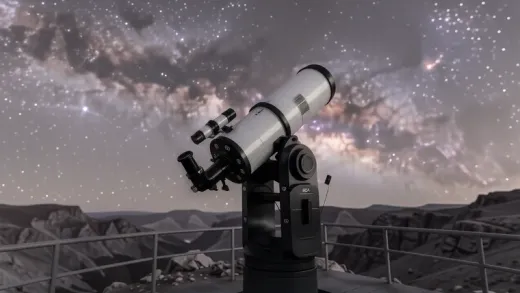
The benefits of an apochromatic refractor
Learn how an apochromatic refractor uses ED glass and multiple lens elements to eliminate chromatic aberration for high-resolution astrophotography.
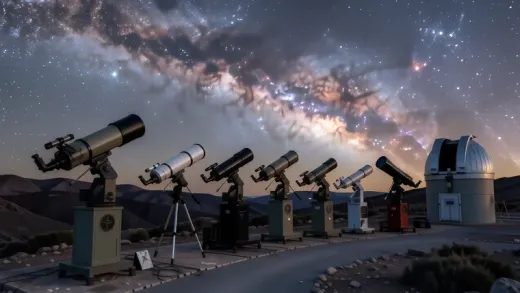
How to start choosing the perfect telescope for beginners
Learn how to select the right telescope by comparing refractors and reflectors, understanding aperture, and matching equipment to your observation goals.
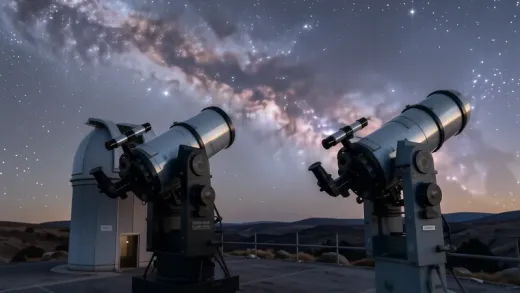
Differentiating between refractor and reflector telescopes
Learn the key differences between refractor and reflector telescopes to choose the right optical design for planetary viewing or deep-sky observation.
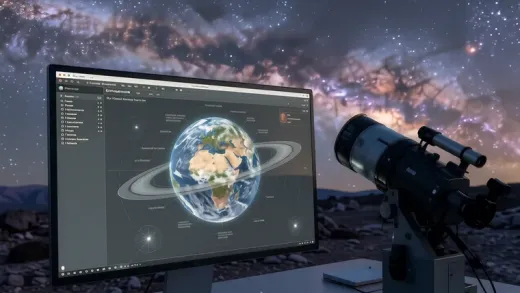
A beginner's guide on how to use Stellarium
Learn how to use Stellarium to simulate the night sky, configure geographical coordinates, and optimize visual settings for celestial observation.